Who was Paul Dirac?
Theoretical physicist whose work united quantum mechanics with special relativity and anticipated antimatter. Theoretical physicist whose work united quantum mechanics with special relativity and anticipated antimatter.
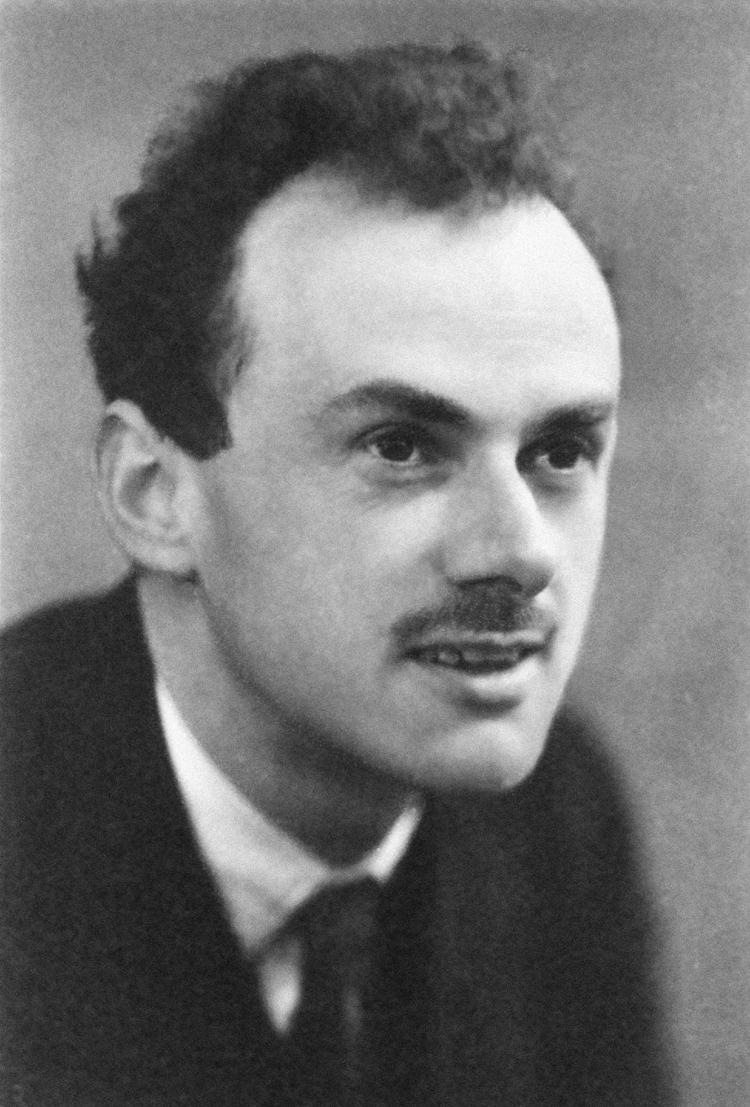
Paul Dirac. Nobel Foundation. Public domain.
1902–1984
Theoretical physicist whose work united quantum mechanics with special relativity and anticipated antimatter.
Direct answers to common questions about Paul Dirac, followed by the full sourced biography.
Theoretical physicist whose work united quantum mechanics with special relativity and anticipated antimatter. Theoretical physicist whose work united quantum mechanics with special relativity and anticipated antimatter.
Paul Dirac is particularly known for The relativistic electron equation, Predicting antimatter.
Paul Dirac lived 1902–1984. This profile places that life within 20th century and Quantum Revolution.
Dirac’s later association with Florida State University gave his work an institutional home beyond the British universities where he had established his reputation. The university preserves and interprets that connection through scientific collections, library resources, and commemorative activity. Such materials allow later researchers to encounter a working physicist rather than only a.
Theoretical physicist whose work united quantum mechanics with special relativity and anticipated antimatter.
Paul Dirac first trained in electrical engineering in Bristol before pursuing mathematics and theoretical physics. His work during the 1920s helped establish the mathematical language of quantum mechanics and quantum electrodynamics. He sought formulations that were internally consistent as well as capable of describing physical observations. This approach placed him among the central architects of a theory that replaced familiar mechanical pictures with abstract mathematical relationships governing matter and radiation.
Dirac’s relativistic equation for the electron, published in 1928, connected quantum mechanics with special relativity. Its consequences led to the prediction of an electron counterpart with opposite electric charge, subsequently identified experimentally as the positron. He shared the 1933 Nobel Prize in Physics with Erwin Schrödinger. Across a long career, including later work in Florida, Dirac continued investigating foundational problems, leaving tools and concepts that became standard throughout theoretical physics.
Dirac’s later association with Florida State University gave his work an institutional home beyond the British universities where he had established his reputation. The university preserves and interprets that connection through scientific collections, library resources, and commemorative activity. Such materials allow later researchers to encounter a working physicist rather than only a famous equation. They also reveal how scientific influence can operate across geography and generations: students who never met Dirac can still find in his papers and institutional legacy a route into the problems that occupied his career.
Completed his Cambridge doctorate after making early contributions to quantum mechanics.
Took the mathematics chair that he held until 1969.
Became a professor of physics in Florida, continuing his research there until his death.
Biographical claims are summarised from the sources above. Interpretation and disputed reputations are identified in the text rather than presented as settled fact.