Who was Max Planck?
Theoretical physicist whose explanation of thermal radiation introduced the energy quantum. Theoretical physicist whose explanation of thermal radiation introduced the energy quantum.
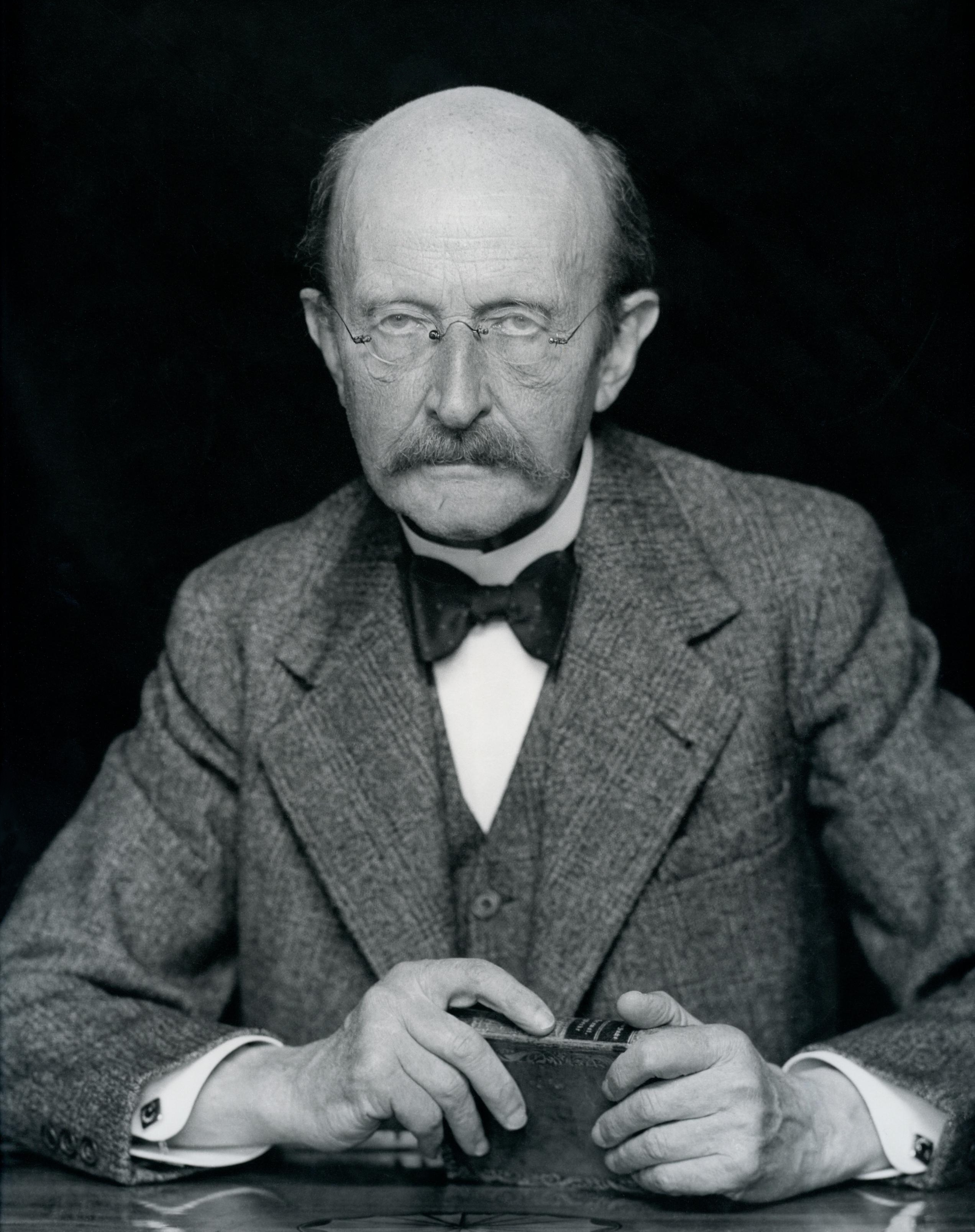
Max Planck. Hugo Erfurth. Public domain.
1858–1947
Theoretical physicist whose explanation of thermal radiation introduced the energy quantum.
Direct answers to common questions about Max Planck, followed by the full sourced biography.
Theoretical physicist whose explanation of thermal radiation introduced the energy quantum. Theoretical physicist whose explanation of thermal radiation introduced the energy quantum.
Max Planck is particularly known for The energy quantum, Thermal radiation research.
Max Planck lived 1858–1947. This profile places that life within 19th–20th centuries and Quantum Revolution.
Planck’s scientific authority developed through a long university and academy career. After completing his doctorate in 1879, he taught in Munich, moved to Kiel, and then established himself in Berlin, becoming a full professor in 1892. He later served as rector of the university and permanent secretary of the Prussian Academy of Sciences. His presidency of the Kaiser Wilhelm Society.
Theoretical physicist whose explanation of thermal radiation introduced the energy quantum.
Max Planck approached physics through thermodynamics, studying the relationships among heat, energy, and matter. His decisive work concerned the radiation emitted by heated objects, a problem that existing theories could not explain across all wavelengths. In December 1900 he presented an account in which energy exchange involved discrete quantities rather than an unrestricted continuum. The constant associated with this proposal became fundamental to quantum physics, although Planck did not initially anticipate the full implications.
Planck’s proposal opened questions that later physicists transformed into a new account of atoms, light, and measurement. He received the 1918 Nobel Prize in Physics for discovering energy quanta, but the development of quantum mechanics was a collective process extending far beyond his original calculation. His later life was marked by war and profound family losses. After the Second World War, he nevertheless contributed to efforts to rebuild German scientific institutions before his death in 1947.
Planck’s scientific authority developed through a long university and academy career. After completing his doctorate in 1879, he taught in Munich, moved to Kiel, and then established himself in Berlin, becoming a full professor in 1892. He later served as rector of the university and permanent secretary of the Prussian Academy of Sciences. His presidency of the Kaiser Wilhelm Society from 1930 to 1937 placed him within German science during a period of political transformation. These offices show why his biography involves institutional responsibility as well as theoretical discovery.
Finished his doctoral research after studying physics in Munich and Berlin.
Became an associate professor of theoretical physics at the university in Kiel.
Took a theoretical physics appointment in Berlin, becoming a full professor in 1892.
Served as president during the collapse of the Weimar Republic and the establishment of Nazi rule.
Biographical claims are summarised from the sources above. Interpretation and disputed reputations are identified in the text rather than presented as settled fact.