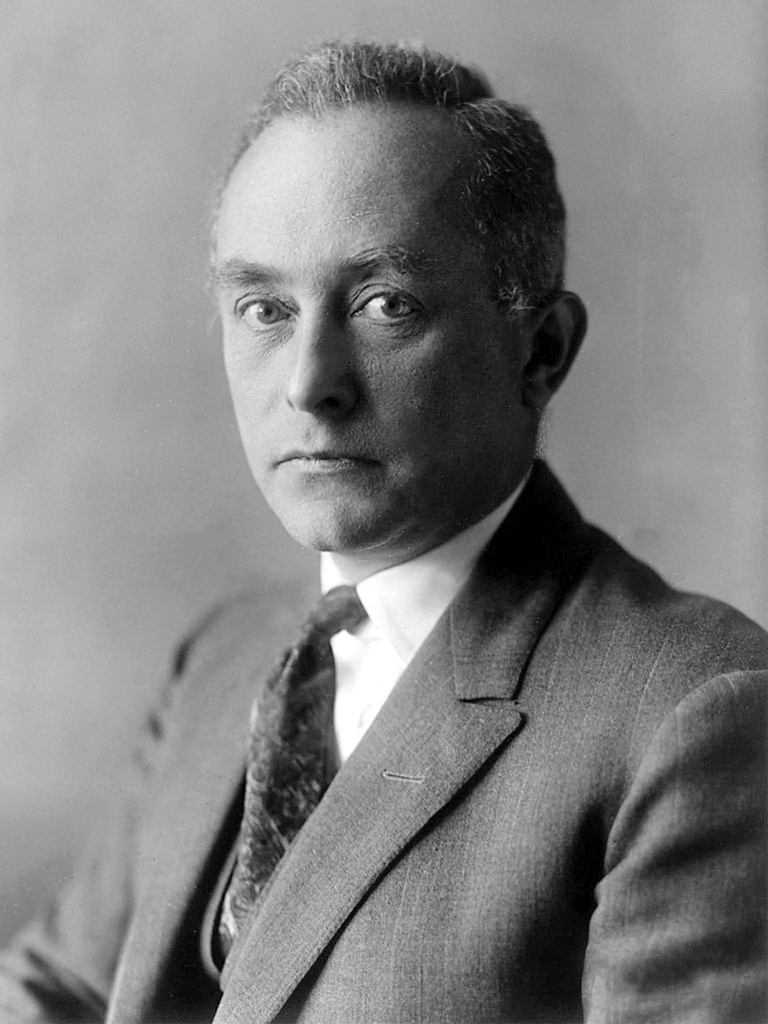
Portrait of Max Born

Max Born. Unknown artist. Public domain.

Historical person · 20th Century

Max Born

1882–1970

Mathematical physicist who helped create quantum mechanics, developed its statistical interpretation and rebuilt his academic career in Britain after Nazi persecution.

Explore Science and TechnologyRead biography ↓

Your next chapter starts here

Take history with you.

Create a free account or log in to download this guide as a PDF. Reading on the website is always free.

Create free account
Quick answers

What to know about Max Born

Direct answers to common questions about Max Born, followed by the full sourced biography.

Who was Max Born?

Mathematical physicist who helped create quantum mechanics, developed its statistical interpretation and rebuilt his academic career in Britain after Nazi persecution. Mathematical physicist who helped create quantum mechanics, developed its statistical interpretation and rebuilt his academic career in Britain after Nazi persecution.

What is Max Born known for?

Max Born is particularly known for Statistical interpretation of quantum mechanics, Matrix mechanics, 1954 Nobel Prize.

When did Max Born live?

Max Born lived 1882–1970. This profile places that life within 20th Century and Science and Technology.

Why is Max Born historically significant?

Born received the Nobel Prize in Physics in 1954 for foundational quantum research, particularly the statistical interpretation. His importance extended beyond that award through textbooks, teaching and contributions to optics and the physics of solids. He also considered the responsibilities of scientists in public affairs. In 1957 he signed the Göttingen declaration opposing nuclear.

Biography

Max Born: life and legacy

Overview

Mathematical physicist who helped create quantum mechanics, developed its statistical interpretation and rebuilt his academic career in Britain after Nazi persecution.

Mathematics and a wider education

Max Born grew up in Breslau in a Jewish academic family. His interests ranged across the humanities and sciences, and his university education took him through several institutions before he worked with leading mathematicians at Göttingen. Mathematics became a means of addressing physical problems rather than a separate intellectual pursuit. Early research included elasticity, relativity and the behaviour of crystals. These varied subjects helped prepare him for the difficulties of atomic theory, where familiar mechanical pictures increasingly failed to match experimental results. His later achievement rested on this broad mathematical training and sustained collaboration.

Building quantum mechanics together

At Göttingen, Born helped create a research environment in which younger physicists could challenge established explanations. He recognised the mathematical significance of Heisenberg’s new approach to atomic processes and worked with Pascual Jordan on its development. Quantum mechanics was not the completed invention of one person arriving in a single paper. Different formulations and interpretations emerged through exchanges among several researchers. Born’s distinctive contribution included the statistical interpretation of the wave function: the theory gives probabilities for possible outcomes. This changed what physicists could claim to predict about individual atomic events.

Exile and work in Edinburgh

The Nazi seizure of power destroyed Born’s position in Germany. Removed from university service because of his Jewish background, he moved through appointments at Cambridge and Bangalore before taking a chair at Edinburgh in 1936. He continued research and teaching there until retirement in 1953. Exile meant a loss of institutional security and established networks, but it also carried scientific knowledge into new settings. His work in Britain included helping develop a research community with other displaced scholars. His career belongs to the history of persecution and migration as well as to the history of theoretical physics.

Probability, recognition and responsibility

Born received the Nobel Prize in Physics in 1954 for foundational quantum research, particularly the statistical interpretation. His importance extended beyond that award through textbooks, teaching and contributions to optics and the physics of solids. He also considered the responsibilities of scientists in public affairs. In 1957 he signed the Göttingen declaration opposing nuclear weapons for West German forces. This was a concrete political intervention rather than a claim that scientific knowledge could remain detached from society. His life brought together mathematical precision, arguments about the meaning of physical theory and concern about the uses of scientific power.
Key moments

Timeline

  1. Born

    Max Born's life began in 1882.

  2. Göttingen chair

    Became a professor at Göttingen.

  3. Matrix mechanics

    Helped develop the mathematical form of the new quantum theory.

  4. Statistical interpretation

    Connected the wave function with probabilities.

  5. Forced departure

    Lost his German university position under Nazi persecution.

  6. Edinburgh

    Began his long academic appointment in Scotland.

  7. Retirement

    Retired from the Edinburgh chair.

  8. Nobel recognition

    Received the Nobel Prize in Physics.

  9. Göttingen declaration

    Joined the statement opposing nuclear armament of West German forces.

  10. Died

    Max Born died in 1970.

Connections

Related people

Keep reading

Related stories

Test your knowledge

Related quizzes

Evidence

Sources and further reading

  1. Max BornUniversity of St Andrews, MacTutor
  2. Max BornHistoric Environment Scotland
  3. Max BornHaus der Geschichte, LeMO
  4. Biographical records and portraitsNational Portrait Gallery
  5. Historical people and primary sourcesLibrary of Congress
  6. Historical figuresEncyclopaedia Britannica

Biographical claims are summarised from the sources above. Interpretation and disputed reputations are identified in the text rather than presented as settled fact.

Milestone unlocked!

Your completed quizzes are building a history of their own.

