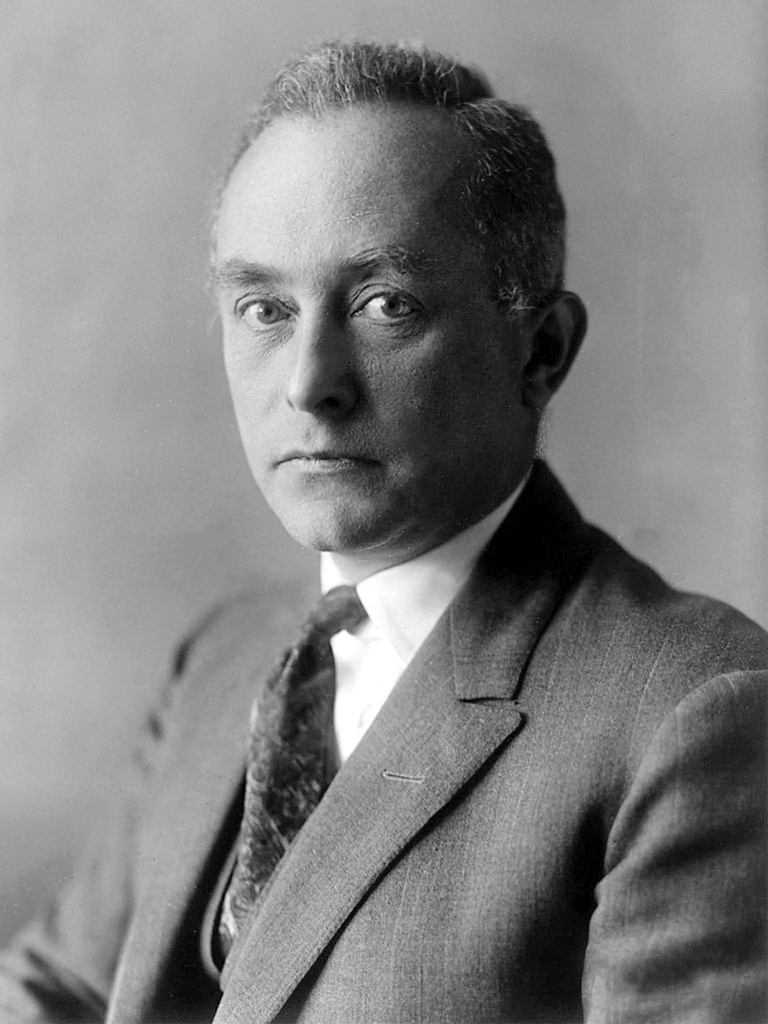
Portrait of André-Marie Ampère

André-Marie Ampère. Ambroise Tardieu. Public domain.

Historical person · 19th Century

André-Marie Ampère

1775–1836

Mathematician and experimental investigator who established fundamental relationships between electrical currents and helped create the science of electrodynamics.

Explore Science and TechnologyRead biography ↓

Your next chapter starts here

Take history with you.

Create a free account or log in to download this guide as a PDF. Reading on the website is always free.

Create free account
Quick answers

What to know about André-Marie Ampère

Direct answers to common questions about André-Marie Ampère, followed by the full sourced biography.

Who was André-Marie Ampère?

Mathematician and experimental investigator who established fundamental relationships between electrical currents and helped create the science of electrodynamics. Mathematician and experimental investigator who established fundamental relationships between electrical currents and helped create the science of electrodynamics.

What is André-Marie Ampère known for?

André-Marie Ampère is particularly known for Electrodynamics, Forces between currents, Mathematical electrical theory.

When did André-Marie Ampère live?

André-Marie Ampère lived 1775–1836. This profile places that life within 19th Century and Science and Technology.

Why is André-Marie Ampère historically significant?

Ampère consolidated his electrical investigations in a major mathematical memoir published in 1827. His account became an important foundation for later nineteenth-century work, although subsequent field theories changed how electrical and magnetic action was understood. At the Collège de France, where he became professor in 1824, he continued to combine scientific teaching with wider.

Biography

André-Marie Ampère: life and legacy

Overview

Mathematician and experimental investigator who established fundamental relationships between electrical currents and helped create the science of electrodynamics.

Education amid revolutionary upheaval

André-Marie Ampère received much of his education at home near Lyon, encouraged by his father to read widely. Mathematics was central, but natural history, literature and philosophy also interested him. The French Revolution brought devastating personal consequences: his father was executed in 1793 after the conflict between Lyon and the revolutionary government. Ampère later supported himself by teaching. His early career included provincial posts and mathematical research on probability. This background matters because the investigator remembered through an electrical unit was neither narrowly trained nor initially employed as a specialist in electricity.

From teaching to Parisian science

Teaching at Bourg-en-Bresse and Lyon preceded his appointment as a tutor at the École Polytechnique in 1804. His research and educational responsibilities developed together, including work on mechanics, chemistry and the organisation of knowledge. Election to the Academy of Sciences in 1814 strengthened his position in Parisian scientific life. Appointments did not remove personal and financial pressures, and inspection duties required considerable travel. Ampère’s career therefore depended on classrooms, institutions and correspondence as well as experiments. These connections also allowed new findings from abroad to reach him quickly and be discussed in public meetings.

Currents acting on currents

In September 1820 François Arago reported Hans Christian Ørsted’s finding that an electrical current could deflect a magnetic needle. Ampère rapidly extended the investigation. Rather than studying only a wire and a magnet, he examined the interaction of two current-carrying conductors. Their attraction or repulsion depended on the directions of the currents. This opened a route towards treating magnetism through electrical motion and expressing the forces mathematically. Experiments, specially arranged apparatus and theoretical assumptions worked together; the resulting electrodynamics was a substantial new research programme rather than a single demonstration with a compass.

A theory and a broader intellectual life

Ampère consolidated his electrical investigations in a major mathematical memoir published in 1827. His account became an important foundation for later nineteenth-century work, although subsequent field theories changed how electrical and magnetic action was understood. At the Collège de France, where he became professor in 1824, he continued to combine scientific teaching with wider philosophical ambitions. His classification of the sciences appeared in 1834. The familiar name ampere preserves his importance, but his actual work is more revealing: he sought connections between experiments and systematic explanation while remaining interested in knowledge well beyond physics.

Key moments

Timeline

  1. Born

    André-Marie Ampère's life began in 1775.

  2. Father executed

    His father died during revolutionary repression in Lyon.

  3. Provincial professorship

    Became professor of physics and chemistry at Bourg-en-Bresse.

  4. École Polytechnique

    Appointed tutor in analysis in Paris.

  5. Academy membership

    Elected to the Academy of Sciences.

  6. Electrodynamic experiments

    Investigated forces between electrical currents.

  7. Collège de France

    Appointed professor of experimental physics.

  8. Mathematical memoir

    Published his major account of electrodynamic phenomena.

  9. Classification of knowledge

    Published the first part of his philosophy of the sciences.

  10. Died

    André-Marie Ampère died in 1836.

Connections

Related people

Keep reading

Related stories

Test your knowledge

Related quizzes

Evidence

Sources and further reading

  1. Ampère: dated biographyLes Archives Ampère
  2. André-Marie AmpèreUniversity of St Andrews, MacTutor
  3. André-Marie AmpèreMuseo Galileo
  4. Biographical records and portraitsNational Portrait Gallery
  5. Historical people and primary sourcesLibrary of Congress
  6. Historical figuresEncyclopaedia Britannica

Biographical claims are summarised from the sources above. Interpretation and disputed reputations are identified in the text rather than presented as settled fact.

Milestone unlocked!

Your completed quizzes are building a history of their own.

