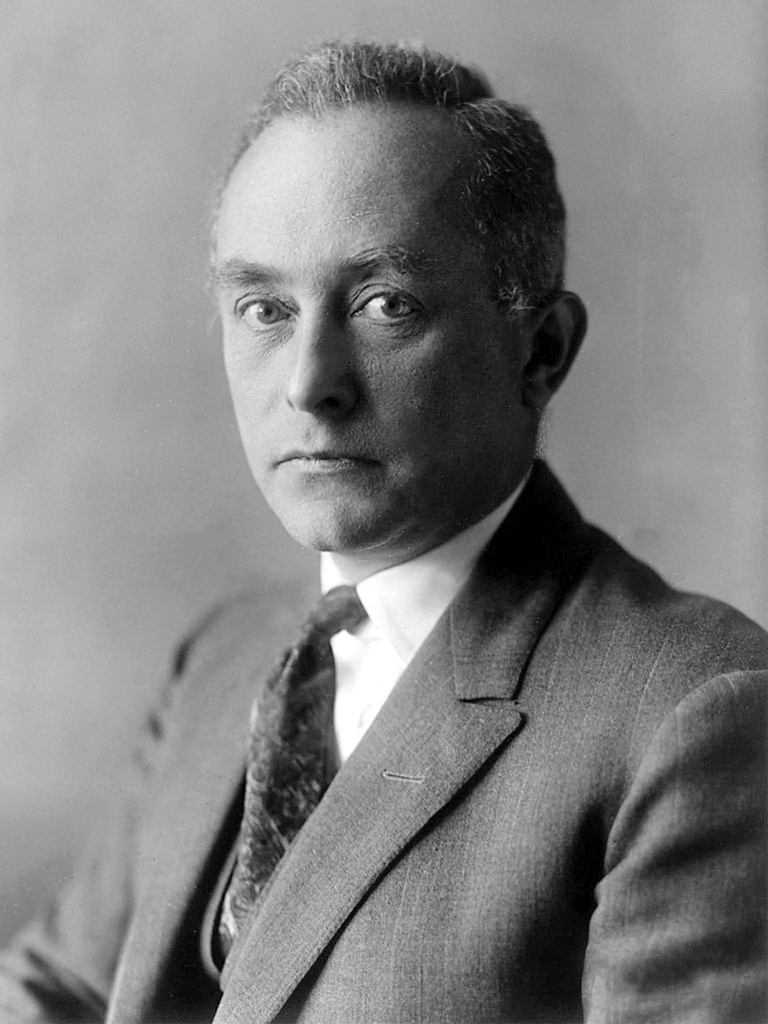
Portrait of Enrico Fermi

Enrico Fermi. Department of Energy-Office of Public Affairs, restored by Yann. Public domain.

Historical person · 20th Century

Enrico Fermi

1901–1954

Physicist whose work ranged from quantum theory to neutron experiments and leadership of the team that achieved the first controlled, self-sustaining nuclear chain reaction.

Explore Science and TechnologyRead biography ↓

Your next chapter starts here

Take history with you.

Create a free account or log in to download this guide as a PDF. Reading on the website is always free.

Create free account
Quick answers

What to know about Enrico Fermi

Direct answers to common questions about Enrico Fermi, followed by the full sourced biography.

Who was Enrico Fermi?

Physicist whose work ranged from quantum theory to neutron experiments and leadership of the team that achieved the first controlled, self-sustaining nuclear chain reaction. Physicist whose work ranged from quantum theory to neutron experiments and leadership of the team that achieved the first controlled, self-sustaining nuclear chain reaction.

What is Enrico Fermi known for?

Enrico Fermi is particularly known for Slow-neutron research, Chicago Pile-1, Nuclear physics.

When did Enrico Fermi live?

Enrico Fermi lived 1901–1954. This profile places that life within 20th Century and Science and Technology.

Why is Enrico Fermi historically significant?

On 2 December 1942 Fermi’s Chicago team achieved a controlled, self-sustaining chain reaction in Chicago Pile-1. The reactor’s arrangement of uranium and graphite, together with control and measurement systems, made the result a collective engineering and scientific achievement. It formed part of the Manhattan Project and helped enable plutonium production for nuclear weapons. Fermi.

Biography

Enrico Fermi: life and legacy

Overview

Physicist whose work ranged from quantum theory to neutron experiments and leadership of the team that achieved the first controlled, self-sustaining nuclear chain reaction.

A physicist across theory and experiment

Enrico Fermi completed his doctorate at Pisa in 1922 and subsequently worked in several European scientific centres. His career at Rome brought together theoretical calculation and laboratory investigation, a combination for which he became particularly respected. He contributed to the statistical description of particles and to the theory of beta decay, while also building a collaborative experimental group. Rather than dividing physics into separate intellectual and practical activities, Fermi moved between them. Calculations guided apparatus and measurements, while unexpected observations could force a theory or an experimental assumption to be reconsidered.

Neutrons and an important uncertainty

During the 1930s Fermi and his colleagues investigated what happened when materials were bombarded with neutrons. They found that slowing the neutrons could greatly increase certain nuclear effects, opening important new possibilities for experimentation. The interpretation was not always correct: some uranium results were initially understood without recognising nuclear fission. This distinction matters when looking back from later knowledge. Fermi received the 1938 Nobel Prize for his neutron work, not for having already explained every process involved. The episode illustrates how productive experiments can generate evidence whose full significance becomes clear only through subsequent research.

Leaving Fascist Italy

The Nobel ceremony provided an opportunity for Fermi’s family to leave Italy. Fascist antisemitic legislation directly threatened his Jewish wife Laura, and the family did not return from Stockholm to resume their previous life. They arrived in the United States in January 1939, where Fermi took a post at Columbia University. He soon joined efforts to investigate nuclear fission and the possibility of a chain reaction. His migration was therefore both a scientific turning point and a response to persecution. It belonged to the wider displacement that transformed research communities during the Nazi and Fascist era.

A chain reaction and its consequences

On 2 December 1942 Fermi’s Chicago team achieved a controlled, self-sustaining chain reaction in Chicago Pile-1. The reactor’s arrangement of uranium and graphite, together with control and measurement systems, made the result a collective engineering and scientific achievement. It formed part of the Manhattan Project and helped enable plutonium production for nuclear weapons. Fermi later worked at Los Alamos and returned to the University of Chicago after the war. His legacy includes fundamental research and teaching, but also the inseparable history of military mobilisation and the destructive applications of nuclear science.

Key moments

Timeline

  1. Born

    Enrico Fermi's life began in 1901.

  2. Doctorate at Pisa

    Completed his physics doctorate.

  3. Florence teaching

    Began teaching mathematical physics and mechanics.

  4. Slow-neutron experiments

    His group investigated neutron-induced reactions.

  5. Nobel Prize

    Received the physics prize and left Italy with his family.

  6. Columbia University

    Arrived in New York and continued nuclear research.

  7. Chicago Pile-1

    Led the team achieving a controlled self-sustaining chain reaction.

  8. Los Alamos

    Joined the leadership of the wartime laboratory.

  9. Return to Chicago

    Resumed university research and teaching after the war.

  10. Died

    Enrico Fermi died in 1954.

Connections

Related people

Keep reading

Related stories

Test your knowledge

Related quizzes

Evidence

Sources and further reading

  1. The life of Enrico FermiUS Department of Energy
  2. Manhattan Project scientists: Enrico FermiNational Park Service
  3. Rome, Stockholm, New YorkUniversity of Chicago Library
  4. Biographical records and portraitsNational Portrait Gallery
  5. Historical people and primary sourcesLibrary of Congress
  6. Historical figuresEncyclopaedia Britannica

Biographical claims are summarised from the sources above. Interpretation and disputed reputations are identified in the text rather than presented as settled fact.

Milestone unlocked!

Your completed quizzes are building a history of their own.