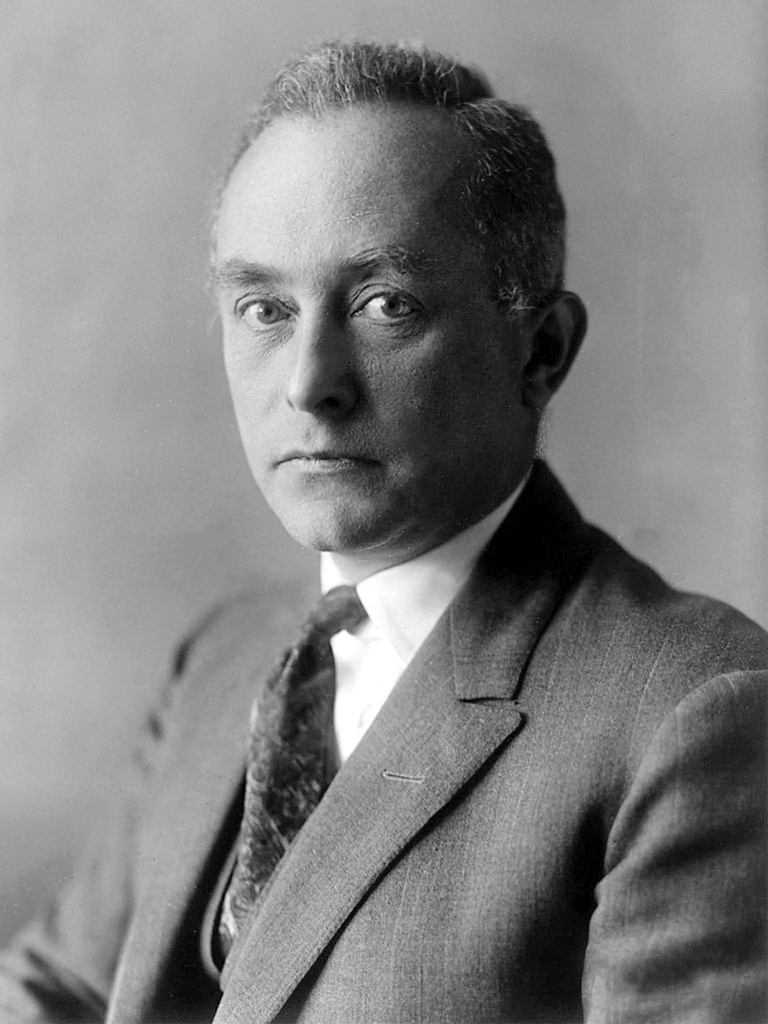
Portrait of Emmy Noether

Emmy Noether. Unknown photographer. Public domain.

Historical person · 20th Century

Emmy Noether

1882–1935

Mathematician whose work reshaped abstract algebra and explained fundamental connections between symmetry and conservation in physics.

Explore Science and TechnologyRead biography ↓

Your next chapter starts here

Take history with you.

Create a free account or log in to download this guide as a PDF. Reading on the website is always free.

Create free account
Quick answers

What to know about Emmy Noether

Direct answers to common questions about Emmy Noether, followed by the full sourced biography.

Who was Emmy Noether?

Mathematician whose work reshaped abstract algebra and explained fundamental connections between symmetry and conservation in physics. Mathematician whose work reshaped abstract algebra and explained fundamental connections between symmetry and conservation in physics.

What is Emmy Noether known for?

Emmy Noether is particularly known for Noether’s theorem, Abstract algebra, Ideal theory.

When did Emmy Noether live?

Emmy Noether lived 1882–1935. This profile places that life within 20th Century and Science and Technology.

Why is Emmy Noether historically significant?

The Nazi persecution of Jewish scholars forced Noether out of her German university career in 1933. Bryn Mawr College provided a research position, supported through efforts to assist displaced academics. She also visited the Institute for Advanced Study to lecture and discuss mathematics. Her letters and colleagues’ recollections show active seminars, student projects and the practical.

Biography

Emmy Noether: life and legacy

Overview

Mathematician whose work reshaped abstract algebra and explained fundamental connections between symmetry and conservation in physics.

Entering mathematics

Emmy Noether initially qualified to teach languages, but chose mathematics instead. University rules made that decision difficult: she first attended lectures with individual permission rather than enjoying ordinary student status. When women could enrol at Erlangen, she joined formally and completed a doctorate in 1907. Research did not immediately bring employment. She continued working without the secure academic position that a male contemporary might have expected. Her early calculation-heavy studies of invariants gradually gave way to a more structural approach, asking which general relationships explain many apparently different mathematical examples.

Symmetry and conservation

Invited to Göttingen by David Hilbert and Felix Klein in 1915, Noether worked on problems arising in mathematical physics. Her 1918 paper on invariant variational problems established connections between continuous symmetries and conservation laws within a precise mathematical framework. A symmetry here means that a relevant transformation leaves the governing description unchanged; it is not simply the visual balance of a shape. The results helped explain why conserved quantities arise in physical theories. Their importance extends beyond any one calculation, providing a method for investigating the structure of the equations themselves.

A different way to do algebra

Noether’s work on ideals and rings helped move algebra towards the systematic study of structures rather than isolated formulae. Her 1921 paper on ideal theory was a major step in that development. Teaching and discussion were central to how these ideas spread. The influential textbook Modern Algebra by Bartel van der Waerden drew partly on her Göttingen lectures. At Bryn Mawr she later used its first volume with students, combining demanding abstract work with research supervision. Her contribution therefore included an intellectual community and a teachable approach, not only a collection of named theorems.

Exile and a new teaching community

The Nazi persecution of Jewish scholars forced Noether out of her German university career in 1933. Bryn Mawr College provided a research position, supported through efforts to assist displaced academics. She also visited the Institute for Advanced Study to lecture and discuss mathematics. Her letters and colleagues’ recollections show active seminars, student projects and the practical insecurity of temporary support. She died in 1935, before this new career could develop further. The American years demonstrate both the damage of expulsion and the concrete importance of institutions willing to preserve scholarly work and livelihoods.

Key moments

Timeline

  1. Born

    Emmy Noether's life began in 1882.

  2. Language qualification

    Qualifies to teach English and French before choosing mathematics.

  3. Formal university enrolment

    Matriculates at Erlangen after rules governing women students change.

  4. Doctorate

    Completes advanced research under Paul Gordan.

  5. Göttingen invitation

    Joins mathematical discussions led by Hilbert and Klein.

  6. Invariant variational problems

    Publishes the paper connecting symmetries and conservation laws.

  7. Teaching qualification

    Receives permission to complete habilitation and lecture as a Privatdozent.

  8. Ideal theory

    Publishes a foundational study of ideals in rings.

  9. Exile in the United States

    Moves to Bryn Mawr after Nazi exclusion from her German position.

  10. American seminars

    Teaches advanced algebra and participates in discussions at Princeton.

  11. Died

    Emmy Noether died in 1935.

Connections

Related people

Keep reading

Related stories

Test your knowledge

Related quizzes

Evidence

Sources and further reading

  1. Emmy NoetherUniversity of St Andrews, MacTutor
  2. Honoring the Legacy of Emmy NoetherInstitute for Advanced Study
  3. Emmy Noether at Bryn Mawr: context and sourcesAmerican Institute of Physics
  4. Biographical records and portraitsNational Portrait Gallery
  5. Historical people and primary sourcesLibrary of Congress
  6. Historical figuresEncyclopaedia Britannica

Biographical claims are summarised from the sources above. Interpretation and disputed reputations are identified in the text rather than presented as settled fact.

Milestone unlocked!

Your completed quizzes are building a history of their own.

