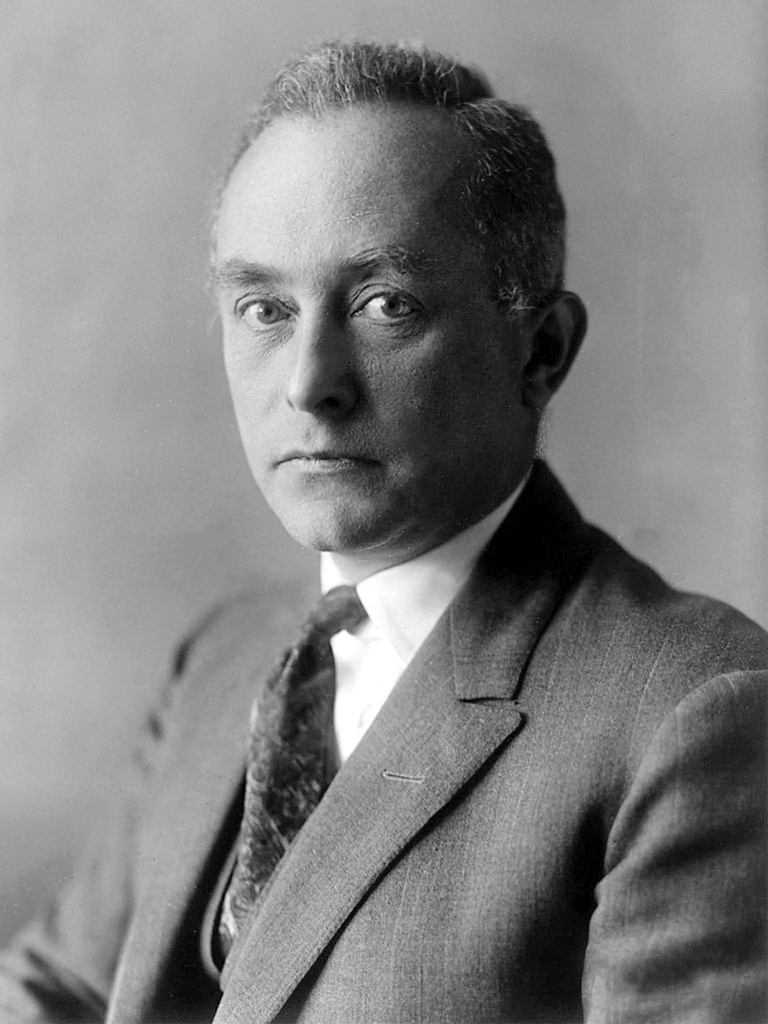
Portrait of Erwin Schrödinger

Erwin Schrödinger. Unknown author. Public domain.

Historical person · 20th Century

Erwin Schrödinger

1887–1961

Theoretical physicist whose wave mechanics transformed atomic theory and whose later writing explored the interpretation of quantum physics and the physical basis of life.

Explore Science and TechnologyRead biography ↓

Your next chapter starts here

Take history with you.

Create a free account or log in to download this guide as a PDF. Reading on the website is always free.

Create free account
Quick answers

What to know about Erwin Schrödinger

Direct answers to common questions about Erwin Schrödinger, followed by the full sourced biography.

Who was Erwin Schrödinger?

Theoretical physicist whose wave mechanics transformed atomic theory and whose later writing explored the interpretation of quantum physics and the physical basis of life. Theoretical physicist whose wave mechanics transformed atomic theory and whose later writing explored the interpretation of quantum physics and the physical basis of life.

What is Erwin Schrödinger known for?

Erwin Schrödinger is particularly known for Wave mechanics, Schrödinger equation, Quantum interpretation.

When did Erwin Schrödinger live?

Erwin Schrödinger lived 1887–1961. This profile places that life within 20th Century and Science and Technology.

Why is Erwin Schrödinger historically significant?

After leaving Germany in 1933, Schrödinger worked in Britain and Austria before Nazi expansion again disrupted his career. He arrived in Dublin in 1939 and became central to the Dublin Institute for Advanced Studies. Lectures delivered in 1943 developed into What Is Life?, a book that encouraged physicists to consider heredity and living systems. He returned to Vienna in 1956. His.

Biography

Erwin Schrödinger: life and legacy

Overview

Theoretical physicist whose wave mechanics transformed atomic theory and whose later writing explored the interpretation of quantum physics and the physical basis of life.

Training and an unsettled career

Erwin Schrödinger studied mathematics and physics in Vienna, completing his doctorate in 1910. Military service interrupted his academic career during the First World War, although he continued scientific work. A succession of posts eventually brought him to Zürich in 1921. The move placed him in an environment where he could concentrate on theoretical problems at a time when established accounts of atomic behaviour were breaking down. His interests were unusually broad, including colour, statistical physics and philosophy. This background helped him approach quantum problems through mathematical techniques drawn from several areas of physical science.

What wave mechanics achieved

In 1926 Schrödinger published the papers that established wave mechanics. Building on the developing idea that matter exhibited wave-like properties, he produced an equation that could describe allowed states and energies of quantum systems. It offered an alternative mathematical route to the emerging matrix mechanics associated with Heisenberg, Born and Jordan. The approaches proved compatible rather than rival descriptions of different worlds. Schrödinger shared the 1933 physics Nobel Prize with Paul Dirac. His equation became a central working tool, but agreement about successful calculations did not mean agreement about what the mathematical wave actually represented.

The cat and the problem of interpretation

Schrödinger’s famous cat was a thought experiment, not a report of an experiment performed on an animal. Proposed in 1935, it connected a microscopic quantum event to an ordinary large-scale outcome in order to expose difficulties in interpreting the theory. The example was intended to question an unsatisfactory description, not simply announce that everyday cats are simultaneously alive and dead. His scientific correspondence and arguments show how deeply the founders disagreed over measurement and reality. Understanding this purpose is more useful than treating the cat as a mysterious slogan detached from its original debate.

Exile, Dublin and a complicated record

After leaving Germany in 1933, Schrödinger worked in Britain and Austria before Nazi expansion again disrupted his career. He arrived in Dublin in 1939 and became central to the Dublin Institute for Advanced Studies. Lectures delivered in 1943 developed into What Is Life?, a book that encouraged physicists to consider heredity and living systems. He returned to Vienna in 1956. His intellectual achievements should not conceal the disturbing personal conduct documented by biographers, including pursuit and grooming of teenage girls. Scientific importance and an honest assessment of a person’s behaviour can be acknowledged together.

Key moments

Timeline

  1. Born

    Erwin Schrödinger's life began in 1887.

  2. Doctorate in Vienna

    Completed his doctoral studies in physics.

  3. Zürich appointment

    Began his productive period at Zürich.

  4. Wave mechanics

    Published his foundational quantum papers.

  5. Nobel Prize and departure

    Shared the physics prize and left Germany.

  6. Cat thought experiment

    Presented his challenge to quantum interpretation.

  7. Arrival in Dublin

    Moved to Ireland before joining the new institute.

  8. Lectures on life

    Delivered lectures later published as What Is Life?.

  9. Return to Vienna

    Returned to an Austrian academic appointment.

  10. Died

    Erwin Schrödinger died in 1961.

Connections

Related people

Keep reading

Related stories

Test your knowledge

Related quizzes

Evidence

Sources and further reading

  1. Erwin SchrödingerUniversity of Zürich
  2. Schrödinger, ErwinRoyal Irish Academy, Dictionary of Irish Biography
  3. 100 years of Schrödinger’s equationUniversity of Vienna
  4. Schrödinger: biographical exhibitionUniversity of Vienna Physics Library
  5. Biographical records and portraitsNational Portrait Gallery
  6. Historical people and primary sourcesLibrary of Congress
  7. Historical figuresEncyclopaedia Britannica

Biographical claims are summarised from the sources above. Interpretation and disputed reputations are identified in the text rather than presented as settled fact.

Milestone unlocked!

Your completed quizzes are building a history of their own.