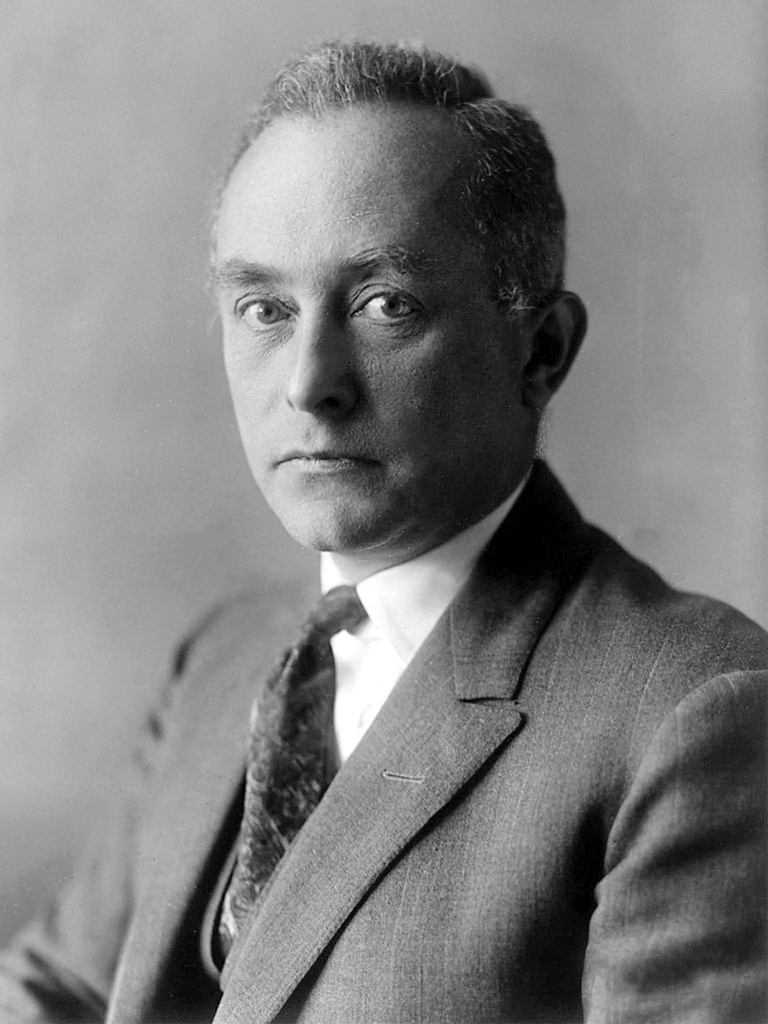
Portrait of Leonhard Euler

Leonhard Euler. Jakob Emanuel Handmann. Public domain.

Historical person · Early Modern

Leonhard Euler

1707–1783

Swiss mathematician whose exceptionally extensive work helped shape analysis, mechanics, number theory and the study of networks.

Explore Science and TechnologyRead biography ↓

Your next chapter starts here

Take history with you.

Create a free account or log in to download this guide as a PDF. Reading on the website is always free.

Create free account
Quick answers

What to know about Leonhard Euler

Direct answers to common questions about Leonhard Euler, followed by the full sourced biography.

Who was Leonhard Euler?

Swiss mathematician whose exceptionally extensive work helped shape analysis, mechanics, number theory and the study of networks. Swiss mathematician whose exceptionally extensive work helped shape analysis, mechanics, number theory and the study of networks.

What is Leonhard Euler known for?

Leonhard Euler is particularly known for Mathematical analysis, Königsberg bridges, Analytical mechanics.

When did Leonhard Euler live?

Leonhard Euler lived 1707–1783. This profile places that life within Early Modern and Science and Technology.

Why is Leonhard Euler historically significant?

Mechanica applied analytical methods to the motion of bodies under forces, including motion in a resisting medium as well as in idealised conditions. The treatment translated physical situations into equations that could be investigated systematically. Such work helped make calculus a working language of mechanics rather than simply a collection of geometrical procedures. The enormous.

Biography

Leonhard Euler: life and legacy

Overview

Swiss mathematician whose exceptionally extensive work helped shape analysis, mechanics, number theory and the study of networks.

A career across European academies

Leonhard Euler studied in Basel, where Johann Bernoulli encouraged his mathematical development. He moved to the academy in St Petersburg in 1727, later worked in Berlin, and returned to Russia in 1766. These institutions provided colleagues, salaries and practical commissions as well as opportunities for theoretical research. His interests reached into astronomy, navigation and engineering. Severe loss of sight did not end his work: family members and mathematical collaborators helped turn discussion and calculation into publishable texts. Remembering those collaborators gives a fuller account of his productivity than the picture of an entirely solitary genius.

Turning a walk into mathematics

The Königsberg bridge problem asked whether a walker could cross each of seven bridges exactly once. Euler’s decisive move was to set aside the precise shapes of the riverbanks and the lengths of the bridges. What mattered was how the land areas were connected. By examining the number of connections at each area, he showed that the required walk was impossible. The paper became an important ancestor of graph theory and topology. Its significance was not merely solving a recreational puzzle, but demonstrating that some questions depend on patterns of connection rather than ordinary measurements of distance or angle.

Functions at the centre

In the Introduction to the Analysis of the Infinite, published in 1748, Euler placed functions at the heart of a broad mathematical programme. Infinite series, products, continued fractions, exponential expressions and logarithms became interconnected subjects rather than isolated techniques. His use of notation helped establish a language through which later mathematicians could work. A modern student may therefore encounter Euler’s influence before learning anything about his life. That influence should not be confused with the claim that he created every concept from nothing: he reorganised, extended and connected a substantial inheritance from earlier mathematical research.

Mathematics for moving bodies

Mechanica applied analytical methods to the motion of bodies under forces, including motion in a resisting medium as well as in idealised conditions. The treatment translated physical situations into equations that could be investigated systematically. Such work helped make calculus a working language of mechanics rather than simply a collection of geometrical procedures. The enormous surviving body of Euler’s publications also includes problems far beyond that book. His importance rests both on individual results and on a sustained habit of turning difficult questions into explicit mathematical forms that other researchers could use, extend or challenge.

Key moments

Timeline

  1. Born

    Leonhard Euler's life began in 1707.

  2. Master’s degree

    Completes philosophical studies at Basel before concentrating on mathematics.

  3. Moves to St Petersburg

    Joins the academy’s scientific community.

  4. Physics appointment

    Becomes professor of physics at the academy.

  5. Senior mathematics chair

    Succeeds Daniel Bernoulli in the senior mathematical post.

  6. Bridge problem analysed

    The Euler Archive dates the composition of his Königsberg paper to this year; publication followed later.

  7. Mechanica

    Publishes the first volume of his analytical treatment of mechanics.

  8. Berlin period begins

    Moves to the Prussian capital for a long academy appointment.

  9. Introduction to analysis

    Publishes a major synthesis centred on functions and infinite processes.

  10. Returns to Russia

    Resumes work in St Petersburg, continuing despite increasing visual impairment.

  11. Died

    Leonhard Euler died in 1783.

Connections

Related people

Keep reading

Related stories

Test your knowledge

Related quizzes

Evidence

Sources and further reading

  1. Leonhard EulerUniversity of St Andrews, MacTutor
  2. Solutio problematis ad geometriam situs pertinentisUniversity of the Pacific Euler Archive
  3. Introductio in analysin infinitorum, volume 1University of the Pacific Euler Archive
  4. Mechanica, volume 1University of the Pacific Euler Archive
  5. Biographical records and portraitsNational Portrait Gallery
  6. Historical people and primary sourcesLibrary of Congress
  7. Historical figuresEncyclopaedia Britannica

Biographical claims are summarised from the sources above. Interpretation and disputed reputations are identified in the text rather than presented as settled fact.

Milestone unlocked!

Your completed quizzes are building a history of their own.