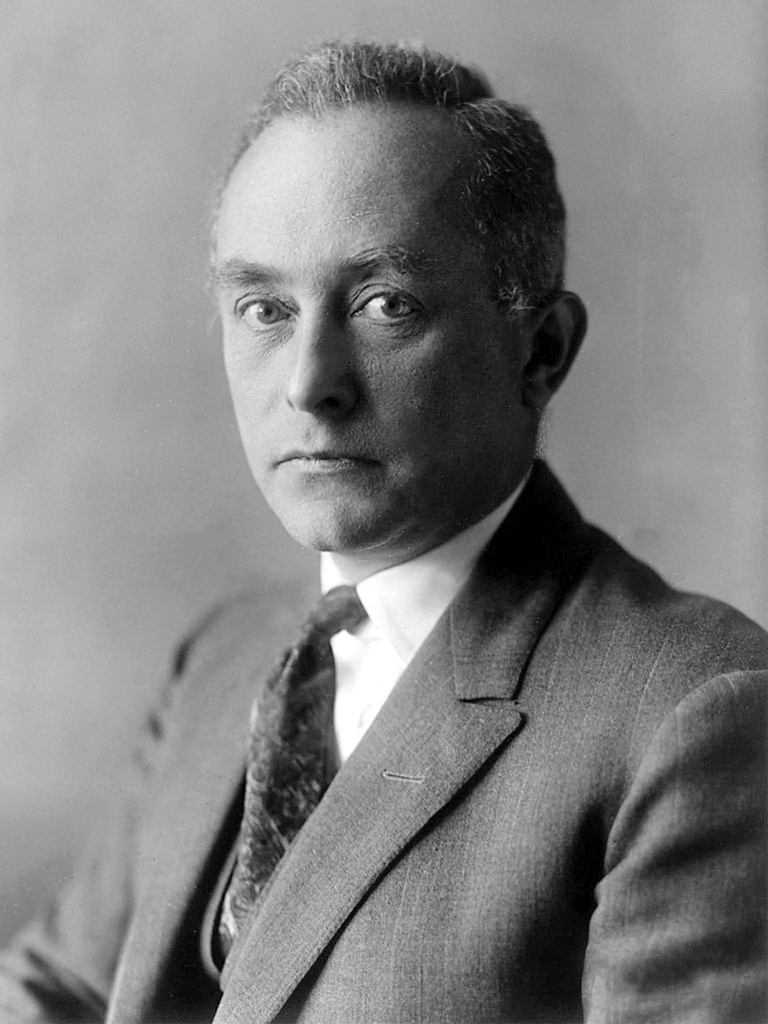
Portrait of James Clerk Maxwell

James Clerk Maxwell. Unknown author Unknown author. Public domain.

Historical person · 19th Century

James Clerk Maxwell

1831–1879

Physicist who developed a mathematical theory linking electricity, magnetism and light, while contributing to colour vision, gas theory and experimental research.

Explore Science and TechnologyRead biography ↓

Your next chapter starts here

Take history with you.

Create a free account or log in to download this guide as a PDF. Reading on the website is always free.

Create free account
Quick answers

What to know about James Clerk Maxwell

Direct answers to common questions about James Clerk Maxwell, followed by the full sourced biography.

Who was James Clerk Maxwell?

Physicist who developed a mathematical theory linking electricity, magnetism and light, while contributing to colour vision, gas theory and experimental research. Physicist who developed a mathematical theory linking electricity, magnetism and light, while contributing to colour vision, gas theory and experimental research.

What is James Clerk Maxwell known for?

James Clerk Maxwell is particularly known for Electromagnetic theory, Kinetic theory of gases, Cavendish Laboratory.

When did James Clerk Maxwell live?

James Clerk Maxwell lived 1831–1879. This profile places that life within 19th Century and Science and Technology.

Why is James Clerk Maxwell historically significant?

In 1871 Maxwell became Cambridge’s first professor of experimental physics and directed the creation of the Cavendish Laboratory. The laboratory opened in 1874, establishing a place for systematic experimental training and investigation. He also edited Henry Cavendish’s electrical researches, making earlier work available to new readers. Maxwell’s legacy therefore includes institutions.

Biography

James Clerk Maxwell: life and legacy

Overview

Physicist who developed a mathematical theory linking electricity, magnetism and light, while contributing to colour vision, gas theory and experimental research.

A wide-ranging mathematical education

Maxwell grew up between Edinburgh and the family estate at Glenlair. His early interest in geometry produced a paper on oval curves while he was still a schoolboy. Study at Edinburgh and Cambridge developed an ability to move between mathematical abstraction and practical problems. As a professor in Aberdeen, he investigated the stability of Saturn’s rings and argued that they could not remain stable as a single solid structure. A multitude of separate particles offered a workable explanation. This was characteristic of his approach: test what physical arrangements could actually persist, rather than merely describe their appearance.

Electricity, magnetism and light

Michael Faraday had described electrical and magnetic effects through fields and lines of force. Maxwell developed mathematical descriptions that linked such effects and explored how disturbances might propagate. The calculated speed agreed closely with the measured speed of light, supporting the conclusion that light was electromagnetic. His 1864 presentation and 1865 publication were major steps, followed by the 1873 Treatise on Electricity and Magnetism. The compact equations taught today reflect later reformulations as well as Maxwell’s work. He did not build radio broadcasting, but his theory supplied essential foundations for understanding the waves that later experimenters generated and detected.

Colour and the behaviour of gases

Maxwell also investigated colour perception and demonstrated colour reproduction at the Royal Institution in 1861. This research concerned how combinations of coloured light could produce perceived colours, not simply the invention of a new pigment. In kinetic theory he treated a gas as an immense population of moving particles whose speeds could be described statistically. Instead of following every molecule, the approach related distributions of motion to observable properties. Experimental work on gases helped connect these calculations with measurement. His range reminds us that major nineteenth-century physicists often worked across boundaries that later became separate specialisms.

Building an experimental institution

In 1871 Maxwell became Cambridge’s first professor of experimental physics and directed the creation of the Cavendish Laboratory. The laboratory opened in 1874, establishing a place for systematic experimental training and investigation. He also edited Henry Cavendish’s electrical researches, making earlier work available to new readers. Maxwell’s legacy therefore includes institutions and scholarship as well as equations. He died in 1879, before many practical consequences of electromagnetic theory emerged. Later success should not make his ideas appear inevitable: turning physical analogies and incomplete measurements into a coherent mathematical account required sustained revision, collaboration and careful judgement about what the mathematics meant.

Key moments

Timeline

  1. Born

    James Clerk Maxwell's life began in 1831.

  2. First mathematical paper

    Work on oval curves was presented to the Royal Society of Edinburgh.

  3. Edinburgh studies

    Began university study before moving to Cambridge.

  4. Cambridge distinction

    Completed the Mathematical Tripos with high honours.

  5. Aberdeen professorship

    Became professor of natural philosophy at Marischal College.

  6. Saturn’s rings prize

    Won the Adams Prize for analysing the rings’ stability.

  7. King’s College London

    Moved to a new professorship during a highly productive period.

  8. Colour demonstration

    Presented colour reproduction experiments at the Royal Institution.

  9. Electromagnetic paper

    Published a developed mathematical theory of the electromagnetic field.

  10. Cavendish leadership

    Became Cambridge’s first professor of experimental physics.

  11. Treatise published

    Brought together his major electrical and magnetic investigations.

  12. Laboratory opened

    The Cavendish Laboratory began its institutional life.

  13. Died

    James Clerk Maxwell died in 1879.

Connections

Related people

Keep reading

Related stories

Test your knowledge

Related quizzes

Evidence

Sources and further reading

  1. James Clerk MaxwellUniversity of St Andrews
  2. James Clerk MaxwellKing’s College London
  3. Who was James Clerk Maxwell?James Clerk Maxwell Foundation
  4. Biographical records and portraitsNational Portrait Gallery
  5. Historical people and primary sourcesLibrary of Congress
  6. Historical figuresEncyclopaedia Britannica

Biographical claims are summarised from the sources above. Interpretation and disputed reputations are identified in the text rather than presented as settled fact.

Milestone unlocked!

Your completed quizzes are building a history of their own.