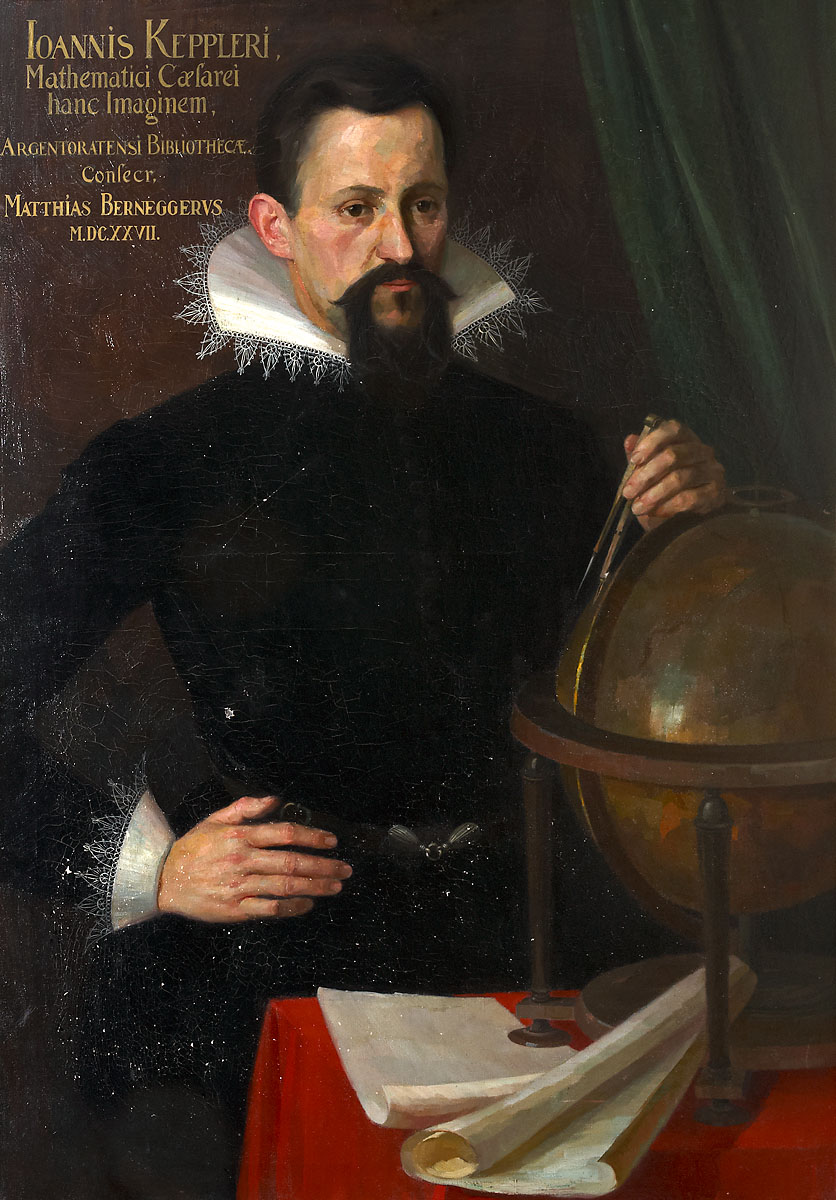
Portrait of Carl Friedrich Gauss

Carl Friedrich Gauss. Christian Albrecht Jensen. Public domain.

Historical person · 19th Century

Carl Friedrich Gauss

1777–1855

German mathematician and astronomer whose work ranged from number theory and geometry to planetary orbits, surveying and terrestrial magnetism.

Explore Science and TechnologyRead biography ↓

Your next chapter starts here

Take history with you.

Create a free account or log in to download this guide as a PDF. Reading on the website is always free.

Create free account
Quick answers

What to know about Carl Friedrich Gauss

Direct answers to common questions about Carl Friedrich Gauss, followed by the full sourced biography.

Who was Carl Friedrich Gauss?

German mathematician and astronomer whose work ranged from number theory and geometry to planetary orbits, surveying and terrestrial magnetism. German mathematician and astronomer whose work ranged from number theory and geometry to planetary orbits, surveying and terrestrial magnetism.

What is Carl Friedrich Gauss known for?

Carl Friedrich Gauss is particularly known for Disquisitiones Arithmeticae, Recovery of Ceres, Geodesy and magnetism.

When did Carl Friedrich Gauss live?

Carl Friedrich Gauss lived 1777–1855. This profile places that life within 19th Century and Science and Technology.

Why is Carl Friedrich Gauss historically significant?

Collaboration with the physicist Wilhelm Weber opened another major field of work in terrestrial magnetism. In 1833 they established an electromagnetic telegraph connection between their workplaces in Göttingen. Signals travelling along wires above the town made scientific communication itself an experimental subject. The apparatus was an early research installation rather than a modern.

Biography

Carl Friedrich Gauss: life and legacy

Overview

German mathematician and astronomer whose work ranged from number theory and geometry to planetary orbits, surveying and terrestrial magnetism.

Building a mathematical career

Carl Friedrich Gauss benefited from the support of the Duke of Brunswick, which made advanced study possible. He attended Göttingen and completed a doctorate at Helmstedt in 1799. His early research included the construction of a regular seventeen-sided polygon using ruler and compass, a striking advance in a problem with ancient roots. Disquisitiones Arithmeticae, published in 1801, organised major results in number theory. Rather than treating arithmetic as a collection of tricks, the book presented connected structures and proofs. Its influence rested on the power of those methods as well as on individual discoveries.

Finding a lost object in the sky

Giuseppe Piazzi discovered Ceres in 1801, but observations covered only a small part of its apparent motion before it became difficult to observe. Gauss calculated a likely orbit from the limited data. Franz Xaver von Zach’s subsequent recovery of Ceres close to the predicted position demonstrated the usefulness of the calculation. Gauss did not discover Ceres, and the result depended on observational work by others. His contribution was to turn incomplete measurements into a testable prediction. It showed how mathematics and careful observation could reinforce each other in a practical astronomical problem.

An observatory and the measured Earth

In 1807 Gauss became director of the Göttingen observatory, a position he retained for the rest of his life. Astronomy did not confine his interests to the sky. Surveying and the geometry of curved surfaces connected mathematical questions with the measurement of the Earth. Accurate instruments still produced imperfect observations, making methods for handling error central to this work. His research helped strengthen the mathematical foundations of cartography and geodesy. The observatory was therefore more than a place for looking through telescopes: it was a centre for computation, measurement and the investigation of physical relationships.

Working with Wilhelm Weber

Collaboration with the physicist Wilhelm Weber opened another major field of work in terrestrial magnetism. In 1833 they established an electromagnetic telegraph connection between their workplaces in Göttingen. Signals travelling along wires above the town made scientific communication itself an experimental subject. The apparatus was an early research installation rather than a modern commercial communications network. Gauss’s career illustrates the traffic between abstract reasoning and practical instruments: questions about numbers coexisted with problems of distance, magnetic force and reliable measurement. His reputation as a mathematician should not hide the observatory work and collaborations that occupied so much of his professional life.

Key moments

Timeline

  1. Born

    Carl Friedrich Gauss's life began in 1777.

  2. Collegium Carolinum

    Begins advanced study in Brunswick with ducal financial support.

  3. Studies at Göttingen

    Continues his mathematical education at the university.

  4. Seventeen-sided polygon

    Establishes that a regular seventeen-sided polygon can be constructed with ruler and compass.

  5. Doctorate at Helmstedt

    Submits work on the fundamental theorem of algebra.

  6. Number theory and Ceres

    Publishes Disquisitiones Arithmeticae and calculates an orbit that helps astronomers recover Ceres.

  7. Observatory directorship

    Moves to Göttingen to direct its astronomical work.

  8. Celestial-motion treatise

    Publishes a major account of methods for determining celestial orbits.

  9. Telegraph with Weber

    An electromagnetic connection links their scientific workplaces.

  10. Died

    Carl Friedrich Gauss died in 1855.

Connections

Related people

Keep reading

Related stories

Test your knowledge

Related quizzes

Evidence

Sources and further reading

  1. Carl Friedrich GaussUniversity of St Andrews, MacTutor
  2. Carl Friedrich GaußUniversity of Göttingen
  3. Ceres: Keeping Well-Guarded Secrets for 215 YearsNASA Jet Propulsion Laboratory
  4. Biographie: Carl Friedrich GaußGauss Society Göttingen
  5. Biographical records and portraitsNational Portrait Gallery
  6. Historical people and primary sourcesLibrary of Congress
  7. Historical figuresEncyclopaedia Britannica

Biographical claims are summarised from the sources above. Interpretation and disputed reputations are identified in the text rather than presented as settled fact.

Milestone unlocked!

Your completed quizzes are building a history of their own.