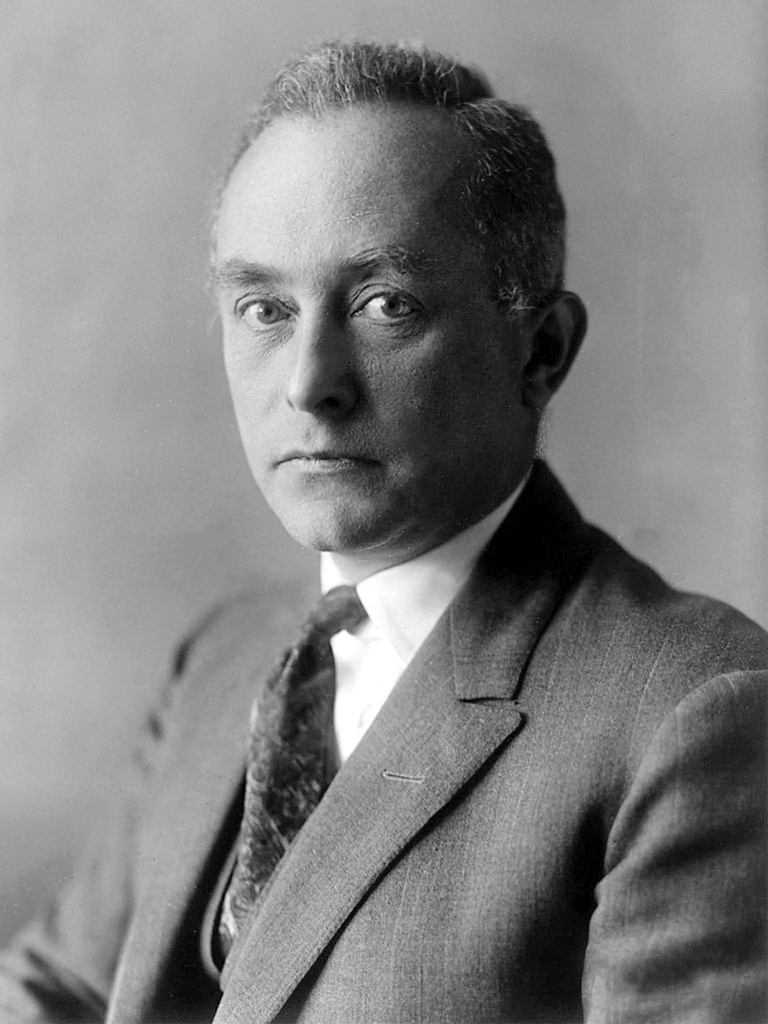
Portrait of Werner Heisenberg

Werner Heisenberg. Unknown author. CC BY-SA 3.0 de.

Historical person · 20th Century

Werner Heisenberg

1901–1976

A founder of quantum mechanics whose uncertainty principle reshaped physics and whose leadership in Germany’s wartime nuclear research remains historically contested.

Explore Science and TechnologyRead biography ↓

Your next chapter starts here

Take history with you.

Create a free account or log in to download this guide as a PDF. Reading on the website is always free.

Create free account
Quick answers

What to know about Werner Heisenberg

Direct answers to common questions about Werner Heisenberg, followed by the full sourced biography.

Who was Werner Heisenberg?

A founder of quantum mechanics whose uncertainty principle reshaped physics and whose leadership in Germany’s wartime nuclear research remains historically contested. A founder of quantum mechanics whose uncertainty principle reshaped physics and whose leadership in Germany’s wartime nuclear research remains historically contested.

What is Werner Heisenberg known for?

Werner Heisenberg is particularly known for Matrix mechanics, Uncertainty principle, German uranium project.

When did Werner Heisenberg live?

Werner Heisenberg lived 1901–1976. This profile places that life within 20th Century and Science and Technology.

Why is Werner Heisenberg historically significant?

After internment in Britain, Heisenberg returned to German scientific work and helped rebuild research institutions. His institute moved from Göttingen to Munich in 1958, and he supported international scientific cooperation, including the development of European high-energy physics. In 1957 he joined the Göttingen declaration opposing nuclear armament of the West German armed forces..

Biography

Werner Heisenberg: life and legacy

Overview

A founder of quantum mechanics whose uncertainty principle reshaped physics and whose leadership in Germany’s wartime nuclear research remains historically contested.

A new mathematical approach

Werner Heisenberg studied in Munich and worked with leading theorists including Max Born and Niels Bohr. In the mid-1920s he helped replace inadequate pictures of electrons following ordinary planetary orbits with a new mathematical description. Born and Pascual Jordan were central collaborators in developing matrix mechanics. The approach concentrated on relationships connected to observable transitions rather than an imagined classical path inside the atom. Heisenberg received the physics Nobel Prize for 1932, presented in 1933. The shared intellectual setting matters: quantum mechanics emerged through intensive collaboration and argument, not through one person working without predecessors.

What uncertainty means

In 1927 Heisenberg formulated the uncertainty relation associated with his name. Quantum theory places a limit on how sharply certain pairs of properties, notably position and momentum, can be specified together in a state. This is not simply a complaint that laboratory equipment is imperfect. Early explanations often used the disturbance caused by measurement, but the relation is more fundamental than an observer accidentally interfering with an otherwise ordinary object. Debates with Bohr and other physicists helped clarify its implications. It became one of the defining differences between quantum theory and familiar classical descriptions.

Research under National Socialism

Heisenberg remained in Germany after the Nazi seizure of power. He faced attacks from ideological opponents of modern physics, yet also became a leading figure in the wartime uranium research programme and directed the Kaiser Wilhelm Institute for Physics. The programme did not produce an atomic bomb or a working self-sustaining reactor during the war. Its failure should not automatically be interpreted as deliberate resistance. Questions about intentions, resources and scientific judgement require evidence, and his later explanations have remained controversial. Both persecution within Nazi scientific politics and participation in state research belong in the record.

Postwar reconstruction and responsibility

After internment in Britain, Heisenberg returned to German scientific work and helped rebuild research institutions. His institute moved from Göttingen to Munich in 1958, and he supported international scientific cooperation, including the development of European high-energy physics. In 1957 he joined the Göttingen declaration opposing nuclear armament of the West German armed forces. Such later positions do not settle arguments about his wartime actions, but they form part of his subsequent public role. His biography connects theoretical innovation with the difficult responsibilities created when scientific expertise becomes important to governments and military projects.

Key moments

Timeline

  1. Born

    Werner Heisenberg's life began in 1901.

  2. Doctorate

    Completed his doctoral studies in Munich.

  3. Quantum mechanics

    Developed the approach that became matrix mechanics.

  4. Uncertainty and Leipzig

    Published his uncertainty argument and became professor at Leipzig.

  5. Nobel ceremony

    Received the physics prize awarded for 1932.

  6. Institute leadership

    Took charge of the Kaiser Wilhelm Institute for Physics.

  7. Internment

    Was interned in Britain with other German nuclear researchers.

  8. Göttingen declaration

    Opposed nuclear armament of West German forces.

  9. Move to Munich

    His physics institute relocated from Göttingen to Munich.

  10. Died

    Werner Heisenberg died in 1976.

Connections

Related people

Keep reading

Related stories

Test your knowledge

Related quizzes

Evidence

Sources and further reading

  1. Werner HeisenbergHaus der Geschichte, LeMO
  2. Uncertainty relationsAmerican Institute of Physics
  3. Institute historyMax Planck Institute for Physics
  4. Werner Heisenberg at Harnack HouseMax Planck Society
  5. Biographical records and portraitsNational Portrait Gallery
  6. Historical people and primary sourcesLibrary of Congress
  7. Historical figuresEncyclopaedia Britannica

Biographical claims are summarised from the sources above. Interpretation and disputed reputations are identified in the text rather than presented as settled fact.

Milestone unlocked!

Your completed quizzes are building a history of their own.