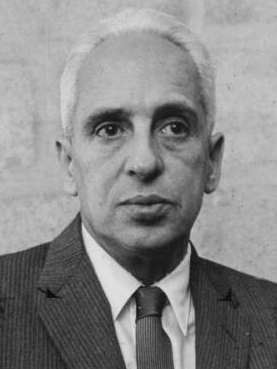
Portrait of William Harvey

William Harvey. After Daniël Mijtens. Public domain.

Historical person · Early Modern

William Harvey

1578–1657

Physician whose experiments and calculations established the circulation of blood, connecting anatomical observation with a new explanation of the heart’s action.

Explore History of MedicineRead biography ↓

Your next chapter starts here

Take history with you.

Create a free account or log in to download this guide as a PDF. Reading on the website is always free.

Create free account
Quick answers

What to know about William Harvey

Direct answers to common questions about William Harvey, followed by the full sourced biography.

Who was William Harvey?

Physician whose experiments and calculations established the circulation of blood, connecting anatomical observation with a new explanation of the heart’s action. Physician whose experiments and calculations established the circulation of blood, connecting anatomical observation with a new explanation of the heart’s action.

What is William Harvey known for?

William Harvey is particularly known for Circulation of the blood, De motu cordis, Lumleian lectures.

When did William Harvey live?

William Harvey lived 1578–1657. This profile places that life within Early Modern and History of Medicine.

Why is William Harvey historically significant?

Harvey’s life also belonged to the political world of the Stuart monarchy and Civil War. Royal patronage supported aspects of his career, and he remained loyal to Charles I. His later benefactions to the College of Physicians included books, instruments, specimens and support for a new library building. The donation was announced in 1651 and completed in 1654. Much was subsequently lost.

Biography

William Harvey: life and legacy

Overview

Physician whose experiments and calculations established the circulation of blood, connecting anatomical observation with a new explanation of the heart’s action.

Learning anatomy across institutions

Harvey studied at Cambridge and then Padua, receiving his medical degree there in 1602. Padua’s anatomical tradition provided an important foundation for his later investigations. Returning to England, he established a London career and became a fellow of the College of Physicians in 1607. Appointment at St Bartholomew’s Hospital followed in 1609. These positions linked clinical responsibility with opportunities to examine the body and teach. His work did not emerge outside established medicine: it developed through institutions whose inherited explanations he would eventually challenge using observation, dissection and argument.

Why blood had to circulate

Harvey examined the action of the heart and the direction in which blood moved through vessels. Valves helped constrain that movement, while calculations about the quantity passing through the heart made continuous production and consumption of fresh blood implausible. Blood must instead return and move repeatedly through the system. The argument combined different kinds of evidence; it was not based on a single dramatic observation. Experiments with ligatures and veins made aspects of the process visible, while observations across animals allowed comparison. The heart’s contraction became central to explaining movement rather than merely an accompaniment to a mysterious ebb and flow.

Publication and the limits of the evidence

De motu cordis appeared in 1628, setting out the case for circulation. Harvey had already developed material through the Lumleian lectures, which he began delivering in 1616 after appointment the previous year. Publication exposed the argument to readers beyond the lecture room and made its reasoning available for dispute and testing. His investigation did not provide every detail of the modern cardiovascular system. Recognising the larger pattern of circulation preceded complete knowledge of the smallest connections. That distinction is important: a persuasive explanation can establish a fundamental relationship while leaving mechanisms that later researchers must still investigate.

Court service and a lasting institutional gift

Harvey’s life also belonged to the political world of the Stuart monarchy and Civil War. Royal patronage supported aspects of his career, and he remained loyal to Charles I. His later benefactions to the College of Physicians included books, instruments, specimens and support for a new library building. The donation was announced in 1651 and completed in 1654. Much was subsequently lost in the Great Fire, but the commitment to preserving and sharing knowledge survived institutionally. Remembering both the experiments and the collections gives a fuller picture than treating Harvey solely as the author of one famous medical discovery.

Key moments

Timeline

  1. Born

    William Harvey's life began in 1578.

  2. Padua medical degree

    Completes medical training at the University of Padua.

  3. London practice

    Settles in London after returning to England.

  4. College fellow

    Elected a fellow of the College of Physicians.

  5. Hospital appointment

    Becomes physician at St Bartholomew’s Hospital.

  6. Lumleian lectureship

    Appointed to the anatomical teaching role.

  7. Lectures begin

    Uses anatomical teaching to develop and communicate his investigations.

  8. De motu cordis published

    Publishes his explanation of the circulation of blood.

  9. Library gift announced

    Plans a major donation of books, instruments and specimens.

  10. Benefaction completed

    The College’s library and collections receive his support.

  11. Died

    William Harvey died in 1657.

Connections

Related people

Keep reading

Related stories

Test your knowledge

Related quizzes

Evidence

Sources and further reading

  1. William HarveyRoyal College of Physicians Museum
  2. Ceaseless Motion exhibitionRoyal College of Physicians
  3. Meet the donorsRoyal College of Physicians Museum
  4. Teaching doctorsRoyal College of Physicians Museum
  5. Biographical records and portraitsNational Portrait Gallery
  6. Historical people and primary sourcesLibrary of Congress
  7. Historical figuresEncyclopaedia Britannica

Biographical claims are summarised from the sources above. Interpretation and disputed reputations are identified in the text rather than presented as settled fact.

Milestone unlocked!

Your completed quizzes are building a history of their own.