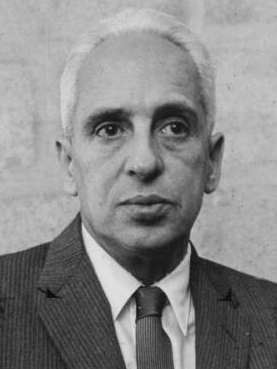
Portrait of John Snow

John Snow. Unknown artist. Public domain.

Historical person · 19th Century

John Snow

1813–1858

Physician and anaesthesia specialist whose investigations connected cholera with contaminated water, using household evidence and comparisons between water supplies.

Explore History of MedicineRead biography ↓

Your next chapter starts here

Take history with you.

Create a free account or log in to download this guide as a PDF. Reading on the website is always free.

Create free account
Quick answers

What to know about John Snow

Direct answers to common questions about John Snow, followed by the full sourced biography.

Who was John Snow?

Physician and anaesthesia specialist whose investigations connected cholera with contaminated water, using household evidence and comparisons between water supplies. Physician and anaesthesia specialist whose investigations connected cholera with contaminated water, using household evidence and comparisons between water supplies.

What is John Snow known for?

John Snow is particularly known for Waterborne cholera, Broad Street investigation, Water-company comparison.

When did John Snow live?

John Snow lived 1813–1858. This profile places that life within 19th Century and History of Medicine.

Why is John Snow historically significant?

Snow’s work also compared households supplied by different water companies in south London. The companies served overlapping neighbourhoods but drew water of differing quality, creating an opportunity to examine mortality without simply comparing rich districts with poor ones. The greatly different outcomes supported the argument for waterborne transmission. His expanded 1855 account.

Biography

John Snow: life and legacy

Overview

Physician and anaesthesia specialist whose investigations connected cholera with contaminated water, using household evidence and comparisons between water supplies.

A medical career beyond the famous map

Snow grew up in York and entered medical apprenticeship before pursuing further training in London. He qualified through the Royal College of Surgeons in 1838 and obtained an MD in 1844. His professional reputation included expertise in anaesthesia, a rapidly developing field after the introduction of ether and chloroform. He studied their administration carefully and attended Queen Victoria during childbirth in 1853 and 1857. This work should not disappear behind the familiar image of the cholera map. Snow’s career joined close clinical observation with an interest in how substances entered and affected the body.

Asking how cholera actually travelled

Snow argued that cholera was communicated through contaminated material reaching the digestive system, particularly through drinking water. His 1849 publication set out this position before the celebrated Soho outbreak. It challenged explanations centred on bad air, but asserting an alternative was not enough: he needed evidence showing why some people became ill while others did not. Households, workplaces and drinking habits therefore became relevant units of investigation. The important question was exposure, not simply whether an area looked dirty or smelled unpleasant. That approach helped make disease patterns a subject for systematic comparison.

Broad Street was more than a picture

During the 1854 outbreak around Broad Street, Snow investigated deaths and water use, helping persuade local authorities to remove the pump handle. His map made the concentration of cases visible, but it should not be treated as a magical image that independently discovered the cause and instantly stopped the epidemic. Interviews and exceptions mattered too. People who lived away from the pump could still drink its water, while nearby residents might obtain water elsewhere. The outbreak was already declining when the handle was removed. These details make the investigation more convincing historically, not less significant.

Comparing water supplies across London

Snow’s work also compared households supplied by different water companies in south London. The companies served overlapping neighbourhoods but drew water of differing quality, creating an opportunity to examine mortality without simply comparing rich districts with poor ones. The greatly different outcomes supported the argument for waterborne transmission. His expanded 1855 account brought together these investigations. Snow died in 1858, before his work acquired its later iconic status in epidemiology. Its lasting value lies in tracing exposure, examining exceptions and comparing populations, rather than teaching that every public-health problem can be solved by drawing a map.

Key moments

Timeline

  1. Born

    John Snow's life began in 1813.

  2. Medical apprenticeship

    Begins practical medical training in northern England.

  3. Moves to London

    Continues formal medical education.

  4. Surgical qualification

    Qualifies through the Royal College of Surgeons.

  5. Medical degree

    Obtains an MD.

  6. Anaesthesia research

    Develops and publishes work on the administration of anaesthetics.

  7. Cholera theory published

    Publishes On the Mode of Communication of Cholera.

  8. Attends Queen Victoria

    Administers anaesthesia during royal childbirth.

  9. Cholera investigations

    Studies Broad Street and contrasts mortality between water supplies.

  10. Expanded cholera account

    Publishes a second edition presenting the accumulated evidence.

  11. Further royal attendance

    Again attends Queen Victoria during childbirth.

  12. Died

    John Snow died in 1858.

Connections

Related people

Keep reading

Related stories

Test your knowledge

Related quizzes

Evidence

Sources and further reading

  1. John Snow introductionUCLA Fielding School of Public Health
  2. Snow’s professional yearsUCLA Fielding School of Public Health
  3. Map, myth and errorUCLA Fielding School of Public Health
  4. John Snow and choleraRoyal College of Surgeons
  5. The Grand ExperimentUCLA Fielding School of Public Health
  6. Biographical records and portraitsNational Portrait Gallery
  7. Historical people and primary sourcesLibrary of Congress
  8. Historical figuresEncyclopaedia Britannica

Biographical claims are summarised from the sources above. Interpretation and disputed reputations are identified in the text rather than presented as settled fact.

Milestone unlocked!

Your completed quizzes are building a history of their own.