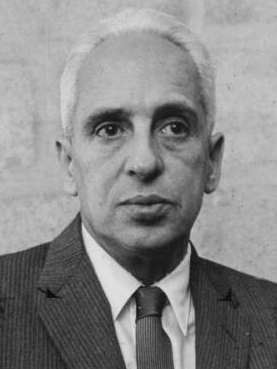
Portrait of Elizabeth Garrett Anderson

Elizabeth Garrett Anderson. Attributed to Reginald Grenville Eves. Public domain.

Historical person · 19th Century

Elizabeth Garrett Anderson

1836–1917

Physician who qualified in Britain despite institutional resistance, founded a hospital staffed by women and helped build women’s medical education.

Explore History of MedicineRead biography ↓

Your next chapter starts here

Take history with you.

Create a free account or log in to download this guide as a PDF. Reading on the website is always free.

Create free account
Quick answers

What to know about Elizabeth Garrett Anderson

Direct answers to common questions about Elizabeth Garrett Anderson, followed by the full sourced biography.

Who was Elizabeth Garrett Anderson?

Physician who qualified in Britain despite institutional resistance, founded a hospital staffed by women and helped build women’s medical education. Physician who qualified in Britain despite institutional resistance, founded a hospital staffed by women and helped build women’s medical education.

What is Elizabeth Garrett Anderson known for?

Elizabeth Garrett Anderson is particularly known for Medical qualification in 1865, New Hospital for Women, London School of Medicine for Women.

When did Elizabeth Garrett Anderson live?

Elizabeth Garrett Anderson lived 1836–1917. This profile places that life within 19th Century and History of Medicine.

Why is Elizabeth Garrett Anderson historically significant?

After marrying James Skelton Anderson, she continued a professional career rather than treating marriage as its endpoint. She supported women’s suffrage, alongside her sister Millicent Fawcett, and in 1908 became mayor of Aldeburgh. Her daughter Louisa also entered medicine. Garrett Anderson’s opportunities were assisted by family resources, which many aspiring women lacked, and progress.

Biography

Elizabeth Garrett Anderson: life and legacy

Overview

Physician who qualified in Britain despite institutional resistance, founded a hospital staffed by women and helped build women’s medical education.

Finding a route into medicine

Elizabeth Garrett grew up in a prosperous family with Suffolk connections and encountered campaigns for women’s education and employment. Meeting Elizabeth Blackwell helped make a medical career seem possible, but established British training routes remained largely closed to women. Garrett sought instruction wherever she could obtain it, including hospital experience and private teaching. The problem was not simply personal prejudice from individual doctors. Institutions controlled access to classes, examinations and recognised qualifications. Her eventual success depended on identifying a route through those rules rather than waiting for the entire system to agree that women should enter.

Qualification and a hospital

In 1865 Garrett passed the Society of Apothecaries examinations. The Society then tightened its rules, preventing other women from immediately following the same route. She later obtained a Paris medical degree in 1870, having learned French to pursue it. Her clinical work developed into the New Hospital for Women in 1872. Women doctors treating women patients was both a practical service and a demonstration that professional competence was not restricted to men. It also provided something a certificate alone could not: an institution where women could gain experience and exercise responsibility over treatment.

Training the next generation

Garrett Anderson helped establish the London School of Medicine for Women in 1874. A central challenge was obtaining clinical training, because lectures without access to hospital wards could not prepare a doctor adequately. The connection with the Royal Free Hospital became an important answer. Her work moved beyond being an exceptional individual allowed through a narrow opening towards creating a repeatable route for students. This distinction explains why the school and hospital are central to her story. They helped turn a pioneer’s achievement into a more durable change in the organisation of the medical profession.

Public life beyond the consulting room

After marrying James Skelton Anderson, she continued a professional career rather than treating marriage as its endpoint. She supported women’s suffrage, alongside her sister Millicent Fawcett, and in 1908 became mayor of Aldeburgh. Her daughter Louisa also entered medicine. Garrett Anderson’s opportunities were assisted by family resources, which many aspiring women lacked, and progress remained uneven after her own qualification. Nevertheless, she challenged exclusion through examinations, clinical service, institution building and elected office. When she died in 1917, women’s medical careers were still contested, but the claim that they were impossible had been decisively weakened by decades of visible professional work.

Key moments

Timeline

  1. Birth

    Born in Whitechapel before growing up largely in Suffolk.

  2. Meeting Blackwell

    Encountered a woman whose medical qualification offered an important example.

  3. Apothecaries qualification

    Passed the examinations enabling her to practise.

  4. Paris degree

    Obtained a medical doctorate after studying French.

  5. Marriage

    Married James Skelton Anderson while continuing her career.

  6. Hospital for women

    Established a hospital with women medical staff.

  7. Medical school

    Helped found the London School of Medicine for Women.

  8. Mayor of Aldeburgh

    Entered municipal leadership as Britain’s first woman mayor.

  9. Death

    Died after decades of work in medicine and public life.

Connections

Related people

Keep reading

Related stories

Test your knowledge

Related quizzes

Evidence

Sources and further reading

  1. Exposing a loophole: Elizabeth Garrett AndersonUniversity College London
  2. Evidence of a medical pioneerRoyal College of Physicians
  3. About Elizabeth Garrett AndersonEGA for Women
  4. Biographical records and portraitsNational Portrait Gallery
  5. Historical people and primary sourcesLibrary of Congress
  6. Historical figuresEncyclopaedia Britannica

Biographical claims are summarised from the sources above. Interpretation and disputed reputations are identified in the text rather than presented as settled fact.

Milestone unlocked!

Your completed quizzes are building a history of their own.