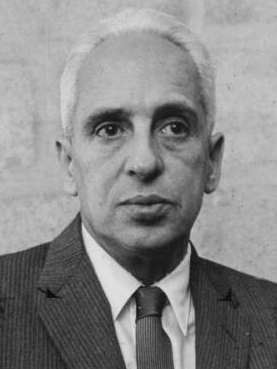
Portrait of Edward Jenner

Edward Jenner. John Raphael Smith. Public domain.

Historical person · 18th–19th Century

Edward Jenner

1749–1823

Physician and naturalist whose investigation and publication of cowpox vaccination helped establish a new approach to preventing smallpox.

Explore History of MedicineRead biography ↓

Your next chapter starts here

Take history with you.

Create a free account or log in to download this guide as a PDF. Reading on the website is always free.

Create free account
Quick answers

What to know about Edward Jenner

Direct answers to common questions about Edward Jenner, followed by the full sourced biography.

Who was Edward Jenner?

Physician and naturalist whose investigation and publication of cowpox vaccination helped establish a new approach to preventing smallpox. Physician and naturalist whose investigation and publication of cowpox vaccination helped establish a new approach to preventing smallpox.

What is Edward Jenner known for?

Edward Jenner is particularly known for Smallpox vaccination research, 1798 vaccination publication, Research on cuckoos.

When did Edward Jenner live?

Edward Jenner lived 1749–1823. This profile places that life within 18th–19th Century and History of Medicine.

Why is Edward Jenner historically significant?

Jenner’s study of the cuckoo was read to the Royal Society in 1788. It illustrates the careful attention to animal behaviour that accompanied his medical work, and prevents his life from being reduced to a single experiment. The eventual eradication of smallpox, declared in 1980, came long after his death in 1823. It depended on generations of developments, international coordination and.

Biography

Edward Jenner: life and legacy

Overview

Physician and naturalist whose investigation and publication of cowpox vaccination helped establish a new approach to preventing smallpox.

A provincial doctor with wider interests

Edward Jenner grew up in Berkeley, Gloucestershire, and began medical training with the surgeon Daniel Ludlow in 1763. Further study included work with John Hunter before Jenner established himself in provincial practice. His interests extended beyond treating patients: he investigated natural history, wrote on a chemical preparation and experimented with a balloon. This range was not an irrelevant hobby beside medicine. Observation and comparison linked different areas of eighteenth-century inquiry. His qualification from St Andrews in 1792 and later professional recognition also show how practical training and institutional credentials could overlap in a medical career.

The experiment and the earlier knowledge

People had observed that cowpox infection could protect against smallpox before Jenner, and Benjamin Jesty had used that connection in 1774. Jenner’s importance lies in investigating, publishing and promoting the approach rather than inventing the observation from nothing. In 1796 he used material from Sarah Nelmes’s cowpox infection on the child James Phipps, later testing protection through exposure by variolation. This was a historical experiment involving a child, not a procedure that would meet modern research-consent standards. Explaining the result should not turn the people involved into anonymous props in a simple story of individual genius.

Publication, persuasion and resistance

Jenner published his findings in 1798 and followed them with further work. The method offered a different approach from variolation, which used smallpox itself and carried serious risks. Adoption was not automatic: practitioners needed convincing, material had to be obtained and handled, and a public unfamiliar with the procedure had to decide whether to trust it. Translations helped take Jenner’s arguments beyond Britain. Cultural promotion mattered too: Robert Bloomfield’s 1804 poem Good Tidings celebrated vaccination. Professional honours, including recognition by the Royal College of Physicians of Edinburgh in 1806, reflected growing acceptance without erasing disagreement.

A naturalist and a long-term legacy

Jenner’s study of the cuckoo was read to the Royal Society in 1788. It illustrates the careful attention to animal behaviour that accompanied his medical work, and prevents his life from being reduced to a single experiment. The eventual eradication of smallpox, declared in 1980, came long after his death in 1823. It depended on generations of developments, international coordination and the work of vaccinators and communities across the world. Jenner was important to that history, but crediting eradication to him alone would remove the many people who turned an early preventive method into a global public-health achievement.

Key moments

Timeline

  1. Born

    Edward Jenner's life began in 1749.

  2. Medical apprenticeship

    Begins training with Daniel Ludlow.

  3. Chemical paper

    Publishes work on a chemical preparation.

  4. Balloon experiment

    Explores balloon flight alongside his medical practice.

  5. Cuckoo research

    His observations are read to the Royal Society and published.

  6. Medical degree

    Receives an MD from St Andrews.

  7. Cowpox experiment

    Tests protection against smallpox in James Phipps.

  8. Publishes vaccination findings

    Makes the investigation available to a wider medical readership.

  9. Good Tidings

    Robert Bloomfield’s poem contributes to public celebration of vaccination.

  10. Edinburgh fellowship

    Receives honorary recognition from the Royal College of Physicians of Edinburgh.

  11. Died

    Edward Jenner died in 1823.

Connections

Related people

Keep reading

Related stories

Test your knowledge

Related quizzes

Evidence

Sources and further reading

  1. Edward JennerScience Museum Group
  2. Edward JennerRoyal College of Physicians of Edinburgh
  3. A brief history of vaccinationWorld Health Organization
  4. Observations on the natural history of the cuckooRoyal Society
  5. Edward JennerNational Portrait Gallery
  6. Biographical records and portraitsNational Portrait Gallery
  7. Historical people and primary sourcesLibrary of Congress
  8. Historical figuresEncyclopaedia Britannica

Biographical claims are summarised from the sources above. Interpretation and disputed reputations are identified in the text rather than presented as settled fact.

Milestone unlocked!

Your completed quizzes are building a history of their own.