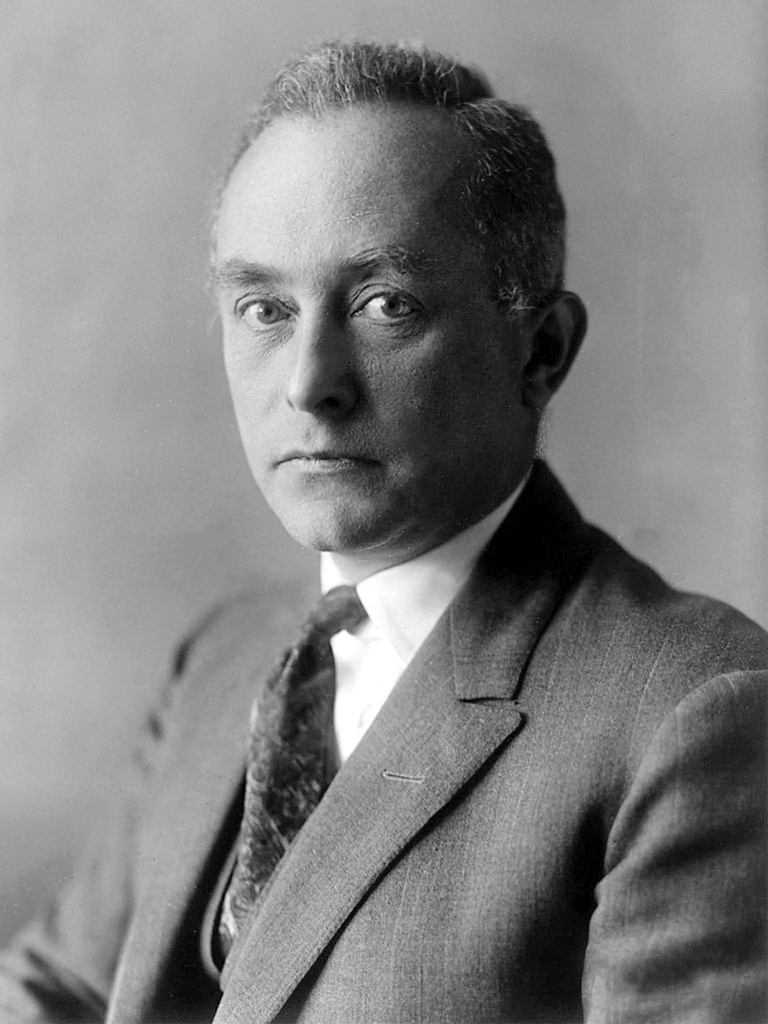
Portrait of Srinivasa Ramanujan

Srinivasa Ramanujan. Unknown author. CC BY 4.0.

Historical person · 20th Century

Srinivasa Ramanujan

1887–1920

Indian mathematician whose original work on infinite series, number theory and modular functions transformed mathematical research.

Explore Science and TechnologyRead biography ↓

Your next chapter starts here

Take history with you.

Create a free account or log in to download this guide as a PDF. Reading on the website is always free.

Create free account
Quick answers

What to know about Srinivasa Ramanujan

Direct answers to common questions about Srinivasa Ramanujan, followed by the full sourced biography.

Who was Srinivasa Ramanujan?

Indian mathematician whose original work on infinite series, number theory and modular functions transformed mathematical research. Indian mathematician whose original work on infinite series, number theory and modular functions transformed mathematical research.

What is Srinivasa Ramanujan known for?

Srinivasa Ramanujan is particularly known for Number theory, Hardy–Ramanujan collaboration, Mock theta functions.

When did Srinivasa Ramanujan live?

Srinivasa Ramanujan lived 1887–1920. This profile places that life within 20th Century and Science and Technology.

Why is Srinivasa Ramanujan historically significant?

Serious illness interrupted his years in England, where wartime conditions and dietary difficulties complicated his circumstances. He returned to India in 1919 and died the following year, aged thirty-two. His surviving papers did not constitute a finished textbook: many statements still needed proof, interpretation or connection to other work. The notebooks and later loose sheets.

Biography

Srinivasa Ramanujan: life and legacy

Overview

Indian mathematician whose original work on infinite series, number theory and modular functions transformed mathematical research.

An independent mathematical education

Ramanujan grew up in southern India and developed his mathematical interests while attending school in Kumbakonam. A compendium by G. S. Carr gave him access to numerous results, often presented with very brief explanations. He investigated these ideas independently, recording formulae and relationships in notebooks. His concentration on mathematics became a practical obstacle: after entering Government College with a scholarship in 1904, he neglected other subjects and lost its support. Later examinations also prevented a conventional university career. This was not an absence of learning, but an unusually uneven education pursued amid financial insecurity.

Recognition before Cambridge

Indian mathematicians and supporters helped Ramanujan find employment and an audience. His paper on Bernoulli numbers appeared in the Journal of the Indian Mathematical Society in 1911, before his famous correspondence with Britain. While working at the Madras Port Trust, he approached established mathematicians with examples of his results. G. H. Hardy recognised exceptional ability in a letter received in 1913 and helped arrange his move to Cambridge. The story therefore involves local intellectual networks and published research, not simply an unknown genius discovered without predecessors by a single European patron.

Collaboration and original results

At Cambridge from 1914, Ramanujan worked with Hardy on difficult questions involving numbers, series and functions. Their differing approaches could create tension: Ramanujan often recorded striking conclusions without the detailed demonstrations expected in contemporary research. Collaboration helped turn these insights into results that others could examine and extend. Their joint work included a 1918 paper connecting modular functions with number theory. Ramanujan also pursued his own investigations. Royal Society election in May 1918 and a Trinity College fellowship that October recognised work already substantial enough to secure an international mathematical reputation.

Illness and unfinished notebooks

Serious illness interrupted his years in England, where wartime conditions and dietary difficulties complicated his circumstances. He returned to India in 1919 and died the following year, aged thirty-two. His surviving papers did not constitute a finished textbook: many statements still needed proof, interpretation or connection to other work. The notebooks and later loose sheets consequently became a continuing research programme. His studies of mock theta functions were particularly fertile. Remembering this unfinished mathematical substance is more useful than reducing his achievement to extraordinary mental calculation or treating every surviving formula as automatically established.

Key moments

Timeline

  1. Born

    Srinivasa Ramanujan's life began in 1887.

  2. College scholarship

    Enters Government College in Kumbakonam with financial support.

  3. First research paper

    Publishes work on Bernoulli numbers in an Indian mathematical journal.

  4. Port Trust employment

    Takes clerical work in Madras while continuing mathematical investigations.

  5. Letter to Hardy

    Sends results that lead to sustained correspondence and an invitation.

  6. Moves to Cambridge

    Begins research in England and collaboration with Hardy.

  7. Royal Society fellowship

    Is elected on 2 May in recognition of his mathematical work.

  8. Trinity fellowship

    Becomes the first Indian elected a fellow of the Cambridge college in October.

  9. Returns to India

    Leaves England after prolonged illness, continuing research at home.

  10. Died

    Srinivasa Ramanujan died in 1920.

Connections

Related people

Keep reading

Related stories

Test your knowledge

Related quizzes

Evidence

Sources and further reading

  1. Srinivasa RamanujanUniversity of St Andrews, MacTutor
  2. Remembering RamanujanTrinity College Library, Cambridge
  3. Revisiting RamanujanRoyal Society
  4. Biographical records and portraitsNational Portrait Gallery
  5. Historical people and primary sourcesLibrary of Congress
  6. Historical figuresEncyclopaedia Britannica

Biographical claims are summarised from the sources above. Interpretation and disputed reputations are identified in the text rather than presented as settled fact.

Milestone unlocked!

Your completed quizzes are building a history of their own.