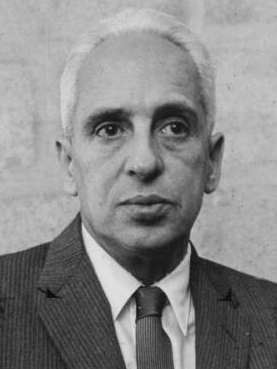
Portrait of Rudolf Virchow

Rudolf Virchow. Unknown author. Public domain.

Historical person · 19th Century

Rudolf Virchow

1821–1902

Pathologist and reforming politician who helped make cellular changes central to the explanation of disease and argued for public action on the social conditions of health.

Explore History of MedicineRead biography ↓

Your next chapter starts here

Take history with you.

Create a free account or log in to download this guide as a PDF. Reading on the website is always free.

Create free account
Quick answers

What to know about Rudolf Virchow

Direct answers to common questions about Rudolf Virchow, followed by the full sourced biography.

Who was Rudolf Virchow?

Pathologist and reforming politician who helped make cellular changes central to the explanation of disease and argued for public action on the social conditions of health. Pathologist and reforming politician who helped make cellular changes central to the explanation of disease and argued for public action on the social conditions of health.

What is Rudolf Virchow known for?

Rudolf Virchow is particularly known for Cellular pathology, Public health reform, Berlin medical collections.

When did Rudolf Virchow live?

Rudolf Virchow lived 1821–1902. This profile places that life within 19th Century and History of Medicine.

Why is Rudolf Virchow historically significant?

Virchow assembled extensive pathological material and also pursued anthropology and early history. A museum opened in 1899 to house his medical collection, preserving specimens as teaching and research resources. Such collections reflected nineteenth-century ambitions to classify bodies and disease, while also raising questions about the people whose remains became scientific objects..

Biography

Rudolf Virchow: life and legacy

Overview

Pathologist and reforming politician who helped make cellular changes central to the explanation of disease and argued for public action on the social conditions of health.

Medical training and political commitment

Rudolf Virchow trained in medicine in Berlin and began working at the Charité, where examination of diseased tissue became central to his research. His early career coincided with political upheaval. During the revolutionary period of 1848 he supported democratic reform, and his political activity helped cost him his Berlin position. He moved to Würzburg in 1849, continuing anatomical and pathological work there. Scientific ambition and political conviction were therefore intertwined from an early stage. He did not regard the physician’s responsibilities as ending at the laboratory door or the bedside.

Disease at the level of cells

Virchow’s cellular pathology helped shift explanations of disease towards changes in the body’s constituent cells. Microscopic examination made it possible to compare normal and abnormal tissues in detail. This did not mean that a microscope alone could explain every illness or that the work of other cell researchers was unimportant. Rather, it gave physicians a powerful framework for locating and investigating pathological processes. His return to Berlin in 1856 included leadership of a pathological institute closely connected with the hospital’s mortuary, joining teaching and research to the examination of actual human bodies.

Public health beyond the laboratory

An investigation of epidemic disease in Upper Silesia in 1848 strengthened Virchow’s concern with poverty and social conditions. In Berlin politics he supported practical improvements to urban health: sewerage, sewage treatment through irrigation fields, municipal hospitals and systematic records of illness and death. He also pressed for meat inspection to combat trichinosis. These measures show what social medicine could mean in concrete terms. Disease prevention required decisions about infrastructure, administration and living conditions, not only new treatments. His political arguments used medical authority to support changes in how the city was governed.

Collections, teaching and a complicated legacy

Virchow assembled extensive pathological material and also pursued anthropology and early history. A museum opened in 1899 to house his medical collection, preserving specimens as teaching and research resources. Such collections reflected nineteenth-century ambitions to classify bodies and disease, while also raising questions about the people whose remains became scientific objects. His institutional influence continued through students, publications and public service. His life is best understood through both scales of investigation: close examination of cells and broad attention to the environments in which people lived. Neither alone captures the full range of his work.

Key moments

Timeline

  1. Born

    Rudolf Virchow's life began in 1821.

  2. Medical studies

    Began medical training in Berlin.

  3. Charité work

    Became assistant to the hospital prosector.

  4. Epidemic and reform

    Investigated the Upper Silesian epidemic and supported political reform.

  5. Würzburg chair

    Became professor of pathological anatomy.

  6. Return to Berlin

    Took leadership of the university’s pathological institute.

  7. Cellular pathology

    Delivered and published the influential lectures on cellular pathology.

  8. Pathological museum

    A museum opened for his extensive medical collection.

  9. Death

    Died in Berlin after decades of research and public service.

Connections

Related people

Keep reading

Related stories

Test your knowledge

Related quizzes

Evidence

Sources and further reading

  1. Rudolf Virchow: biographyCharité
  2. Rudolf Virchow: research and collectionsCharité
  3. Rudolf Virchow and public healthDeutsches Historisches Museum
  4. Rudolf VirchowLeopoldina
  5. Medical museum chronologyHumboldt University collections
  6. Biographical records and portraitsNational Portrait Gallery
  7. Historical people and primary sourcesLibrary of Congress
  8. Historical figuresEncyclopaedia Britannica

Biographical claims are summarised from the sources above. Interpretation and disputed reputations are identified in the text rather than presented as settled fact.

Milestone unlocked!

Your completed quizzes are building a history of their own.