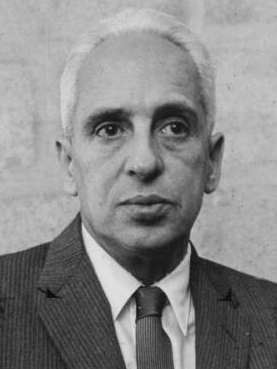
BiographyRobert Koch: life and legacy
Overview
Physician and bacteriologist who helped establish links between specific microorganisms and infectious diseases, including anthrax and tuberculosis, but whose career also included harmful colonial experiments.
From district practice to experimental bacteriology
Koch studied medicine at Göttingen and worked as a physician before becoming district medical officer at Wollstein in 1872. Anthrax affected animals and people around him, providing a pressing problem for investigation. His 1876 research helped demonstrate the relationship between a particular microorganism and the disease. The significance was methodological as well as practical: identifying an organism required more than noticing that diseased tissue contained tiny living forms. Researchers needed ways to isolate, observe and connect an organism with a reproducible pattern of illness. Local medical work thus developed into an experimental programme with much wider implications.
Making an invisible cause demonstrable
In Berlin, Koch and his colleagues developed techniques of staining, cultivation and observation that made bacteria easier to investigate systematically. On 24 March 1882 he presented evidence identifying the bacterium responsible for tuberculosis. His demonstration combined methods and results rather than relying on a single striking image. Tuberculosis was enormously destructive, so the identification had major public significance even though finding the cause did not immediately provide a cure. The 1905 Nobel Prize recognised his tuberculosis investigations. The laboratory approach helped reshape medicine, but its power depended on careful procedures and evidence that other investigators could assess.
Discovery did not guarantee a successful treatment
Koch’s career illustrates the distance between identifying an infectious agent and treating the resulting disease safely. Tuberculin, introduced in 1890 amid great expectations, failed as the promised cure, although preparations derived from this research later had diagnostic uses. The episode warns against reading every stage of a celebrated career backwards as inevitable progress. He directed the Institute for Infectious Diseases from 1891 until retirement in 1904, helping establish a durable research organisation. Institutions, staff and techniques extended the work beyond one investigator, while controversies exposed the consequences of allowing confidence to outrun demonstrated therapeutic benefit.
Colonial research and responsibility
Koch’s later journeys included investigations of sleeping sickness in East Africa during 1906–1907. Treatment with the arsenic-containing drug Atoxyl produced serious harm, including blindness in some patients. He increased exposure despite knowing the risks and continued to support the approach. The Robert Koch Institute now explicitly addresses this ethically unacceptable colonial legacy. It cannot be separated from the unequal power within which experiments were conducted. A balanced biography must therefore hold scientific achievement and responsibility together: identifying dangerous pathogens did not remove the obligation to protect the people subjected to research, nor does later fame erase those injuries.