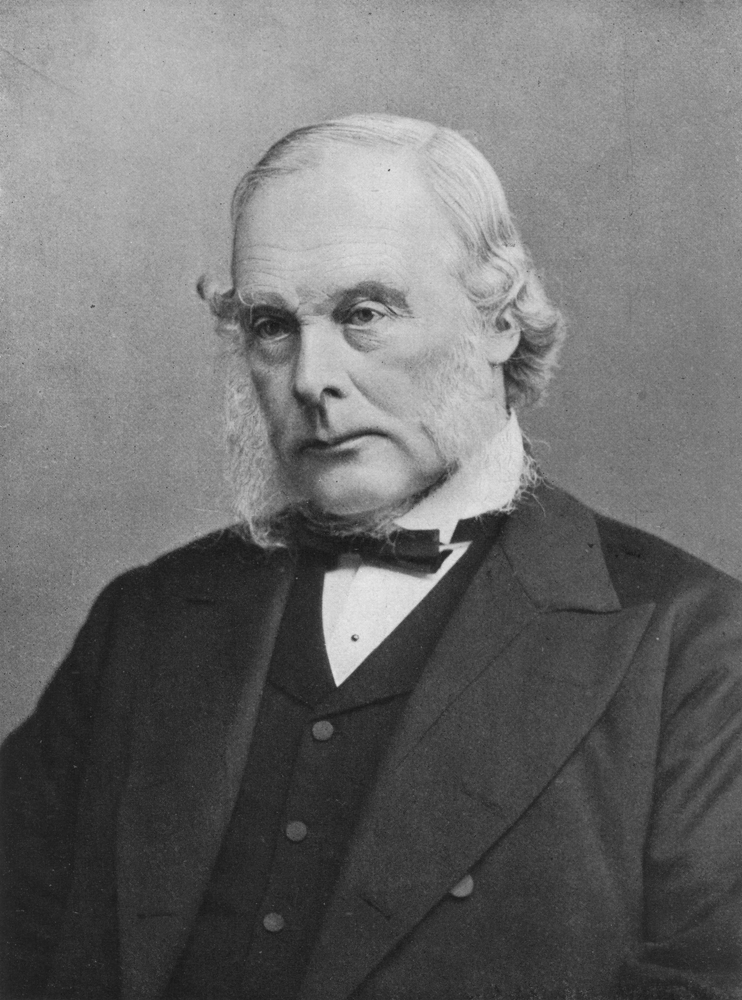
Portrait of Louis Pasteur

Louis Pasteur. Paul Nadar. Public domain.

Historical person · 19th Century

Louis Pasteur

1822–1895

Chemist whose research linked microorganisms with fermentation and disease and helped develop preventive treatments against anthrax and rabies.

Explore History of MedicineRead biography ↓

Your next chapter starts here

Take history with you.

Create a free account or log in to download this guide as a PDF. Reading on the website is always free.

Create free account
Quick answers

What to know about Louis Pasteur

Direct answers to common questions about Louis Pasteur, followed by the full sourced biography.

Who was Louis Pasteur?

Chemist whose research linked microorganisms with fermentation and disease and helped develop preventive treatments against anthrax and rabies. Chemist whose research linked microorganisms with fermentation and disease and helped develop preventive treatments against anthrax and rabies.

What is Louis Pasteur known for?

Louis Pasteur is particularly known for Pasteurisation, Fermentation research, Rabies treatment.

When did Louis Pasteur live?

Louis Pasteur lived 1822–1895. This profile places that life within 19th Century and History of Medicine.

Why is Louis Pasteur historically significant?

In 1885 Joseph Meister received a course of experimental treatment after being bitten by a rabid dog. The episode became central to Pasteur’s fame, but it involved medical judgement, collaborators and serious uncertainty; it should not be presented as a risk-free procedure. Rabies work helped attract support for the Institut Pasteur, inaugurated in 1888. The institute joined research,.

Biography

Louis Pasteur: life and legacy

Overview

Chemist whose research linked microorganisms with fermentation and disease and helped develop preventive treatments against anthrax and rabies.

From crystals to living processes

Pasteur began as a chemist, not a medical doctor. After doctoral study in Paris, he investigated why certain substances affected polarised light differently. His work with crystals showed the importance of molecular arrangement and helped establish stereochemistry. A move to Lille brought him close to industries concerned with fermentation. Questions about spoiled drinks and useful production connected laboratory investigation with commercial needs. His later reputation in medicine can hide this earlier training: careful comparison of materials and experimental conditions helped shape the methods he carried into research on microorganisms.

Fermentation and contamination

Pasteur argued that living microorganisms played specific roles in fermentation, rather than treating the process as purely chemical decomposition. Different organisms could produce desirable changes or spoil a product. Experiments also challenged claims that life simply appeared spontaneously in nutrient liquids. His curved-neck flasks allowed air to enter while trapping dust, helping separate exposure to air from contamination carried in it. These experiments were part of an extended scientific controversy, not a single demonstration that instantly settled every question. Earlier researchers contributed essential observations, while rivals disputed his procedures and conclusions.

Protecting agriculture and developing vaccines

Controlled heating of wine became associated with pasteurisation, reducing unwanted microbial activity without requiring complete sterilisation. Pasteur also investigated silkworm diseases, addressing a serious threat to French production. His laboratory later worked on animal diseases, including anthrax, and methods of inducing protection. The public anthrax demonstration in 1881 helped build his reputation. Collaborators were essential to these projects. Historians comparing notebooks with published accounts have identified differences between what was done and what was publicly claimed. That evidence complicates heroic accounts without removing the practical importance of the resulting research.

Rabies and an enduring institution

In 1885 Joseph Meister received a course of experimental treatment after being bitten by a rabid dog. The episode became central to Pasteur’s fame, but it involved medical judgement, collaborators and serious uncertainty; it should not be presented as a risk-free procedure. Rabies work helped attract support for the Institut Pasteur, inaugurated in 1888. The institute joined research, training and treatment rather than preserving only one scientist’s methods. Pasteur’s achievement was part of the wider development of germ theory and immunology. He neither invented vaccination, which preceded him, nor single-handedly explained every infectious disease. His career shows both the power and the pressures of competitive laboratory science.

Key moments

Timeline

  1. Born

    Louis Pasteur's life began in 1822.

  2. Doctoral qualification

    Completed advanced work in chemistry and physics in Paris.

  3. Crystal research

    Investigated molecular asymmetry through the optical behaviour of crystals.

  4. Appointment at Lille

    Became dean of the science faculty amid an industrial region.

  5. Fermentation research

    Published findings connecting lactic fermentation with living organisms.

  6. Pasteurisation patent

    Developed a heating process intended to protect wine from spoilage.

  7. Silkworm investigation

    Began research into diseases damaging silk production.

  8. Anthrax demonstration

    A public animal experiment promoted the laboratory’s vaccination work.

  9. Rabies treatment

    Joseph Meister received an experimental preventive treatment after a bite.

  10. Institute inaugurated

    The Institut Pasteur opened as a centre for research and treatment.

  11. Died

    Louis Pasteur died in 1895.

Connections

Related people

Keep reading

Related stories

Test your knowledge

Related quizzes

Evidence

Sources and further reading

  1. Louis PasteurScience History Institute
  2. Bicentenary chronologyInstitut Pasteur
  3. Louis PasteurUniversity of Alabama at Birmingham Libraries
  4. Louis PasteurLemelson-MIT
  5. Biographical records and portraitsNational Portrait Gallery
  6. Historical people and primary sourcesLibrary of Congress
  7. Historical figuresEncyclopaedia Britannica

Biographical claims are summarised from the sources above. Interpretation and disputed reputations are identified in the text rather than presented as settled fact.

Milestone unlocked!

Your completed quizzes are building a history of their own.