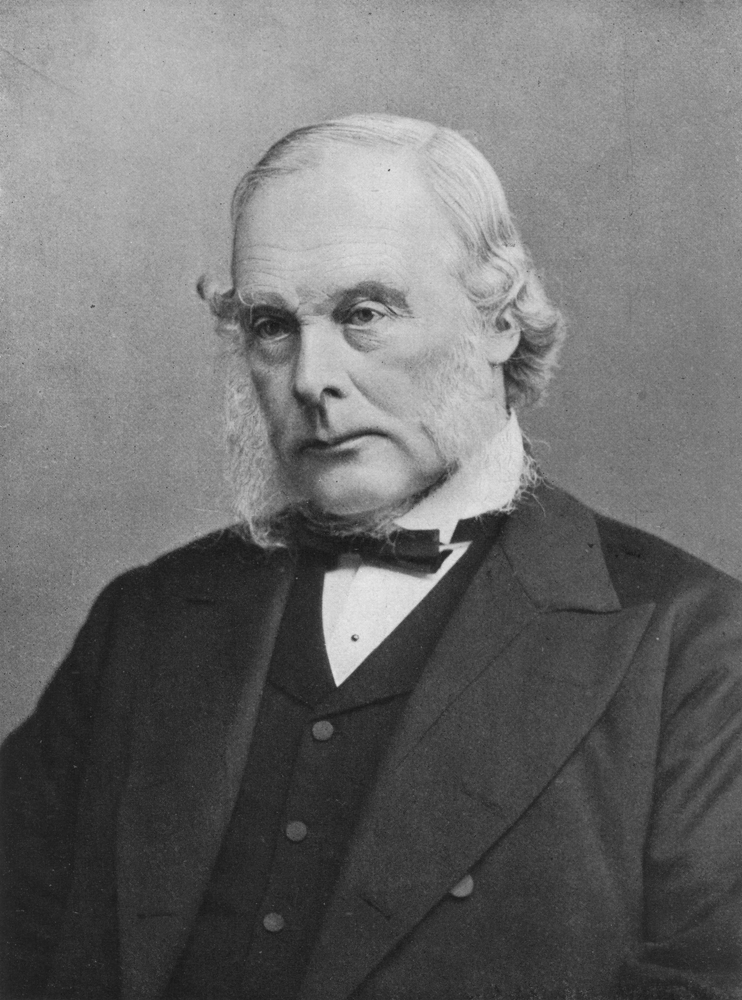
Portrait of Joseph Lister

Joseph Lister. Unknown author. Public domain.

Historical person · 19th Century

Joseph Lister

1827–1912

Surgeon whose antiseptic methods applied research on microorganisms to the prevention of wound infection, helping transform the risks of nineteenth-century surgery.

Explore History of MedicineRead biography ↓

Your next chapter starts here

Take history with you.

Create a free account or log in to download this guide as a PDF. Reading on the website is always free.

Create free account
Quick answers

What to know about Joseph Lister

Direct answers to common questions about Joseph Lister, followed by the full sourced biography.

Who was Joseph Lister?

Surgeon whose antiseptic methods applied research on microorganisms to the prevention of wound infection, helping transform the risks of nineteenth-century surgery. Surgeon whose antiseptic methods applied research on microorganisms to the prevention of wound infection, helping transform the risks of nineteenth-century surgery.

What is Joseph Lister known for?

Joseph Lister is particularly known for Antiseptic surgery, Carbolic dressings, Surgical teaching.

When did Joseph Lister live?

Joseph Lister lived 1827–1912. This profile places that life within 19th Century and History of Medicine.

Why is Joseph Lister historically significant?

Lister returned to Edinburgh in 1869 and moved to King’s College Hospital in London in 1877. Teaching and demonstration helped spread his approach, but adoption was neither instantaneous nor uniform. Surgeons had to reconsider familiar habits and learn methods whose effectiveness depended on careful execution. His later presidency of the Royal Society, from 1895 to 1900, reflected.

Biography

Joseph Lister: life and legacy

Overview

Surgeon whose antiseptic methods applied research on microorganisms to the prevention of wound infection, helping transform the risks of nineteenth-century surgery.

Surgery before reliable infection control

Anaesthesia made longer operations possible, but patients could survive the operation itself and subsequently die from infection. Lister’s career developed within that dangerous environment. After medical study in London, he worked with James Syme in Edinburgh and became professor of surgery in Glasgow in 1860. He investigated inflammation and healing rather than treating postoperative infection as an unavoidable mystery. Laboratory observations and clinical practice informed one another. His questions concerned what happened to injured tissue, how wounds changed and whether an intervention could prevent deterioration rather than merely respond once it had begun.

Turning germ research into surgical practice

Research associated with Louis Pasteur suggested that microscopic organisms could cause putrefaction. Lister applied that insight to wounds, developing methods using carbolic acid from 1865 and publishing his results in 1867. Dressings, instruments and the conduct of an operation all became part of a system intended to reduce contamination. This was not simply the invention of a single spray. Procedures changed as experience revealed practical difficulties. Carbolic acid itself could damage tissue, and later surgery developed aseptic approaches designed to prevent contamination through sterilisation and controlled environments. Lister’s methods were an important stage in that continuing development.

The detail behind the celebrated breakthrough

His surviving papers include studies of blood coagulation, wound treatment, ligatures and bacteria, together with clinical notes and drawings. They reveal sustained technical work behind the familiar label of surgical pioneer. A ligature had to hold securely without introducing infection; a dressing had to protect a wound while remaining usable in a busy hospital. Such problems required repeated adjustments rather than a declaration that germs existed. The archive also makes it possible to distinguish what Lister actually investigated from later simplified accounts. Successful surgical change depended on materials, training and disciplined procedure as well as a compelling explanatory theory.

Teaching a changing profession

Lister returned to Edinburgh in 1869 and moved to King’s College Hospital in London in 1877. Teaching and demonstration helped spread his approach, but adoption was neither instantaneous nor uniform. Surgeons had to reconsider familiar habits and learn methods whose effectiveness depended on careful execution. His later presidency of the Royal Society, from 1895 to 1900, reflected recognition extending beyond surgery. Calling him the father of antiseptic surgery acknowledges a major contribution, but should not erase earlier infection-prevention work or the nurses, assistants and other practitioners who put new procedures into practice. The transformation was institutional and collective as well as personal.
Key moments

Timeline

  1. Born

    Joseph Lister's life began in 1827.

  2. Works in Edinburgh

    Begins working with James Syme after study in London.

  3. Edinburgh surgeon

    Appointed at the Royal Infirmary.

  4. Glasgow professorship

    Becomes professor of surgery in Glasgow.

  5. Coagulation lecture

    Presents research on blood coagulation.

  6. Antiseptic treatment develops

    Applies carbolic methods to surgical wounds.

  7. Results published

    Sets out the antiseptic approach in published papers.

  8. Returns to Edinburgh

    Succeeds Syme in the surgical chair.

  9. Moves to King’s

    Takes up clinical surgery and teaching in London.

  10. Royal Society president

    Begins a five-year presidency.

  11. Died

    Joseph Lister died in 1912.

Connections

Related people

Keep reading

Related stories

Test your knowledge

Related quizzes

Evidence

Sources and further reading

  1. Joseph ListerKing’s College London
  2. Papers of Joseph ListerRoyal College of Surgeons
  3. Joseph Lister: biographical recordRoyal Society
  4. Lister in the ArchivesRoyal College of Surgeons
  5. Biographical records and portraitsNational Portrait Gallery
  6. Historical people and primary sourcesLibrary of Congress
  7. Historical figuresEncyclopaedia Britannica

Biographical claims are summarised from the sources above. Interpretation and disputed reputations are identified in the text rather than presented as settled fact.

Milestone unlocked!

Your completed quizzes are building a history of their own.