Who was Sally Ride?
Physicist and astronaut who became the first American woman in space and later championed science education. Physicist and astronaut who became the first American woman in space and later championed science education.
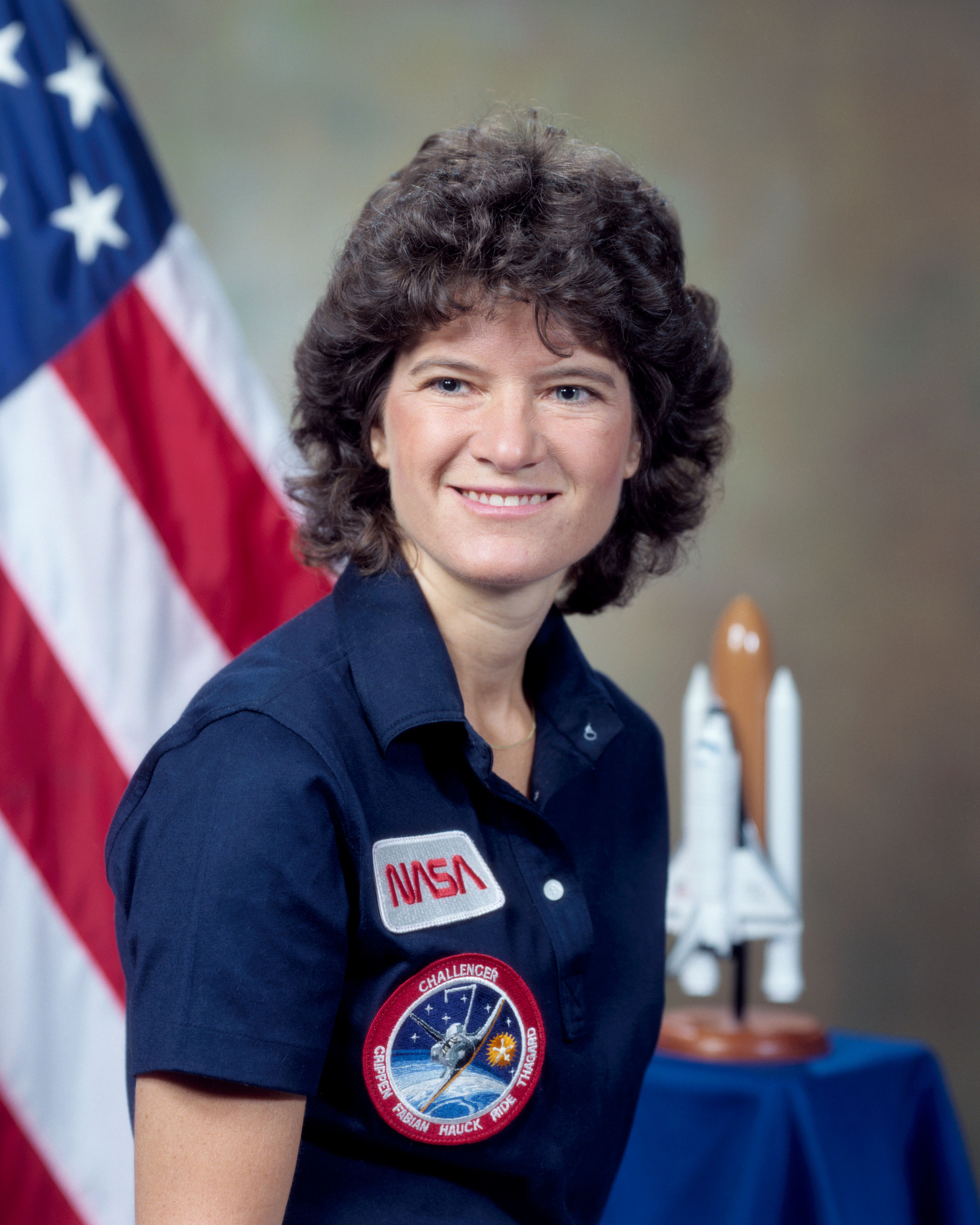
Sally Ride. NASA; retouched by Coffeeandcrumbs. Public domain.
1951–2012
Physicist and astronaut who became the first American woman in space and later championed science education.
Direct answers to common questions about Sally Ride, followed by the full sourced biography.
Physicist and astronaut who became the first American woman in space and later championed science education. Physicist and astronaut who became the first American woman in space and later championed science education.
Sally Ride is particularly known for Becoming the first American woman in space, Science education.
Sally Ride lived 1951–2012. This profile places that life within 20th century and Space Race.
Ride entered Stanford in 1970 and studied both physics and English literature, pursuing scientific specialization without abandoning a wider intellectual life. That combination complicates the narrow image of an astronaut as only a pilot or engineer. Museum collections documenting her career also distinguish the public figure from the private individual, preserving papers and objects.
Physicist and astronaut who became the first American woman in space and later championed science education.
Sally Ride applied to NASA during the agency’s expansion of astronaut recruitment beyond its earlier overwhelmingly male military-pilot model. Selected in 1978, she trained as a mission specialist. On June 18, 1983, she launched aboard Challenger on STS-7, becoming the first American woman in space. Her duties included operating the shuttle’s robotic arm and supporting satellite deployment and experiments, placing her within the shuttle program’s technical work rather than only its public symbolism.
Ride flew again in 1984 and later brought her operational experience to investigations of shuttle safety. Her post-NASA career emphasized research and education, especially the barriers that discouraged girls from pursuing science. In 2001 she founded Sally Ride Science to develop educational programs and materials. She also co-authored books for young readers, translating subjects such as Earth observation and the solar system into accessible introductions intended to sustain curiosity beyond a single celebrated spaceflight.
Ride entered Stanford in 1970 and studied both physics and English literature, pursuing scientific specialization without abandoning a wider intellectual life. That combination complicates the narrow image of an astronaut as only a pilot or engineer. Museum collections documenting her career also distinguish the public figure from the private individual, preserving papers and objects that reveal how she navigated extraordinary attention. Her later educational work drew on this capacity to communicate: making science approachable required attention to language, audience, and the social assumptions that affected young people’s expectations.
Sally Ride's life began in 1951.
Graduated from Stanford with degrees in both subjects before continuing graduate physics research.
Became eligible for shuttle mission assignments after NASA's training and evaluation programme.
Served on the presidential commission investigating the shuttle accident after plans for her third spaceflight were cancelled.
Joined the university as a physics professor and director of the California Space Institute.
Sally Ride died in 2012.
Biographical claims are summarised from the sources above. Interpretation and disputed reputations are identified in the text rather than presented as settled fact.