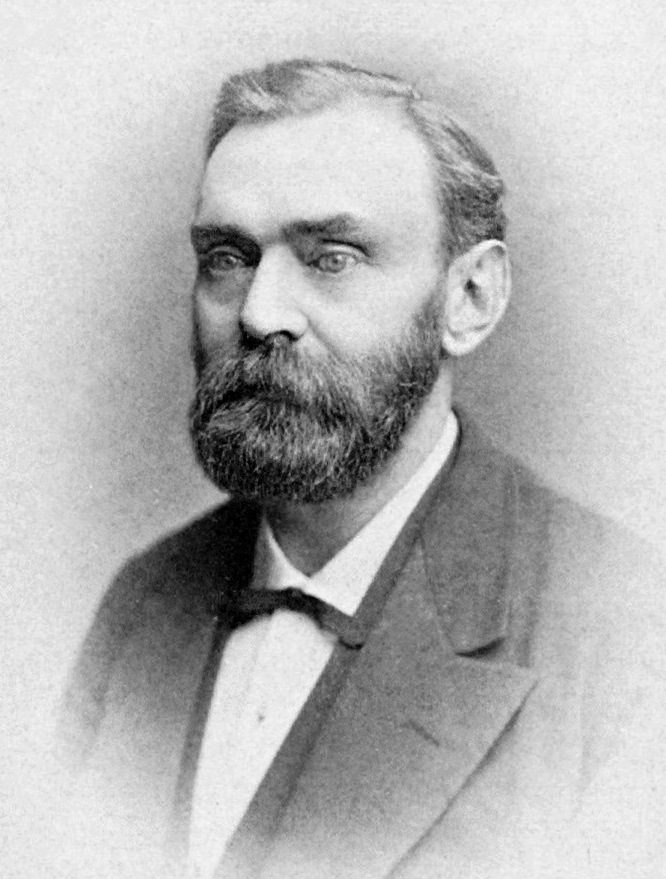
Portrait of Rosalind Franklin

Rosalind Franklin. MRC Laboratory of Molecular Biology. CC BY-SA 4.0.

Historical person · 20th Century

Rosalind Franklin

1920–1958

Chemist and crystallographer whose research on coal, DNA and viruses established structural evidence essential to understanding complex biological and industrial materials.

Explore Science and TechnologyRead biography ↓

Your next chapter starts here

Take history with you.

Create a free account or log in to download this guide as a PDF. Reading on the website is always free.

Create free account
Quick answers

What to know about Rosalind Franklin

Direct answers to common questions about Rosalind Franklin, followed by the full sourced biography.

Who was Rosalind Franklin?

Chemist and crystallographer whose research on coal, DNA and viruses established structural evidence essential to understanding complex biological and industrial materials. Chemist and crystallographer whose research on coal, DNA and viruses established structural evidence essential to understanding complex biological and industrial materials.

What is Rosalind Franklin known for?

Rosalind Franklin is particularly known for DNA X-ray diffraction research, Photograph 51 with Raymond Gosling, Structural research on viruses.

When did Rosalind Franklin live?

Rosalind Franklin lived 1920–1958. This profile places that life within 20th Century and Science and Technology.

Why is Rosalind Franklin historically significant?

Franklin moved to Birkbeck in 1953 and built a successful research programme on viruses, including tobacco mosaic virus. Working with colleagues such as Aaron Klug, she investigated how their components were arranged. This research continued despite the illness that led to her death in 1958, aged thirty-seven. She died before the 1962 Nobel Prize awarded for the DNA work and never.

Biography

Rosalind Franklin: life and legacy

Overview

Chemist and crystallographer whose research on coal, DNA and viruses established structural evidence essential to understanding complex biological and industrial materials.

Coal and scientific training

Rosalind Franklin studied natural sciences at Cambridge before contributing to wartime research at the British Coal Utilisation Research Association. Her investigations examined the internal structure and porosity of coal and related carbon materials. This was practical research with industrial importance, but it also required precise physical reasoning about materials at very small scales. The work formed the basis of her doctorate in 1945. Remembering this stage prevents her career from being reduced to a single photograph. Before she approached DNA, she had already developed a substantial research record and a rigorous experimental approach of her own.

Learning to interpret diffraction

In Paris Franklin worked with Jacques Mering and developed expertise in X-ray diffraction. The technique does not simply take an ordinary enlarged picture of a molecule. Instead, the pattern produced when X-rays interact with a sample supplies evidence from which a structure can be inferred. Preparing the material, controlling conditions and calculating what the pattern means are all essential. She brought this expertise to King’s College London in 1951. There, work with Raymond Gosling distinguished different forms of DNA and produced measurements that constrained any plausible model of its molecular organisation.

DNA and shared evidence

Photograph 51, produced with Gosling in 1952, showed a striking diffraction pattern associated with the hydrated form of DNA. It became one important piece of evidence behind the double-helix model proposed by James Watson and Francis Crick. Franklin’s measurements and analysis mattered alongside the image. Some of her information reached the Cambridge researchers without her knowledge, making questions of scientific communication and credit central to later accounts. Her own work appeared with Gosling in Nature in 1953. The episode is best understood through the actual evidence and collaborations, rather than a simplified contest in which one photograph alone solved everything.

Viruses and an unfinished career

Franklin moved to Birkbeck in 1953 and built a successful research programme on viruses, including tobacco mosaic virus. Working with colleagues such as Aaron Klug, she investigated how their components were arranged. This research continued despite the illness that led to her death in 1958, aged thirty-seven. She died before the 1962 Nobel Prize awarded for the DNA work and never received a Nobel herself. Her scientific legacy nevertheless spans materials chemistry, molecular biology and virology. Giving proper attention to all three fields restores the scale of her achievement and the productive collaborations that characterised much of her working life.

Key moments

Timeline

  1. London birth

    Born into a family that supported her education.

  2. Cambridge studies completed

    Finished the natural sciences course before wartime research.

  3. Coal research

    Joined the British Coal Utilisation Research Association.

  4. Doctorate

    Received a PhD based on the physical chemistry of carbon materials.

  5. Paris laboratory

    Developed X-ray diffraction expertise with Jacques Mering.

  6. King’s College London

    Began research into DNA with Raymond Gosling.

  7. Photograph 51

    Produced an important diffraction image of hydrated DNA.

  8. Birkbeck research

    Moved to virus studies and published DNA results with Gosling.

  9. Death

    Died in London on 16 April, aged thirty-seven.

Connections

Related people

Keep reading

Related stories

Test your knowledge

Related quizzes

Evidence

Sources and further reading

  1. Rosalind FranklinKing’s College London
  2. Rosalind Franklin’s lifeRosalind Franklin Institute
  3. Rosalind FranklinScience Museum Group
  4. Rosalind Franklin 1920–1958International Union of Crystallography
  5. Biographical records and portraitsNational Portrait Gallery
  6. Historical people and primary sourcesLibrary of Congress
  7. Historical figuresEncyclopaedia Britannica

Biographical claims are summarised from the sources above. Interpretation and disputed reputations are identified in the text rather than presented as settled fact.

Milestone unlocked!

Your completed quizzes are building a history of their own.