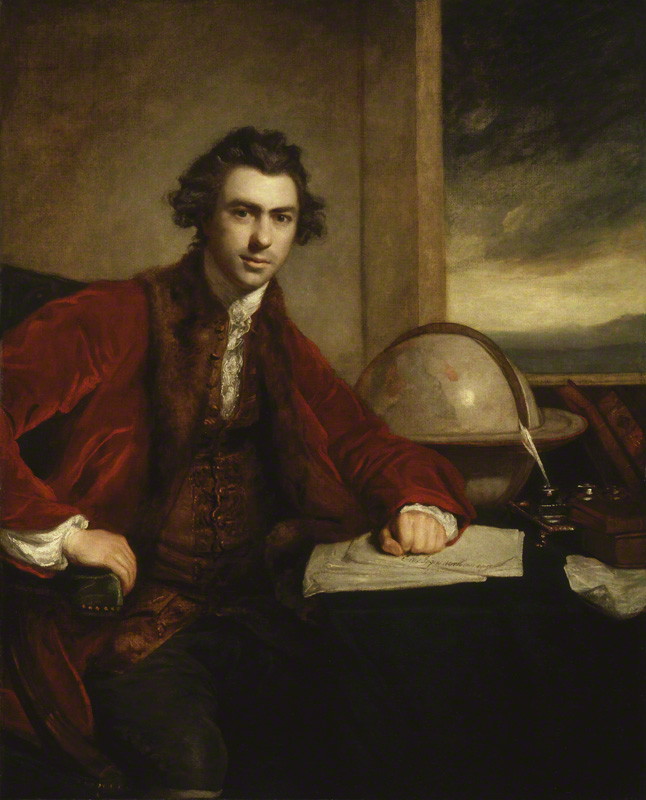
Portrait of Robert Boyle

Robert Boyle. Johann Kerseboom. Public domain.

Historical person · Early Modern

Robert Boyle

1627–1691

Experimental natural philosopher whose investigations of air and chemical substances challenged inherited explanations of nature and helped shape the early Royal Society.

Explore Science and TechnologyRead biography ↓

Your next chapter starts here

Take history with you.

Create a free account or log in to download this guide as a PDF. Reading on the website is always free.

Create free account
Quick answers

What to know about Robert Boyle

Direct answers to common questions about Robert Boyle, followed by the full sourced biography.

Who was Robert Boyle?

Experimental natural philosopher whose investigations of air and chemical substances challenged inherited explanations of nature and helped shape the early Royal Society. Experimental natural philosopher whose investigations of air and chemical substances challenged inherited explanations of nature and helped shape the early Royal Society.

What is Robert Boyle known for?

Robert Boyle is particularly known for Boyle’s law, Air-pump experiments, The Sceptical Chymist.

When did Robert Boyle live?

Robert Boyle lived 1627–1691. This profile places that life within Early Modern and Science and Technology.

Why is Robert Boyle historically significant?

Boyle attended the meeting from which the Royal Society developed in 1660, and his publications exemplified its interest in experimental evidence. Describing procedures and outcomes allowed readers to assess claims even when they had not witnessed an experiment themselves. He also wrote extensively about religion and the philosophical implications of natural investigation. Faith was not.

Biography

Robert Boyle: life and legacy

Overview

Experimental natural philosopher whose investigations of air and chemical substances challenged inherited explanations of nature and helped shape the early Royal Society.

Wealth, education and experimental opportunity

Boyle was born at Lismore in Ireland into the exceptionally wealthy family of the Earl of Cork. Private education, Eton and continental travel gave him resources and connections unavailable to most contemporaries. He established a laboratory at Stalbridge before moving to Oxford in the mid-1650s. Scientific work was therefore not an escape from social circumstances: money, assistants and access to intellectual networks helped make it possible. He later lived in London with his sister, Lady Ranelagh, whose household formed part of his working and social environment. His biography is inseparable from these arrangements of patronage and cooperation.

Making air into an experimental subject

The air pump allowed investigators to change the conditions surrounding objects and observe what happened. Boyle’s experiments made air’s physical properties subjects of deliberate testing rather than matters settled solely by philosophical authority. His famous pressure–volume relationship describes how, for a fixed quantity of gas at constant temperature, increasing pressure reduces volume. The law is not a statement that every gas behaves perfectly under every condition. Its historical importance lies in identifying a measurable relationship and connecting explanation with controlled observation. Equipment, repeated trials and the communication of results were essential parts of that achievement.

Questioning what substances are made from

The Sceptical Chymist, published in 1661, challenged established accounts of the basic constituents of matter. Boyle disputed both the traditional four elements and the chemical principles commonly associated with salt, sulphur and mercury. Yet it is misleading to present him as already possessing the entire modern periodic-table understanding of an element. He explored explanations based on small particles and their arrangements while continuing to take alchemical questions seriously. The boundary between respectable chemistry and rejected older knowledge was not drawn in the same place as it is today. His work emerged through that unsettled intellectual landscape.

Experiment, belief and the Royal Society

Boyle attended the meeting from which the Royal Society developed in 1660, and his publications exemplified its interest in experimental evidence. Describing procedures and outcomes allowed readers to assess claims even when they had not witnessed an experiment themselves. He also wrote extensively about religion and the philosophical implications of natural investigation. Faith was not an incidental private interest that can simply be removed from his scientific life. Understanding Boyle requires keeping these concerns together while distinguishing his historical arguments from later stories that make the Scientific Revolution a straightforward victory of modern thinking over an entirely mistaken past.

Key moments

Timeline

  1. Born

    Robert Boyle's life began in 1627.

  2. Enters Eton

    Receives part of his education at Eton College.

  3. Continental education

    Travels in France and Switzerland with his tutor.

  4. Settles at Stalbridge

    Establishes a base for study and experimentation in Dorset.

  5. Laboratory established

    Develops experimental facilities at Stalbridge.

  6. Moves towards Oxford

    Settles there in late 1655 or early 1656.

  7. Air-pump experiments

    Begins the experimental programme associated with the pump.

  8. Royal Society founding meeting

    Participates in the inaugural gathering in November.

  9. The Sceptical Chymist

    Publishes a major critique of accepted chemical principles.

  10. Pressure–volume relationship

    Publishes the relationship subsequently known as Boyle’s law.

  11. Settles in London

    Lives with Lady Ranelagh while continuing research and writing.

  12. Died

    Robert Boyle died in 1691.

Connections

Related people

Keep reading

Related stories

Test your knowledge

Related quizzes

Evidence

Sources and further reading

  1. Robert BoyleScience History Institute
  2. Boyle timelineBirkbeck Robert Boyle Project
  3. Robert Boyle: An IntroductionBirkbeck Robert Boyle Project
  4. Boyle’s air-pump experimentsRoyal Society
  5. Biographical records and portraitsNational Portrait Gallery
  6. Historical people and primary sourcesLibrary of Congress
  7. Historical figuresEncyclopaedia Britannica

Biographical claims are summarised from the sources above. Interpretation and disputed reputations are identified in the text rather than presented as settled fact.

Milestone unlocked!

Your completed quizzes are building a history of their own.