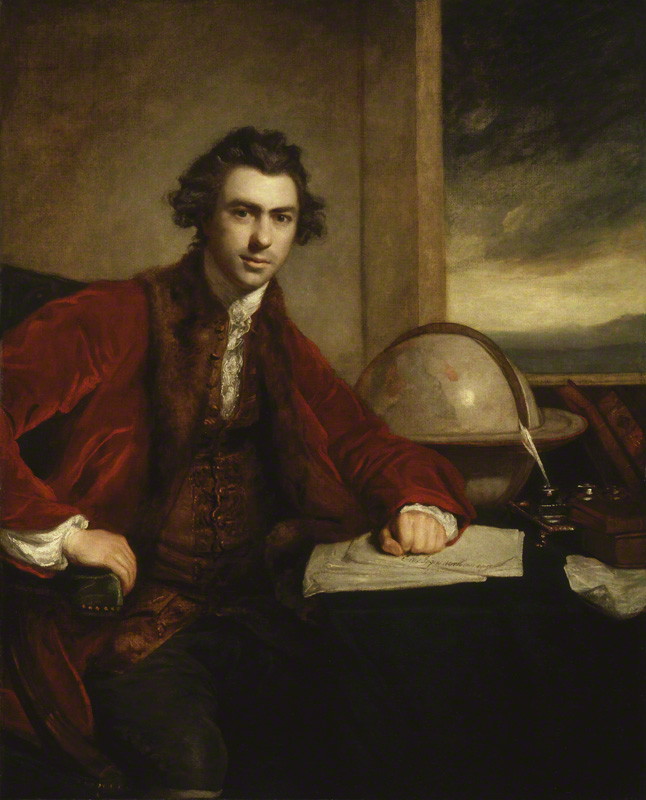
Portrait of Joseph Banks

Joseph Banks. Joshua Reynolds. Public domain.

Historical person · Early Modern

Joseph Banks

1743–1820

Botanical collector and scientific patron who sailed on Endeavour and later organised influential networks linking research, Kew and British imperial expansion.

Explore Science and TechnologyRead biography ↓

Your next chapter starts here

Take history with you.

Create a free account or log in to download this guide as a PDF. Reading on the website is always free.

Create free account
Quick answers

What to know about Joseph Banks

Direct answers to common questions about Joseph Banks, followed by the full sourced biography.

Who was Joseph Banks?

Botanical collector and scientific patron who sailed on Endeavour and later organised influential networks linking research, Kew and British imperial expansion. Botanical collector and scientific patron who sailed on Endeavour and later organised influential networks linking research, Kew and British imperial expansion.

What is Joseph Banks known for?

Joseph Banks is particularly known for Endeavour voyage, Kew patronage, Royal Society presidency.

When did Joseph Banks live?

Joseph Banks lived 1743–1820. This profile places that life within Early Modern and Science and Technology.

Why is Joseph Banks historically significant?

Banks encouraged research with economic applications, including the movement of useful crops between regions. Such projects cannot be understood simply as the spread of beneficial plants. They were entangled with colonial settlement, plantation economies and unequal power over land and labour. His support for exploration helped shape British engagement with Australia, while his.

Biography

Joseph Banks: life and legacy

Overview

Botanical collector and scientific patron who sailed on Endeavour and later organised influential networks linking research, Kew and British imperial expansion.

Wealth made extensive collecting possible

Banks came from a wealthy family and inherited resources that allowed him to pursue natural history on an unusually large scale. A voyage to Newfoundland and Labrador in 1766 developed his collecting experience. His election to the Royal Society connected him with a powerful scientific community. Money mattered throughout this career: transport, assistants, equipment and preservation were costly. Treating his work solely as personal enthusiasm would hide the material advantages that enabled it. His later patronage extended those advantages to selected collectors while also making him an influential gatekeeper within British science.

Natural history aboard Endeavour

Banks joined James Cook’s first Pacific voyage with a scientific party that included Daniel Solander and the artist Sydney Parkinson. Their work accompanied the expedition’s astronomical and geographical objectives. Plants and animals were collected, described and drawn during stops in South America, the Pacific and Australasia. The resulting collections brought many species to European scientific attention, but those species were not new to the people already living with them. Local knowledge, encounters and the labour of others formed part of the expedition’s achievements. The voyage also operated within European imperial ambitions rather than outside political history.

Organising science from London

After returning in 1771, Banks increasingly worked through correspondence, collections and patronage. He became president of the Royal Society in 1778 and remained in office for decades. His London household functioned as a meeting point and resource for naturalists. Advice to George III and involvement with Kew helped create a network of collectors and plant transfers. This was science conducted through administration as well as field observation. Decisions about who received support and which plants deserved attention influenced what information reached Britain and what kinds of knowledge gained institutional prestige.

Botany, empire and practical uses

Banks encouraged research with economic applications, including the movement of useful crops between regions. Such projects cannot be understood simply as the spread of beneficial plants. They were entangled with colonial settlement, plantation economies and unequal power over land and labour. His support for exploration helped shape British engagement with Australia, while his scientific connections extended far beyond it. Banks’s importance rests partly in that reach: he helped make collection and classification into sustained institutional enterprises. A balanced account recognises the scientific resources he assembled while asking whose knowledge and labour were credited, and who benefited from their use.
Key moments

Timeline

  1. Born

    Joseph Banks's life began in 1743.

  2. North Atlantic collecting

    Visits Newfoundland and Labrador to study natural history.

  3. Royal Society fellowship

    Is elected to the scientific society.

  4. Endeavour departs

    Joins Cook’s first Pacific expedition with his scientific party.

  5. Australian collecting

    Works at Botany Bay and the Endeavour River.

  6. Return to Britain

    Brings home extensive natural-history collections.

  7. Iceland expedition

    Travels with Solander to Iceland and the Hebrides.

  8. Royal Society president

    Begins his long presidency.

  9. Public advisory committees

    Chairs parliamentary inquiries on banknote forgery and weights and measures.

  10. Died

    Joseph Banks died in 1820.

Connections

Related people

Keep reading

Related stories

Test your knowledge

Related quizzes

Evidence

Sources and further reading

  1. Who was Sir Joseph Banks?State Library of New South Wales
  2. Joseph BanksNatural History Museum
  3. Sir Joseph BanksAustralian Dictionary of Biography
  4. Joseph BanksCentre for Australian National Biodiversity Research
  5. Biographical records and portraitsNational Portrait Gallery
  6. Historical people and primary sourcesLibrary of Congress
  7. Historical figuresEncyclopaedia Britannica

Biographical claims are summarised from the sources above. Interpretation and disputed reputations are identified in the text rather than presented as settled fact.

Milestone unlocked!

Your completed quizzes are building a history of their own.

