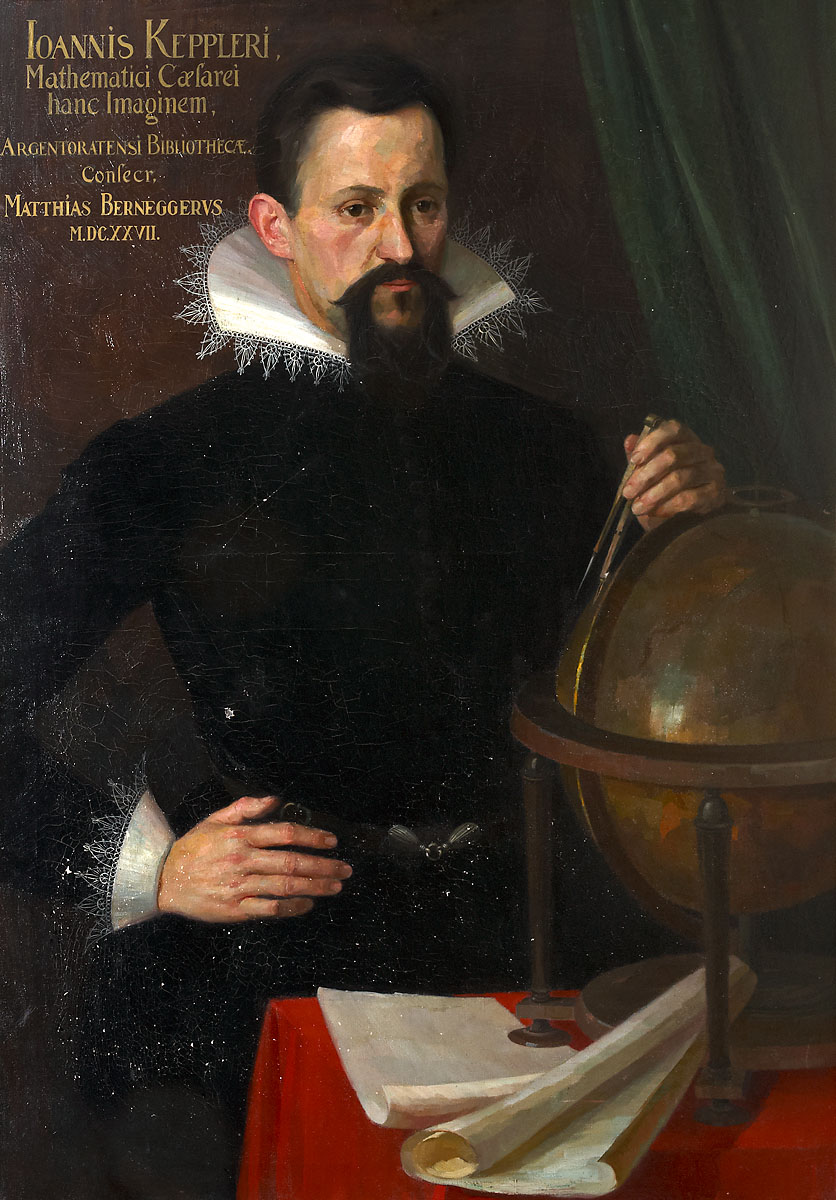
Portrait of Pierre de Fermat

Pierre de Fermat. Unknown author. Public domain.

Historical person · Early Modern

Pierre de Fermat

Early 1600s–1665

French magistrate and mathematician whose correspondence advanced number theory, geometry and the mathematical study of probability.

Explore Science and TechnologyRead biography ↓

Your next chapter starts here

Take history with you.

Create a free account or log in to download this guide as a PDF. Reading on the website is always free.

Create free account
Quick answers

What to know about Pierre de Fermat

Direct answers to common questions about Pierre de Fermat, followed by the full sourced biography.

Who was Pierre de Fermat?

French magistrate and mathematician whose correspondence advanced number theory, geometry and the mathematical study of probability. French magistrate and mathematician whose correspondence advanced number theory, geometry and the mathematical study of probability.

What is Pierre de Fermat known for?

Pierre de Fermat is particularly known for Number theory, Probability with Pascal, Methods for tangents and extrema.

When did Pierre de Fermat live?

Pierre de Fermat lived Early 1600s–1665. This profile places that life within Early Modern and Science and Technology.

Why is Pierre de Fermat historically significant?

Fermat’s best-known assertion concerned whole-number solutions to equations in which two like powers add to a third. His marginal claim that he possessed a proof became famous through his son’s later publication of the notes; the annotated original volume no longer survives. A general proof was not established until Andrew Wiles’s work in the 1990s. That later achievement must not be.

Biography

Pierre de Fermat: life and legacy

Overview

French magistrate and mathematician whose correspondence advanced number theory, geometry and the mathematical study of probability.

A magistrate with mathematical correspondents

Fermat pursued mathematics alongside a legal career in southern France, entering office in Toulouse in 1631. His birth year is disputed: 1601 is traditional, while historians have proposed later dates, so a precise birthday should not be treated as settled. He exchanged problems and results through networks involving Marin Mersenne and other scholars. Letters allowed ideas to travel without requiring a permanent university appointment. They also created difficulties when Fermat sent an impressive conclusion but omitted enough of the method to leave his correspondents unsure how to reproduce it.

Geometry and the study of change

Fermat investigated curves, tangents, areas and maximum or minimum values. These questions later became central to calculus, although his methods should not simply be identified with the fully developed subject. He sought ways to translate geometrical problems into algebraic relationships and to compare closely related quantities. His work brought him into disagreement with Descartes over methods and their validity. The surviving record is scattered rather than a single systematic textbook. Reconstructing his contribution requires distinguishing what he had communicated, what others understood and what appeared in print only after his lifetime.

A fair division of uncertain winnings

His exchange with Pascal in 1654 examined how stakes should be divided when a game stops before either player has won. Counting the possible future sequences gave a way to compare the players’ chances instead of dividing money merely according to the current score. The reasoning depended on clearly specified rules and equally likely outcomes. This was a decisive step towards mathematical probability, not a guarantee that every uncertain human situation can be counted so neatly. The correspondence illustrates how a seemingly recreational problem could demand a new and general form of reasoning.

The claim in the margin

Fermat’s best-known assertion concerned whole-number solutions to equations in which two like powers add to a third. His marginal claim that he possessed a proof became famous through his son’s later publication of the notes; the annotated original volume no longer survives. A general proof was not established until Andrew Wiles’s work in the 1990s. That later achievement must not be projected backwards as evidence that Fermat had the same argument. His importance also extends well beyond this celebrated puzzle, into methods and questions that helped define number theory as a continuing research field.

Key moments

Timeline

  1. Born

    Pierre de Fermat's life began in Early 1600s.

  2. Early geometrical work

    Shares a reconstruction of Apollonius’s Plane Loci in Bordeaux.

  3. Toulouse legal office

    Begins his career as a councillor in the local parlement.

  4. Mersenne correspondence

    Sends geometrical results and challenges into the Paris scholarly network.

  5. Higher judicial chamber

    Advances to another chamber within the Toulouse parlement.

  6. Criminal court responsibilities

    Reaches a senior stage in his legal career.

  7. Probability exchange

    Discusses fair division and chances with Pascal.

  8. Huygens correspondence

    Begins an exchange that includes probability and number theory.

  9. Account of discoveries

    Communicates more about his number-theoretical methods, including infinite descent.

  10. Died

    Pierre de Fermat died in 1665.

Connections

Related people

Keep reading

Related stories

Test your knowledge

Related quizzes

Evidence

Sources and further reading

  1. Pierre de FermatUniversity of St Andrews, MacTutor
  2. Pierre de Fermat and the surviving editions of DiophantusLinda Hall Library
  3. Fermat: mathematical methods and probability correspondenceTrinity College Dublin, historical Rouse Ball text
  4. When Was Pierre de Fermat Born?Mathematical Association of America
  5. Biographical records and portraitsNational Portrait Gallery
  6. Historical people and primary sourcesLibrary of Congress
  7. Historical figuresEncyclopaedia Britannica

Biographical claims are summarised from the sources above. Interpretation and disputed reputations are identified in the text rather than presented as settled fact.

Milestone unlocked!

Your completed quizzes are building a history of their own.