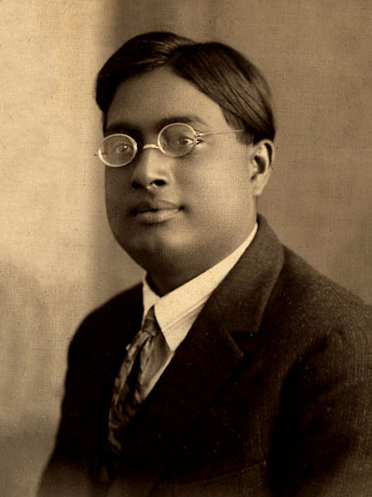
BiographyJagadish Chandra Bose: life and legacy
Overview
Bengali experimental scientist who investigated electromagnetic waves and plant responses, and founded an enduring interdisciplinary research institute.
Training across disciplines
Bose’s early schooling in Bengal preceded study at St Xavier’s in Calcutta and then in Britain. Ill health ended an initial attempt to train in medicine, after which he pursued natural sciences at Cambridge. Returning to India, he taught physics at Presidency College. His later movement between physics and plant physiology was therefore not simply a late abandonment of one subject for another. He approached questions about living systems with the practical interests of an experimental physicist: what can be measured, how reliably, and what apparatus will make an otherwise minute response observable?
Electromagnetic waves in the laboratory
During the 1890s Bose developed apparatus for studying short electromagnetic waves. Reflection, refraction and polarisation helped demonstrate relationships between these waves and light. His instruments included detectors and arrangements for directing the radiation, and he demonstrated his work internationally, including at the Royal Institution in 1897. These investigations belong in the history of wireless technology, but should not be compressed into a claim that one person invented all radio communication. His distinctive contribution lay in generating, detecting and experimentally examining waves under controlled conditions, making their behaviour available to systematic measurement.
Recording the responses of plants
Observations of changes in detectors encouraged Bose to compare responses in living and non-living materials. He investigated the effects of electrical, mechanical and chemical stimulation, eventually devoting much of his work to plants. Devices such as the crescograph magnified tiny movements so that growth and responses could be recorded. These experiments made plant activity easier to study quantitatively. They do not, by themselves, establish that plants experience human emotions or possess consciousness. Distinguishing a measurable physiological response from those much larger claims preserves the real interest of the work without adding sensational conclusions.
A permanent home for research
Bose founded his institute in Calcutta in November 1917, creating an institutional home for investigations crossing conventional subject boundaries. The project drew on support from people including Sister Nivedita, Sara Chapman Bull and Rabindranath Tagore. Its history reflects the importance of funding, buildings, instruments and intellectual networks alongside individual discovery. Bose wanted research and the spread of knowledge to continue beyond his own experiments. His published books and surviving apparatus reveal that ambition in practical form: observations needed a record, an audience and trained successors if they were to become an enduring scientific programme.