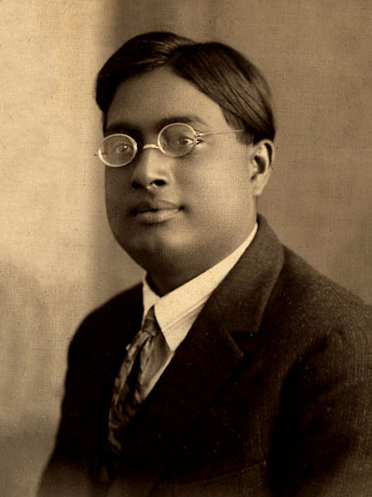
Portrait of Chien-Shiung Wu

Chien-Shiung Wu. Smithsonian Institution. No known copyright restrictions.

Historical person · 20th Century

Chien-Shiung Wu

1912–1997

Experimental physicist whose precision studies of radioactive decay helped overturn the assumption that nature always preserves mirror symmetry.

Explore Science and TechnologyRead biography ↓

Your next chapter starts here

Take history with you.

Create a free account or log in to download this guide as a PDF. Reading on the website is always free.

Create free account
Quick answers

What to know about Chien-Shiung Wu

Direct answers to common questions about Chien-Shiung Wu, followed by the full sourced biography.

Who was Chien-Shiung Wu?

Experimental physicist whose precision studies of radioactive decay helped overturn the assumption that nature always preserves mirror symmetry. Experimental physicist whose precision studies of radioactive decay helped overturn the assumption that nature always preserves mirror symmetry.

What is Chien-Shiung Wu known for?

Chien-Shiung Wu is particularly known for Parity-violation experiment, Beta-decay research, American Physical Society leadership.

When did Chien-Shiung Wu live?

Chien-Shiung Wu lived 1912–1997. This profile places that life within 20th Century and Science and Technology.

Why is Chien-Shiung Wu historically significant?

The findings, obtained in late 1956 and published in 1957, transformed particle physics. The Nobel Prize went to Lee and Yang, not to Wu or the other experimenters. Wu’s career nevertheless extended far beyond that omission: she continued research at Columbia, received major honours and became the first woman to lead the American Physical Society in 1975. She also challenged unequal.

Biography

Chien-Shiung Wu: life and legacy

Overview

Experimental physicist whose precision studies of radioactive decay helped overturn the assumption that nature always preserves mirror symmetry.

From China to American laboratories

Wu received an education encouraged by her father, who established a school for girls. After studying physics in China, she travelled to the United States and entered Berkeley in 1936, completing a doctorate in 1940. Her subsequent career crossed several institutions, including Smith College and Princeton. Scientific ambition developed alongside the upheavals of war and migration. She became an experimental specialist, concerned not only with what a theory predicted but with whether an apparatus could distinguish that prediction from background effects, imperfect measurements or an alternative explanation.

Wartime nuclear research

In 1944 Wu moved from Princeton to Columbia and joined work connected with the Manhattan Project. Her contributions included improvements to radiation detection and research associated with uranium enrichment. This placed her within a large, secretive organisation rather than in an isolated discovery story. Princeton’s historical account also records her contribution to understanding xenon poisoning, a problem affecting reactor operation. These activities linked precise laboratory measurements to the development of nuclear weapons. Her later public prominence should not obscure the collective, technically specialised and ethically consequential wartime setting of this research.

Testing a supposedly universal symmetry

Lee and Yang questioned whether parity conservation had actually been demonstrated in weak interactions. Wu developed a decisive test with Ernest Ambler, Raymond Hayward, Dale Hoppes and Ralph Hudson at the National Bureau of Standards. The team cooled cobalt-60 to extremely low temperatures and aligned its nuclei. They then measured the directions in which electrons emerged during beta decay. The unequal emission showed that the process did not behave like its mirror image. Reversing the alignment and checking changes as the sample warmed helped establish that the result was physical, not merely an apparatus defect.

Recognition and the place of experiment

The findings, obtained in late 1956 and published in 1957, transformed particle physics. The Nobel Prize went to Lee and Yang, not to Wu or the other experimenters. Wu’s career nevertheless extended far beyond that omission: she continued research at Columbia, received major honours and became the first woman to lead the American Physical Society in 1975. She also challenged unequal treatment in science. Her achievement illustrates why experimental design deserves attention alongside theoretical proposals: a new possibility becomes established knowledge only through measurements capable of surviving careful scrutiny and independent investigation.

Key moments

Timeline

  1. Born

    Chien-Shiung Wu's life began in 1912.

  2. Berkeley studies

    Moves to the United States for graduate work in physics.

  3. Doctorate

    Completes her physics PhD at Berkeley.

  4. Columbia wartime research

    Joins Manhattan Project work after teaching at Princeton.

  5. Cobalt-60 experiment

    Works with the National Bureau of Standards team to test parity.

  6. Parity results published

    Coauthors the experimental paper documenting the asymmetric beta emission.

  7. National Academy election

    Receives recognition from the American scientific academy.

  8. Physics society president

    Becomes the first woman president of the American Physical Society.

  9. Wolf Prize

    Receives the inaugural Wolf Prize in Physics.

  10. Retirement

    Retires from her Columbia professorship.

  11. Died

    Chien-Shiung Wu died in 1997.

Connections

Related people

Keep reading

Related stories

Test your knowledge

Related quizzes

Evidence

Sources and further reading

  1. Chien-Shiung Wu: The First Lady of PhysicsUS National Park Service
  2. The Reversal of Parity Law in Nuclear PhysicsNational Institute of Standards and Technology
  3. Chien-Shiung WuPrinceton University, Nuclear Princeton
  4. Biographical records and portraitsNational Portrait Gallery
  5. Historical people and primary sourcesLibrary of Congress
  6. Historical figuresEncyclopaedia Britannica

Biographical claims are summarised from the sources above. Interpretation and disputed reputations are identified in the text rather than presented as settled fact.

Milestone unlocked!

Your completed quizzes are building a history of their own.