Ancient Egyptian history stretches across thousands of years and cannot be reduced to pyramids and famous rulers. Kingdoms expanded and fragmented, religious practices changed, and communities maintained extensive connections beyond the Nile valley. Historians conventionally divide the dynastic period into kingdoms and intermediate periods, but these labels are modern tools rather than names Egyptians always used for themselves. Dates for early reigns remain approximate. Archaeology, inscriptions, administrative records and objects together reveal a society whose remarkable monuments depended on the resources and work of a much wider population.

Topic guide
Ancient Egypt
The Nile valley's changing kingdoms, everyday work, religious beliefs and connections with the wider ancient world.
Start here
Overview
Key questions answered
Ancient Egypt explained
Begin with clear answers, then use the full guide, timeline, people, stories and quizzes below.
What is Ancient Egypt?
The Nile valley's changing kingdoms, everyday work, religious beliefs and connections with the wider ancient world. Ancient Egyptian history stretches across thousands of years and cannot be reduced to pyramids and famous rulers. Kingdoms expanded and fragmented, religious practices changed, and communities maintained extensive connections beyond the Nile valley. Historians.
When did Ancient Egypt happen?
The guide follows major developments from c. 3100 BC (Early dynastic unification) to 1822 (Hieroglyphic breakthrough). The full chronology below explains the changes between them.
What should you know about Ancient Egypt?
The essential areas are The Nile and the work of survival, Kingship, administration and political change, Religion, death and the preservation of identity, An interconnected kingdom, How the evidence changes the story. Each section below explains the evidence and historical connections.
Why does Ancient Egypt matter?
Ancient Egyptian history stretches across thousands of years and cannot be reduced to pyramids and famous rulers. Kingdoms expanded and fragmented, religious practices changed, and communities maintained extensive connections beyond the Nile valley. Historians conventionally divide the dynastic period into kingdoms and intermediate periods, but these labels are modern tools rather than.
Build your understanding
The essential guide
The Nile and the work of survival
The Nile supplied water, fertile agricultural land and a major transport route. Its seasonal rhythms shaped farming, but people still needed to organise cultivation, storage and distribution. A favourable environment did not remove the risks of shortage or the inequalities between households. Grain production sustained towns, officials and religious institutions as well as cultivators. Fishing, craft production and trade supplemented farming. Most houses used materials such as mudbrick, wood and reeds, which survive less readily than monumental stone. This uneven preservation matters: the impressive buildings visitors see today do not represent the ordinary home of most ancient Egyptians. Archaeologists recover everyday experience through tools, food remains, pottery and settlements.
Kingship, administration and political change
Royal authority was expressed through ceremony, monuments and relationships with the gods, but governing required officials, scribes and local institutions. The conventional unification of Upper and Lower Egypt around 3100 BC marks a useful starting point for dynastic history, not a fully documented single-day event. Old Kingdom rulers commissioned major pyramid complexes. Later periods saw changing centres of authority, reunification and renewed expansion. Political fragmentation should not automatically be equated with the disappearance of all cultural or economic activity. Provincial leaders and communities could remain active when central power weakened. The distinction between royal claims and practical administration is therefore essential when interpreting inscriptions that present the king as universally victorious.
Religion, death and the preservation of identity
Egyptians recognised many deities whose importance varied between places and periods. Temples were religious centres but also substantial institutions with personnel, property and resources. Funerary practices expressed hopes for continued existence after death, linking bodily preservation, ritual, offerings and remembrance. Wealth strongly affected the form of burial a household could afford. Elaborate tombs and decorated coffins therefore reveal particular social experiences rather than a universal standard. Texts and images were intended to achieve religious purposes, not simply record scenes for future historians. A tomb painting may show desirable abundance and order. Reading it as a literal inventory of its owner's everyday life would miss the conventions through which it worked.
An interconnected kingdom
Egypt was never completely isolated behind its deserts. Trade, diplomacy, migration and warfare connected it with Nubia, the Levant and the wider Mediterranean. New Kingdom rulers developed an empire beyond Egypt's core territory, while later Egypt was itself ruled by dynasties with origins elsewhere. These relationships brought conflict and exploitation but also the circulation of objects, skills and ideas. Alexander's arrival in 332 BC was followed by Ptolemaic rule, during which Greek and Egyptian institutions interacted without simply becoming identical. Rome took control in 30 BC. Such transitions changed political authority, but they did not instantly erase local languages, religious practices or the knowledge accumulated by communities over generations.
How the evidence changes the story
Written evidence includes accounts, contracts, letters and literature alongside royal and religious inscriptions. These sources widen the picture beyond battles and tombs, although literacy and preservation remained uneven. The Rosetta Stone carried a decree in Greek and two Egyptian scripts; comparison helped scholars decipher hieroglyphs, with a major breakthrough in 1822. Decipherment made more Egyptian voices accessible, but interpretation still requires attention to context and genre. Archaeological discoveries continue to refine dates and explanations. Studying ancient Egypt responsibly means recognising both the extraordinary survival of evidence and its gaps. A history reconstructed mainly from elite objects must be tested against the remains of work, settlement and ordinary material life.
Chronology
Key dates
Early dynastic unification
Upper and Lower Egypt became linked under early dynastic kingship.
Old Kingdom begins
The period associated with major pyramid complexes developed.
Middle Kingdom
Reunification opened a new phase of central royal authority.
New Kingdom
Egypt entered an era of substantial imperial expansion.
Persian conquest
Egypt came under Achaemenid Persian rule.
Alexander arrives
Macedonian conquest changed Egypt's political position.
Roman annexation
Egypt became part of the Roman Empire.
Hieroglyphic breakthrough
Champollion's work transformed the interpretation of Egyptian writing.
Read more
Essential stories
Begin with the foundations, then move into the events, people and debates that add detail and complexity.
No verified stories have been assigned to this topic yet.
Test yourself
Available quizzes
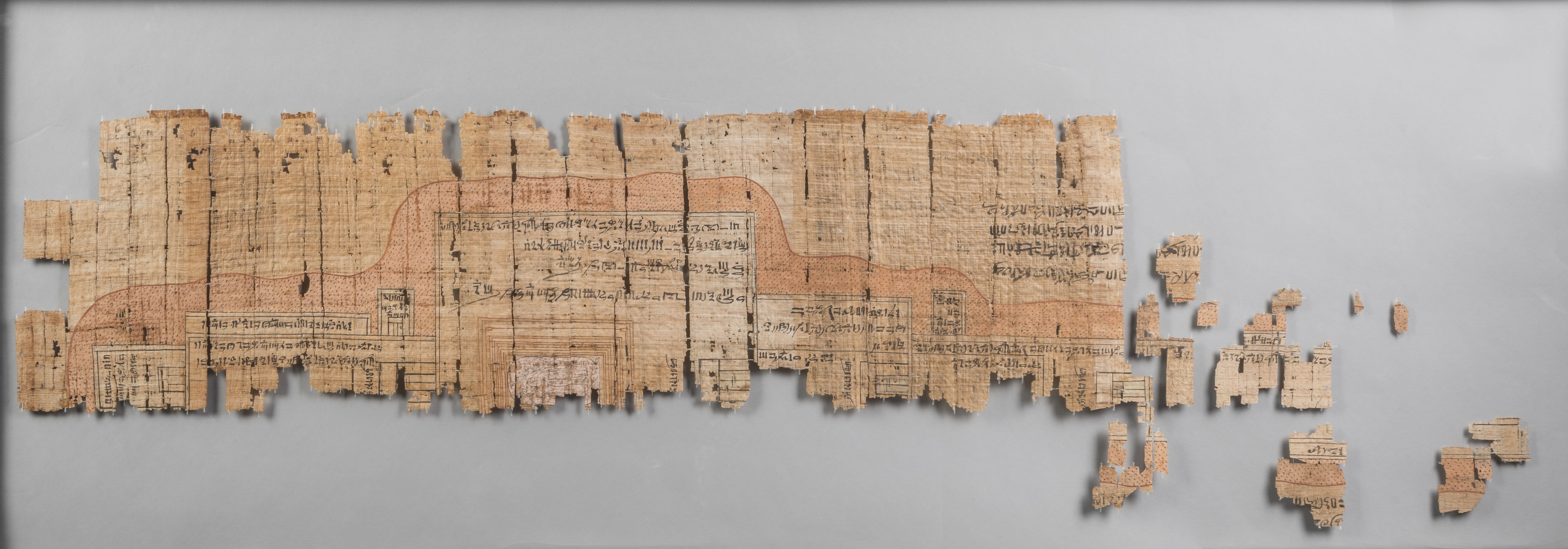 Hard
Ancient Egypt
Egyptian Papyrus: Making and Meaning
Eight questions exploring egyptian papyrus: making and meaning, from surviving evidence to practical decisions.
Start quiz → Hard
Ancient Egypt
Egyptian Faience: Materials and Glazing
Eight questions about egyptian faience: materials and glazing, exploring evidence, objects and historical decisions.
Start quiz →People
Events
No events are currently assigned.
Continue learning
Sources and further reading
- Egyptian Ministry of Tourism and Antiquities: historical periods
- University of Memphis: Egyptian chronology
- British Museum: life in ancient Egypt
- British Museum: life and death gallery guide
- British Museum: hieroglyphs exhibition guide
- Library of Congress: exhibitions and primary-source collections
- Heilbrunn Timeline of Art History
- British Library: research collections