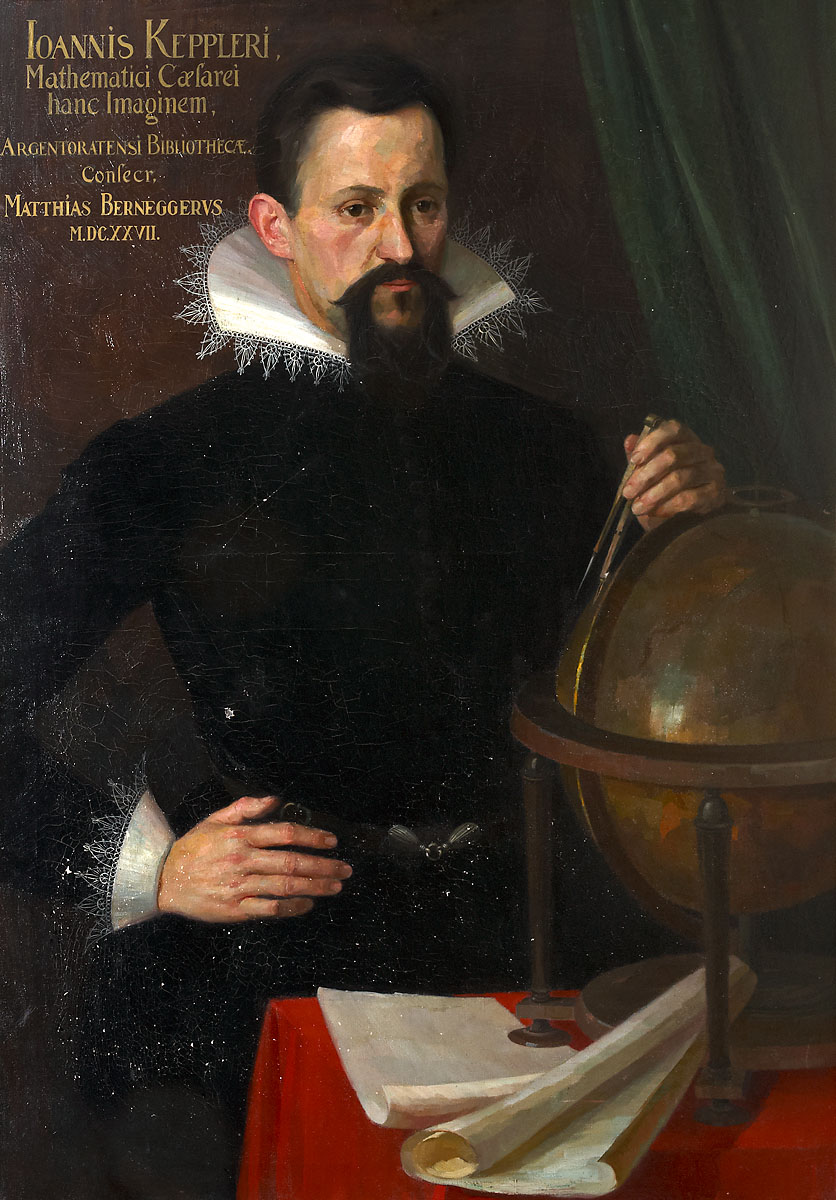
Portrait of Tycho Brahe

Tycho Brahe. Unknown author. Public domain.

Historical person · Early Modern

Tycho Brahe

1546–1601

Danish astronomer whose carefully calibrated observations before the telescope supplied crucial evidence for a transformed understanding of planetary motion.

Explore Science and TechnologyRead biography ↓

Your next chapter starts here

Take history with you.

Create a free account or log in to download this guide as a PDF. Reading on the website is always free.

Create free account
Quick answers

What to know about Tycho Brahe

Direct answers to common questions about Tycho Brahe, followed by the full sourced biography.

Who was Tycho Brahe?

Danish astronomer whose carefully calibrated observations before the telescope supplied crucial evidence for a transformed understanding of planetary motion. Danish astronomer whose carefully calibrated observations before the telescope supplied crucial evidence for a transformed understanding of planetary motion.

What is Tycho Brahe known for?

Tycho Brahe is particularly known for Uraniborg and Stjerneborg, The supernova of 1572, Planetary observations used by Kepler.

When did Tycho Brahe live?

Tycho Brahe lived 1546–1601. This profile places that life within Early Modern and Science and Technology.

Why is Tycho Brahe historically significant?

Tycho proposed a system in which the Sun and Moon moved around a stationary Earth while the other planets orbited the Sun. His failure to detect stellar parallax was one reason for rejecting Earth’s motion; the stars were actually too distant for his instruments to reveal the small shift. Johannes Kepler later used Tycho’s planetary measurements to establish elliptical orbits. This.

Biography

Tycho Brahe: life and legacy

Overview

Danish astronomer whose carefully calibrated observations before the telescope supplied crucial evidence for a transformed understanding of planetary motion.

Choosing observation

Tycho Brahe belonged to a prominent Danish noble family and was educated for a career appropriate to that status. Astronomy increasingly displaced the legal studies expected of him. An eclipse in 1560 impressed him because it could be predicted, while discrepancies in existing planetary tables showed that prediction was not yet accurate enough. His response was to make better observations rather than simply accept inherited calculations. Study and travel across Europe brought him into contact with books, instruments and scholars. His eventual achievements depended on this long accumulation of technical experience as well as on personal curiosity.

A changing heaven

The brilliant new star he observed in 1572 challenged the idea that the heavens beyond the Moon were unchanging. Measurements found no detectable displacement relative to distant stars, supporting the conclusion that the object was not a nearby atmospheric phenomenon. His study of the comet of 1577 similarly placed it beyond the Moon. These conclusions mattered because they tested physical claims about the structure of the cosmos. Tycho was not using a telescope: his work relied on carefully designed instruments for measuring angles and on repeated comparison, making precision and calibration central to his authority.

An island devoted to astronomy

Royal support enabled Tycho to build Uraniborg on Hven in 1576, followed by the neighbouring Stjerneborg observatory in 1584. The complex brought instruments, assistants and sustained observation together on an unusual scale. Improvements in equipment were part of a continuing effort to detect and reduce error, not simply displays of expensive craftsmanship. Such an enterprise also depended on patronage and local resources. After losing support under a new monarch, Tycho left Denmark and eventually entered imperial service in Prague. Scientific institutions, even ambitious ones, remained vulnerable to changes in political relationships.

A different model of the planets

Tycho proposed a system in which the Sun and Moon moved around a stationary Earth while the other planets orbited the Sun. His failure to detect stellar parallax was one reason for rejecting Earth’s motion; the stars were actually too distant for his instruments to reveal the small shift. Johannes Kepler later used Tycho’s planetary measurements to establish elliptical orbits. This outcome makes the distinction between evidence and interpretation especially clear. Tycho’s preferred cosmic model did not survive, but the quality of the observations allowed another investigator to reach conclusions he himself had not accepted.

Key moments

Timeline

  1. Born

    Tycho Brahe's life began in 1546.

  2. University in Copenhagen

    Begins studies that include law before astronomy becomes his main interest.

  3. Eclipse stimulates interest

    The successful prediction of a solar eclipse encourages his astronomical studies.

  4. Checks planetary tables

    Observations reveal errors in predicted planetary positions.

  5. Observes a new star

    Measures the object now recognised as a supernova in Cassiopeia.

  6. Uraniborg founded

    Royal patronage supports his observatory on Hven.

  7. Studies a comet

    Measurements place the comet beyond the Moon rather than within the atmosphere.

  8. Stjerneborg built

    Adds another observatory to improve the arrangement and stability of instruments.

  9. Leaves Denmark

    Departs following the deterioration of royal support.

  10. Imperial service in Prague

    Establishes a new base under Rudolf II.

  11. Died

    Tycho Brahe died in 1601.

Connections

Related people

Keep reading

Related stories

Test your knowledge

Related quizzes

Evidence

Sources and further reading

  1. Tycho BraheUniversity of St Andrews, MacTutor
  2. Tycho Brahe, 1546–1601Danmarkshistorien / Lex
  3. Tycho Brahe Spots a SupernovaAmerican Physical Society
  4. Biographical records and portraitsNational Portrait Gallery
  5. Historical people and primary sourcesLibrary of Congress
  6. Historical figuresEncyclopaedia Britannica

Biographical claims are summarised from the sources above. Interpretation and disputed reputations are identified in the text rather than presented as settled fact.

Milestone unlocked!

Your completed quizzes are building a history of their own.

