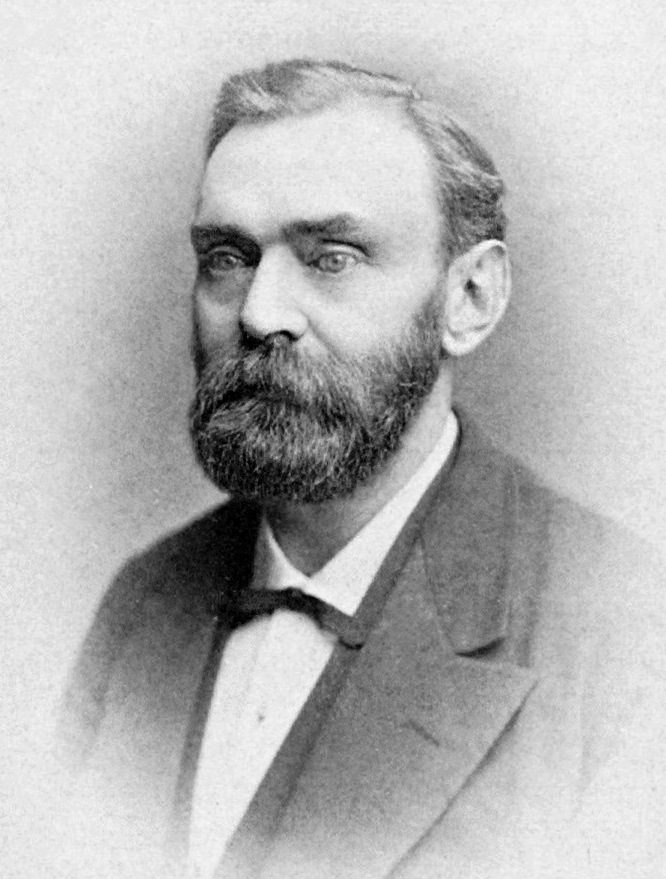
Portrait of Thomas Edison

Thomas Edison. Louis Bachrach, Bachrach Studios, restored by Michel Vuijlsteke. Public domain.

Historical person · 19th Century

Thomas Edison

1847–1931

Inventor and industrial organiser whose laboratories developed sound recording, electric lighting systems and motion-picture equipment through extensive collaborative experimentation.

Explore Science and TechnologyRead biography ↓

Your next chapter starts here

Take history with you.

Create a free account or log in to download this guide as a PDF. Reading on the website is always free.

Create free account
Quick answers

What to know about Thomas Edison

Direct answers to common questions about Thomas Edison, followed by the full sourced biography.

Who was Thomas Edison?

Inventor and industrial organiser whose laboratories developed sound recording, electric lighting systems and motion-picture equipment through extensive collaborative experimentation. Inventor and industrial organiser whose laboratories developed sound recording, electric lighting systems and motion-picture equipment through extensive collaborative experimentation.

What is Thomas Edison known for?

Thomas Edison is particularly known for Phonograph, Electric lighting systems, Menlo Park laboratory.

When did Thomas Edison live?

Thomas Edison lived 1847–1931. This profile places that life within 19th Century and Science and Technology.

Why is Thomas Edison historically significant?

The larger West Orange laboratory opened in 1887 and supported work on phonographs, moving pictures, batteries and industrial materials. Not every venture succeeded. A major attempt to concentrate low-grade iron ore proved commercially disappointing, illustrating the difference between making machinery function and making it profitable. Some techniques were redirected into cement.

Biography

Thomas Edison: life and legacy

Overview

Inventor and industrial organiser whose laboratories developed sound recording, electric lighting systems and motion-picture equipment through extensive collaborative experimentation.

Learning through telegraphy

Edison grew up in Ohio and Michigan, with much of his education taking place outside a formal classroom. Railway work and employment as a travelling telegraph operator introduced him to a technology whose commercial value depended on speed and reliability. Improving a receiver or sending several messages along one wire meant solving a problem for paying customers. That environment shaped his later approach. He combined experimentation with attention to manufacturing costs, patents and demand, rather than treating an invention as complete when it first worked on a laboratory bench.

A laboratory built around teams

At Menlo Park, established in 1876, Edison gathered machinists, experimenters and specialist equipment in one place. The arrangement made repeated testing and rapid reconstruction possible. The phonograph emerged in 1877 from work connected with communications: a moving surface could preserve vibrations and reproduce sound. Its public demonstrations made Edison famous, but the celebrated name should not hide the people who constructed and refined the machines. His later motion-picture work depended particularly on William Kennedy Laurie Dickson. Industrial invention was a collective process even when publicity and patent ownership concentrated recognition on one person.

More than a light bulb

Electric lamps existed before Edison’s work. His central achievement was helping turn incandescent lighting into an interconnected commercial system. A useful lamp required appropriate generators, wiring, switches, meters and a way to distribute power economically. Experiments in 1879 produced a durable carbon-filament lamp, followed by a public demonstration at Menlo Park. Pearl Street station began serving part of Manhattan in 1882. The restricted service area matters: electrification spread through costly infrastructure and business decisions, not an immediate transformation of every household. Investors and competing technologies shaped the industry alongside technical ingenuity.

Success, failure and the business of invention

The larger West Orange laboratory opened in 1887 and supported work on phonographs, moving pictures, batteries and industrial materials. Not every venture succeeded. A major attempt to concentrate low-grade iron ore proved commercially disappointing, illustrating the difference between making machinery function and making it profitable. Some techniques were redirected into cement production. Edison’s career therefore offers more than a sequence of miraculous breakthroughs. It shows persistent experimentation, strong commercial ambition, dependence on skilled colleagues and the importance of distribution. His extensive patent record documents activity, but does not by itself establish that each device was unprecedented or solely his creation.

Key moments

Timeline

  1. Born

    Thomas Edison's life began in 1847.

  2. Telegraph work

    Begins employment as a telegraph operator after learning the equipment.

  3. First patent

    Receives a patent for an electrical vote recorder.

  4. Newark workshop

    Establishes manufacturing and experimental work in New Jersey.

  5. Menlo Park laboratory

    Creates a dedicated research facility with workshops and laboratories.

  6. Phonograph demonstrated

    Develops a machine capable of recording and reproducing sound.

  7. Lighting demonstration

    Publicly demonstrates his incandescent lighting system at Menlo Park.

  8. Pearl Street opens

    An electrical station begins supplying customers in lower Manhattan.

  9. West Orange laboratory

    Opens a larger research complex for a broad programme of development.

  10. Died

    Thomas Edison died in 1931.

Connections

Related people

Keep reading

Related stories

Test your knowledge

Related quizzes

Evidence

Sources and further reading

  1. Edison biographyNational Park Service
  2. BiographyRutgers University, Thomas A. Edison Papers
  3. Thomas Edison timelineLibrary of Congress
  4. Biographical records and portraitsNational Portrait Gallery
  5. Historical people and primary sourcesLibrary of Congress
  6. Historical figuresEncyclopaedia Britannica

Biographical claims are summarised from the sources above. Interpretation and disputed reputations are identified in the text rather than presented as settled fact.

Milestone unlocked!

Your completed quizzes are building a history of their own.

