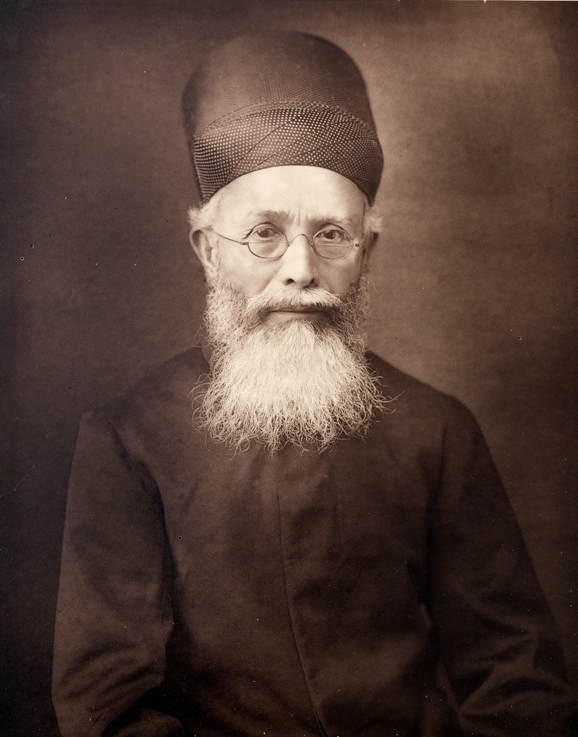
Portrait of Swami Vivekananda

Swami Vivekananda. The original uploader was Dziewa at English Wikipedia .. Public domain.

Historical person · 19th Century

Swami Vivekananda

1863–1902

Hindu monk and teacher who presented Vedanta to international audiences and founded the Ramakrishna Mission, linking spiritual life with organised social service.

Explore Indian HistoryRead biography ↓

Your next chapter starts here

Take history with you.

Create a free account or log in to download this guide as a PDF. Reading on the website is always free.

Create free account
Quick answers

What to know about Swami Vivekananda

Direct answers to common questions about Swami Vivekananda, followed by the full sourced biography.

Who was Swami Vivekananda?

Hindu monk and teacher who presented Vedanta to international audiences and founded the Ramakrishna Mission, linking spiritual life with organised social service. Hindu monk and teacher who presented Vedanta to international audiences and founded the Ramakrishna Mission, linking spiritual life with organised social service.

What is Swami Vivekananda known for?

Swami Vivekananda is particularly known for Chicago Parliament of Religions, Ramakrishna Mission, Practical Vedanta.

When did Swami Vivekananda live?

Swami Vivekananda lived 1863–1902. This profile places that life within 19th Century and Indian History.

Why is Swami Vivekananda historically significant?

Returning to India in 1897, Vivekananda founded the Ramakrishna Mission on 1 May. The organisation brought monks and lay supporters into educational, medical and relief work alongside religious teaching. Land acquired at Belur in 1898 provided a lasting base for the monastic order. He travelled west again in 1899 and returned in 1900, before dying in 1902. Institutions established around.

Biography

Swami Vivekananda: life and legacy

Overview

Hindu monk and teacher who presented Vedanta to international audiences and founded the Ramakrishna Mission, linking spiritual life with organised social service.

Narendranath and Ramakrishna

Born Narendranath Datta in Calcutta, Vivekananda received an education that included Western philosophy alongside Indian intellectual and religious traditions. He became a disciple of Ramakrishna, whose teaching and example shaped his religious development. After Ramakrishna’s death in 1886, a group of disciples formed a monastic community at Baranagar. Formal vows followed in 1887. The name Vivekananda was adopted later, rather than simply being his childhood name. His subsequent public role emerged from this community and its understanding of spiritual practice, not from an isolated decision to become an international lecturer.

Travelling through India and speaking abroad

From 1890 Vivekananda travelled extensively through India. Encounters with poverty and social inequality informed his conviction that religious life should include practical concern for other people. In 1893 he travelled to the United States and addressed the World’s Parliament of Religions in Chicago. The gathering provided a prominent international platform for presenting Hindu traditions to audiences who often knew them through missionary or colonial descriptions. He continued teaching in America and Britain. Public speaking, personal networks and committed supporters helped sustain this work; the Chicago appearance was a beginning rather than the whole of his overseas activity.

What his religious argument proposed

Vivekananda presented Vedanta as a framework for recognising spiritual possibilities within human beings and encouraged respect between religious traditions. His Chicago addresses opposed sectarian hostility while articulating a distinctly Hindu account of religious life. These were theological and philosophical claims, not scientific findings that all listeners accepted. He also argued that material deprivation could not be ignored by people claiming spiritual concern. His idea of practical Vedanta connected service with religious discipline. It offered a response both to internal social problems and to colonial representations of India as incapable of constructive intellectual and social renewal.

A lasting organisation

Returning to India in 1897, Vivekananda founded the Ramakrishna Mission on 1 May. The organisation brought monks and lay supporters into educational, medical and relief work alongside religious teaching. Land acquired at Belur in 1898 provided a lasting base for the monastic order. He travelled west again in 1899 and returned in 1900, before dying in 1902. Institutions established around his teaching continued beyond his short life. His legacy includes international interest in Vedanta and organised service, but it is best understood through particular organisations, lectures and practices rather than vague claims that he represented every Indian religious tradition or spoke for all Hindus.

Key moments

Timeline

  1. Born

    Swami Vivekananda's life began in 1863.

  2. Met Ramakrishna

    Began a relationship with the teacher at Dakshineshwar.

  3. Monastic community formed

    Joined fellow disciples at Baranagar after Ramakrishna’s death.

  4. Formal vows

    The brotherhood adopted formal monastic commitments.

  5. Travels across India

    Embarked on a sustained period of travel and encounter.

  6. Chicago addresses

    Presented Hindu religious ideas at the Parliament of Religions.

  7. Ramakrishna Mission

    Founded an organisation linking spiritual teaching and social service.

  8. Belur base

    Acquired land for the monastery and its developing activities.

  9. Second western visit

    Returned to teach in Europe and the United States.

  10. Returned to India

    Resumed work with disciples and institutions at Belur.

  11. Died

    Swami Vivekananda died in 1902.

Connections

Related people

Keep reading

Related stories

Test your knowledge

Related quizzes

Evidence

Sources and further reading

  1. Swami VivekanandaBelur Math
  2. A Short Life of Swami VivekanandaRamakrishna Mission Vivekananda Educational and Research Institute
  3. Chicago addressesBelur Math
  4. Biographical records and portraitsNational Portrait Gallery
  5. Historical people and primary sourcesLibrary of Congress
  6. Historical figuresEncyclopaedia Britannica

Biographical claims are summarised from the sources above. Interpretation and disputed reputations are identified in the text rather than presented as settled fact.

Milestone unlocked!

Your completed quizzes are building a history of their own.