Who was Severo Ochoa?
Spanish-American biochemist whose enzyme research helped reveal how nucleic acids and proteins are produced. Spanish-American biochemist whose enzyme research helped reveal how nucleic acids and proteins are produced.
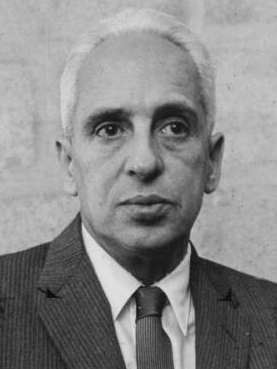
Severo Ochoa. Irwin Gooen (New York University). Public domain.
1905–1993
Spanish-American biochemist whose enzyme research helped reveal how nucleic acids and proteins are produced.
Direct answers to common questions about Severo Ochoa, followed by the full sourced biography.
Spanish-American biochemist whose enzyme research helped reveal how nucleic acids and proteins are produced. Spanish-American biochemist whose enzyme research helped reveal how nucleic acids and proteins are produced.
Severo Ochoa is particularly known for Enzyme research, Laboratory synthesis of nucleic acids.
Severo Ochoa lived 1905–1993. This profile places that life within 20th century and History of Medicine.
Ochoa studied medicine in Madrid but developed his career through laboratory investigation rather than clinical practice. As a student he joined Juan Negrín’s physiology group, studying questions related to muscular metabolism. Research appointments outside Spain broadened his scientific training, and his later career helped connect Spanish researchers with international molecular.
Spanish-American biochemist whose enzyme research helped reveal how nucleic acids and proteins are produced.
Severo Ochoa investigated the biochemical reactions through which cells transform energy and construct essential molecules. In 1955 his laboratory isolated polynucleotide phosphorylase, an enzyme capable under laboratory conditions of producing chains of ribonucleotides. The discovery supplied a practical route to synthetic RNA-like polymers and opened experimental possibilities for molecular biology. It is important to distinguish this laboratory synthesis from the template-directed RNA production ordinarily performed by cellular RNA polymerases.
Ochoa’s work connected enzyme chemistry with the emerging study of genetic information. Synthetic polynucleotides became valuable tools for examining how nucleotide sequences relate to protein production. He shared the 1959 Nobel Prize in Physiology or Medicine with Arthur Kornberg for work on nucleic-acid synthesis. His broader contributions encompassed cellular energy generation, protein synthesis, and genetic-code research, recognized again through the United States National Medal of Science for 1979.
Ochoa studied medicine in Madrid but developed his career through laboratory investigation rather than clinical practice. As a student he joined Juan Negrín’s physiology group, studying questions related to muscular metabolism. Research appointments outside Spain broadened his scientific training, and his later career helped connect Spanish researchers with international molecular biology. The establishment of the Centre for Molecular Biology in Madrid reflected those renewed connections. His institutional influence therefore complemented his enzyme discoveries, providing opportunities for scientific work that could continue through younger researchers and collaborative laboratories.
Graduated with honours from medical school in Madrid before pursuing biochemical research.
Joined its medical school as a research associate, beginning a long association with the university.
Became a United States citizen while continuing his research career in New York.

Railways, telegraphy, newspapers and nursing made the Crimean War look modern, even as soldiers suffered from old failures.
Read story →
How nursing, medical education, statistics and public campaigning changed care while professional barriers persisted.
Read story →Biographical claims are summarised from the sources above. Interpretation and disputed reputations are identified in the text rather than presented as settled fact.


