BiographyRubén Darío: life and legacy
Overview
Nicaraguan poet and journalist whose innovations in rhythm, imagery and literary language helped reshape Spanish-language writing across the Atlantic.
A writer moving between countries
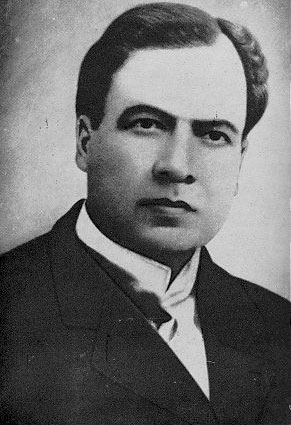
Rubén Darío was born Félix Rubén García Sarmiento in Nicaragua. Early recognition as a poet did not lead to a settled or financially secure life. Journalism, travel and diplomatic employment became recurring ways to support his writing. His career took him through Central America, Chile, Argentina, Spain and France. These journeys exposed him to different literary markets and political settings. They also complicate the idea of a writer belonging to only one national tradition: Darío’s audience and intellectual conversations developed across a Spanish-speaking world connected by newspapers, publishers and personal networks.
Changing the sound of Spanish poetry
Azul, published in Chile in 1888, became a landmark of modernismo. Darío drew on French literary movements while experimenting with the resources of Spanish. Musical rhythm, unusual vocabulary, sensuous images and carefully shaped metres helped break established habits of poetic expression. Prosas profanas, published in 1896, extended those experiments. Exotic settings and elegant surfaces were not simply decorative indulgence. They could assert the freedom of art against ordinary utility and conventional rhetoric, creating a language in which aspiration, desire and dissatisfaction took forms unavailable to more routine public speech.
A journalist as well as a poet
Darío’s newspaper work brought him into contact with contemporary politics and cultural debate. Reporting from Europe for readers in Latin America involved selection and interpretation, not merely recording events. The relationship between Spain and its former colonies changed after the war of 1898, and Darío participated in arguments about shared language, cultural renewal and American power. His writing helped reverse an older assumption that literary authority travelled only from Europe to the Americas. Innovations developed by a Nicaraguan writer could now reshape what poets in Spain considered possible.
Later poetry and an unsettled life
Cantos de vida y esperanza, published in 1905, combined formal ambition with reflections on time, mortality, collective identity and political danger. It did not simply abandon earlier work but widened its emotional and historical range. Diplomatic duties, financial difficulties, illness and personal strain continued alongside public recognition. Darío died in Nicaragua in 1916. His influence should not be reduced to a list of followers: he altered the rhythm and expectations of a language, showing how experimentation could emerge from movement between cultures rather than obedience to a single metropolitan model.