BiographyGabriela Mistral: life and legacy
Overview
Chilean poet, teacher and diplomat whose writing explored loss, childhood and belonging, and whose international career linked literature to education and public service.
A teacher’s beginnings
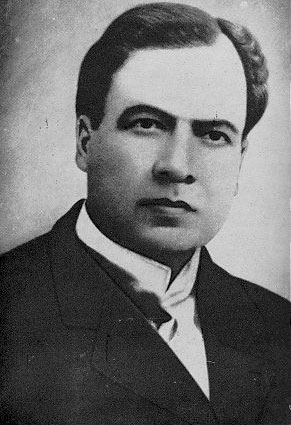
Gabriela Mistral was born Lucila Godoy Alcayaga in Chile’s Elqui region. Teaching began early in her life, before she possessed the credentials normally associated with an established educational career. She worked in schools and developed an interest in the conditions under which children learned. Writing accompanied that work rather than replacing it immediately. By 1908 she was using the name Gabriela Mistral in print. Her early career helps explain why childhood and schooling recur throughout her public activity: they were practical responsibilities, not simply poetic subjects chosen after literary success.
Poetry and educational reform
Publication of Desolación in 1922 established her reputation beyond Chile. The collection explored grief, spiritual questioning and attachment with an intensity that resisted a single sentimental label. That same year Mexico’s education minister José Vasconcelos invited her to contribute to educational reform. She travelled with the artist Laura Rodig and participated in a wider effort to extend reading and education. Lecturas para mujeres appeared in 1923, followed by Ternura in 1924. Poetry, reading materials and educational institutions formed connected parts of her work, although her literary voice was never limited to straightforward instruction or uncomplicated reassurance.
An international working life
Mistral spent much of her later life outside Chile. Work associated with international intellectual cooperation and a consular career brought her into contact with European and American cultural networks. Her appointment to Naples in 1932 did not lead to an effective posting there; she subsequently served in Madrid and elsewhere. These roles gave her influence but also placed her within complicated diplomatic and political settings. Her collection Tala appeared in Buenos Aires in 1938 with support from Victoria Ocampo’s publishing circle. Its connection to aid for children displaced by the Spanish Civil War made literary publication part of a wider humanitarian commitment.
Recognition without simplification
The Nobel Prize in Literature in 1945 made Mistral the first Latin American writer to receive that award. Chile’s National Literature Prize followed in 1951. International recognition sometimes encouraged a narrow public image of a comforting maternal poet. Her career was considerably broader: she was a working educator, a diplomat, an advocate for vulnerable children and an author concerned with displacement, landscape and difficult emotional experience. Understanding those activities together gives greater depth to her writing. She died in 1957, leaving a body of poetry and prose whose importance cannot be reduced to an award or a single national symbol.