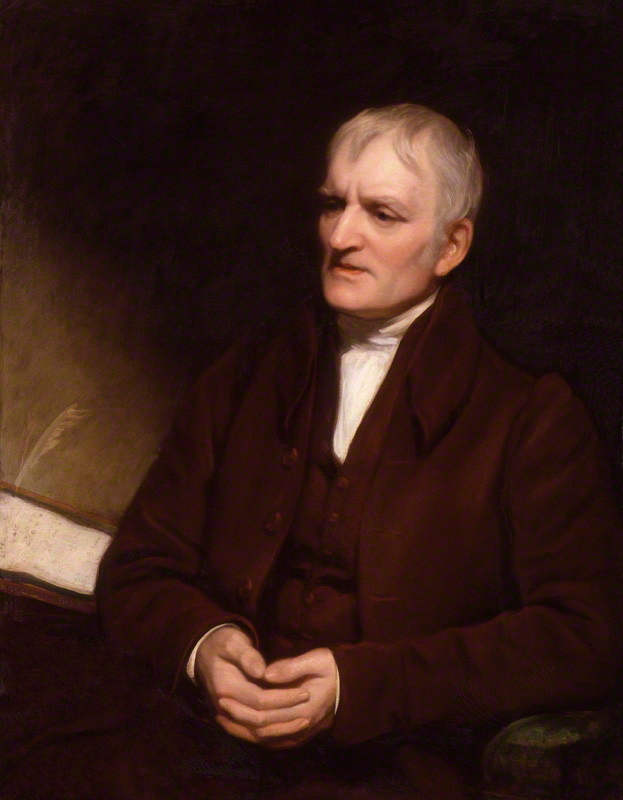
Portrait of Gregor Mendel

Gregor Mendel. Unknown author. Public domain.

Historical person · 19th Century

Gregor Mendel

1822–1884

Augustinian friar and experimental researcher in Brno whose carefully counted plant crosses established enduring principles of inheritance.

Explore Science and TechnologyRead biography ↓

Your next chapter starts here

Take history with you.

Create a free account or log in to download this guide as a PDF. Reading on the website is always free.

Create free account
Quick answers

What to know about Gregor Mendel

Direct answers to common questions about Gregor Mendel, followed by the full sourced biography.

Who was Gregor Mendel?

Augustinian friar and experimental researcher in Brno whose carefully counted plant crosses established enduring principles of inheritance. Augustinian friar and experimental researcher in Brno whose carefully counted plant crosses established enduring principles of inheritance.

What is Gregor Mendel known for?

Gregor Mendel is particularly known for Pea-plant experiments, Principles of inheritance, Meteorological observations.

When did Gregor Mendel live?

Gregor Mendel lived 1822–1884. This profile places that life within 19th Century and Science and Technology.

Why is Gregor Mendel historically significant?

Mendel presented his findings to the Brno natural-science society in February and March 1865, with publication following in 1866. Immediate recognition was limited, but his wider scientific life continued. Meteorological observations occupied him for years, and he kept bees in an apiary built to his design. Election as abbot in 1868 increased his administrative responsibilities and.

Biography

Gregor Mendel: life and legacy

Overview

Augustinian friar and experimental researcher in Brno whose carefully counted plant crosses established enduring principles of inheritance.

A scientific monastery

Johann Mendel grew up in a farming family in Silesia and entered the Augustinian abbey in Brno in 1843, taking the name Gregor. The monastery provided more than religious shelter: its members participated in education, agriculture and scholarly societies. Study at Vienna from 1851 to 1853 added physics and natural science to his training. He also worked as a teacher. This background challenges the familiar picture of an isolated amateur who somehow stumbled upon genetics. His experiments emerged from an intellectually active institution and a region where plant and animal breeding had practical economic significance.

Counting what crosses produced

Mendel chose pea varieties with contrasting characteristics and controlled their pollination, then followed the offspring across generations. Counting large numbers made it possible to identify recurring proportions rather than relying on a few striking examples. Some characteristics disappeared in the first hybrid generation and reappeared in the next. This suggested that inheritance did not simply blend parental qualities permanently together. In modern terms, alternative versions of a hereditary factor can separate into reproductive cells and recombine at fertilisation. Mendel did not know the molecular structure of genes or DNA; those discoveries belonged to later research.

More than one simple law

The familiar principles of segregation and independent assortment capture important parts of Mendel’s work, but not its full scope. He investigated other plants and considered cases that did not behave like the selected pea characters. Modern genetics explains why genes on the same chromosome may be inherited together, and why many traits involve several genes or environmental effects. These qualifications do not make his experiments worthless; they define the conditions under which a simplified model is useful. His method combined deliberate selection of experimental material with numerical analysis, allowing inheritance to be studied as a problem capable of testing.

Publication and responsibilities

Mendel presented his findings to the Brno natural-science society in February and March 1865, with publication following in 1866. Immediate recognition was limited, but his wider scientific life continued. Meteorological observations occupied him for years, and he kept bees in an apiary built to his design. Election as abbot in 1868 increased his administrative responsibilities and reduced the time available for experiments. The later revival of interest in his work around 1900 transformed his reputation. Understanding that delayed reception requires separating the actual researcher, teacher and administrator from the simplified founding-hero story subsequently built around him.

Key moments

Timeline

  1. Born

    Gregor Mendel's life began in 1822.

  2. Studies in Olomouc

    Enters the Philosophical Institute after earlier schooling.

  3. Joins the Augustinians

    Takes the monastic name Gregor at the abbey in Brno.

  4. Vienna studies begin

    Receives further training in physics and natural science through 1853.

  5. Systematic pea crosses

    Begins the main series of pea-breeding experiments conventionally dated 1856–1863.

  6. Meteorological paper

    Publishes observations reflecting an enduring interest beyond plant breeding.

  7. Presents hybridisation results

    Lectures to the Brno society in February and March.

  8. Experiments published

    His account of plant hybrids appears in print.

  9. Elected abbot

    Leadership responsibilities increasingly compete with experimental work.

  10. Apiary constructed

    Develops facilities for his work with bees in the monastery garden.

  11. Died

    Gregor Mendel died in 1884.

Connections

Related people

Keep reading

Related stories

Test your knowledge

Related quizzes

Evidence

Sources and further reading

  1. Gregor Johann MendelMasaryk University Mendel Museum
  2. Gregor MendelCold Spring Harbor Laboratory DNA Learning Center
  3. Demystifying the mythical Mendel: a biographical reviewHeredity / Genetics Society
  4. Laws of InheritanceRice University OpenStax
  5. Biographical records and portraitsNational Portrait Gallery
  6. Historical people and primary sourcesLibrary of Congress
  7. Historical figuresEncyclopaedia Britannica

Biographical claims are summarised from the sources above. Interpretation and disputed reputations are identified in the text rather than presented as settled fact.

Milestone unlocked!

Your completed quizzes are building a history of their own.

