Magna Carta was a royal charter granted by King John in June 1215 during a rebellion by leading subjects. It addressed practical grievances about royal government, feudal obligations and justice. The agreement quickly collapsed, yet revised versions issued under Henry III gave the charter a lasting place in English law. Its later reputation as a foundation of liberty owes much to reinterpretation. Understanding it means distinguishing the settlement attempted in 1215 from the rights that later readers associated with its words.

Topic guide
Magna Carta
Why King John granted Magna Carta, why the first agreement failed and how later generations transformed its meaning.
Start here
Overview
Key questions answered
Magna Carta explained
Begin with clear answers, then use the full guide, timeline, people, stories and quizzes below.
What is Magna Carta?
Why King John granted Magna Carta, why the first agreement failed and how later generations transformed its meaning. Magna Carta was a royal charter granted by King John in June 1215 during a rebellion by leading subjects. It addressed practical grievances about royal government, feudal obligations and justice. The agreement quickly collapsed, yet revised versions issued under Henry III.
When did Magna Carta happen?
The guide follows major developments from 1199 (John becomes king) to 1297 (Edward I confirms). The full chronology below explains the changes between them.
What should you know about Magna Carta?
The essential areas are Why John faced rebellion, The agreement at Runnymede, Who received its protections?, Failure, civil war and reissue, From medieval charter to lasting symbol. Each section below explains the evidence and historical connections.
Why does Magna Carta matter?
Magna Carta was a royal charter granted by King John in June 1215 during a rebellion by leading subjects. It addressed practical grievances about royal government, feudal obligations and justice. The agreement quickly collapsed, yet revised versions issued under Henry III gave the charter a lasting place in English law. Its later reputation as a foundation of liberty owes much to.
Build your understanding
The essential guide
Why John faced rebellion
John inherited a monarchy with substantial administrative resources and extensive interests in France. The loss of Normandy in 1204 and failed efforts to recover continental possessions intensified financial pressure. Payments associated with military service, inheritance and royal favour became sources of resentment. Disputes were also personal and political: barons objected to the way the king exercised established powers, not simply to the existence of monarchy. Military failure in 1214 weakened his position further. Opposition therefore emerged from the interaction of war, money and distrust. It is misleading to describe the conflict as a united nation demanding democracy, because interests differed and many people had little direct influence over negotiations.
The agreement at Runnymede
Negotiation produced a charter associated with Runnymede on 15 June 1215. John authenticated the document through the royal seal rather than signing it like a modern contract. Copies circulated so that its provisions could be known and implemented. The charter dealt with a wide range of matters, including debts, inheritance payments, local administration and access to justice. Its celebrated clauses formed part of a much longer practical settlement. A security provision authorised twenty-five barons to act if the king failed to observe the agreement. That attempt to create an enforcement mechanism demonstrates how little trust remained; it also made the settlement particularly difficult for John to accept as a permanent restriction.
Who received its protections?
The language of free men did not provide equal rights to every inhabitant. Many rural people lived under forms of unfree tenure, while political power remained concentrated among landholding elites. Women appeared in provisions concerning marriage and widowhood, but not as equal political citizens. Some clauses protected institutional or commercial interests rather than individual liberty in a modern sense. Nevertheless, limiting arbitrary royal action mattered within that society. The charter asserted that government should operate through recognised procedures and obligations. Its significance becomes clearer when those achievements are acknowledged without pretending that medieval England had adopted universal human rights, representative democracy or an immediately enforceable constitution for everyone.
Failure, civil war and reissue
Pope Innocent III annulled the 1215 settlement, and warfare continued. John's death in October 1216 changed the political situation: his young son Henry III inherited the throne, and the new government used a revised charter to attract support. Further versions appeared in 1217 and 1225. The separate Charter of the Forest addressed grievances relating to royal forests, which were legal jurisdictions rather than simply wooded areas. The 1225 Magna Carta was granted in connection with taxation and became the principal later text. These revisions removed some of the most confrontational provisions. Survival therefore depended on adaptation, not the unchanged enforcement of everything agreed at Runnymede.
From medieval charter to lasting symbol
Edward I confirmed Magna Carta in 1297, helping secure its place within the legal tradition. Subsequent generations repeatedly invoked the charter when arguing about power, taxation and lawful procedure. Those arguments often gave medieval phrases broader meanings than their original authors intended. This is not a reason to dismiss its legacy: reinterpretation is itself part of history. It is, however, a reason to separate a claim about 1215 from a claim about later constitutional thought. Magna Carta did not invent every principle associated with it, and most of its detailed provisions are no longer operative. Its enduring importance lies partly in the proposition that rulers can be measured against publicly recognised legal restraints.
Chronology
Key dates
John becomes king
John inherited the English crown and continental possessions.
Normandy lost
Losses in France increased political and financial pressure.
Continental campaign fails
Military defeat weakened John's position.
Runnymede settlement
John granted the charter known as Magna Carta.
Papal annulment
Innocent III rejected the settlement.
Henry III and reissue
After John's death, a revised charter was issued for his young successor.
Further revision
Magna Carta was reissued alongside the Charter of the Forest.
Definitive medieval text
Henry III granted the version central to later legal tradition.
Edward I confirms
Royal confirmation reinforced Magna Carta's legal standing.
Read more
Essential stories
Begin with the foundations, then move into the events, people and debates that add detail and complexity.

Test yourself
Available quizzes
 Hard
Medieval History
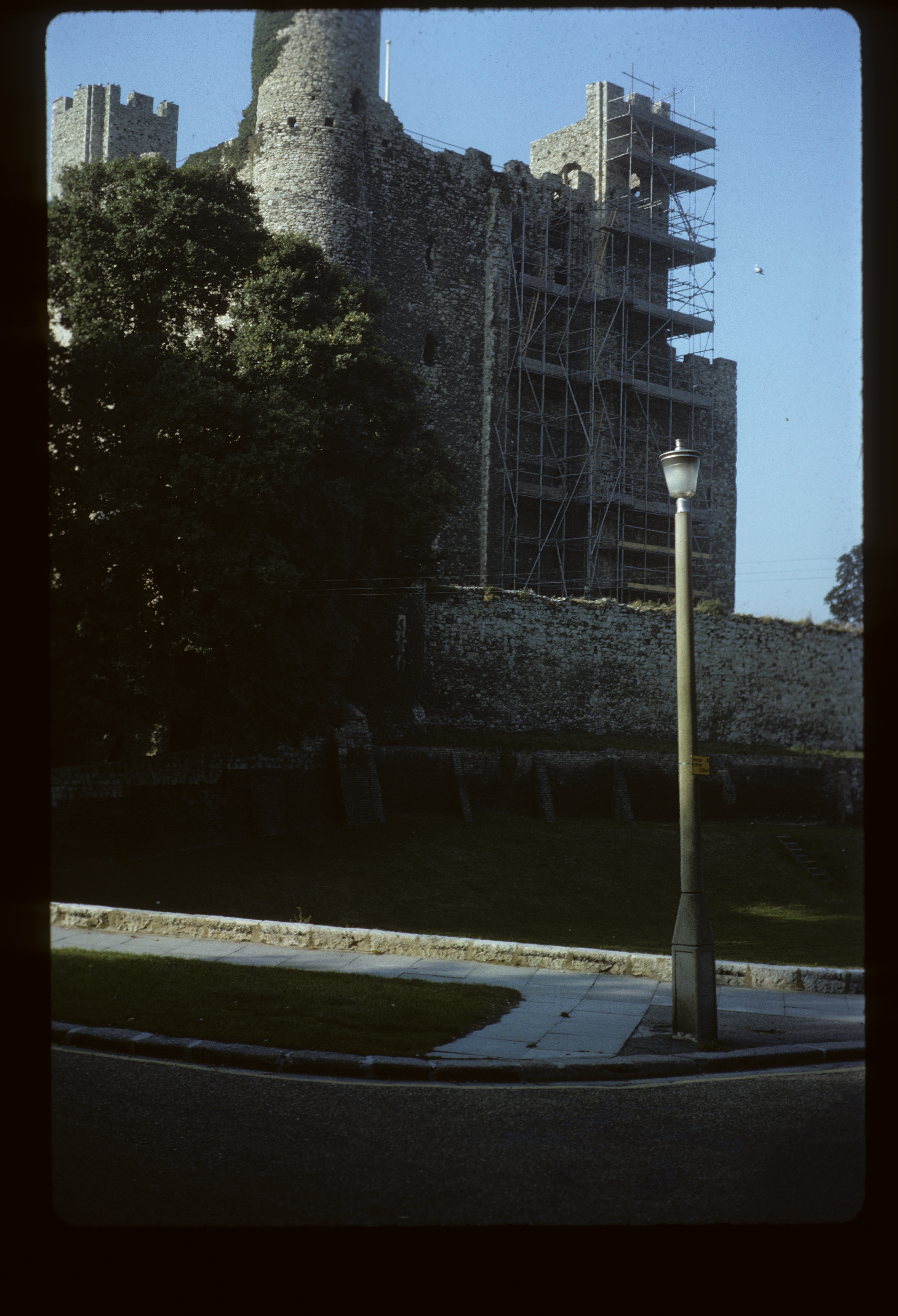
Rochester Castle: Defences Under Siege
Discover how masonry, mining and supplies shaped the fate of a medieval fortress.
Start quiz →MediumMagna Carta
Magna Carta: Clauses and Survival
Look beyond the famous name to the charter's practical provisions and repeated reissues.
Start quiz →People
No people are currently assigned.
Events
Continue learning
Sources and further reading
- National Archives: Magna Carta, 1214–1225
- University of East Anglia: Magna Carta copies
- Library of Congress: confirmation by kings and Parliament
- US National Archives: Magna Carta's legacy
- Library of Congress: exhibitions and primary-source collections
- Heilbrunn Timeline of Art History
- British Library: research collections