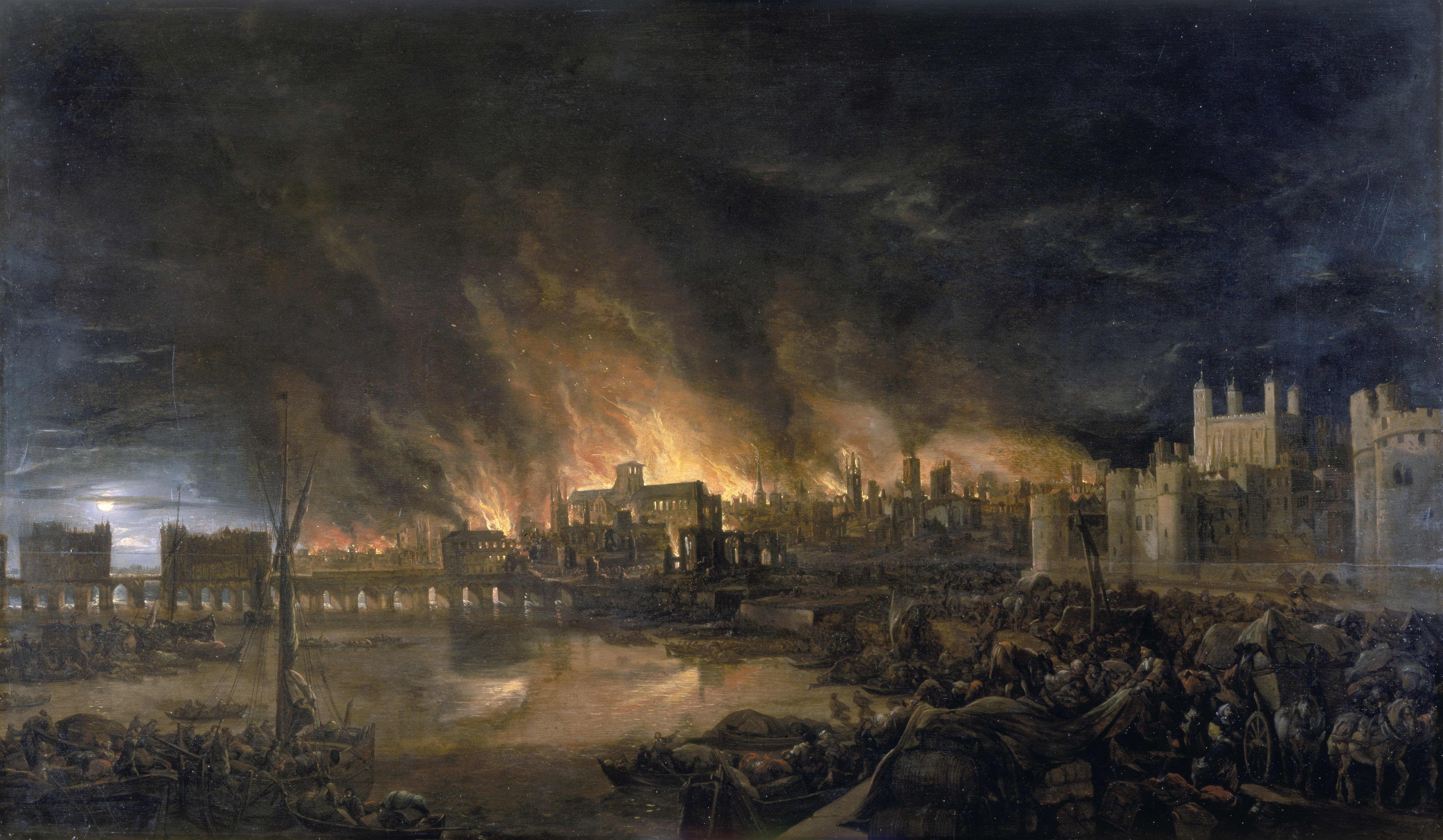
The Great Fire of London began in Pudding Lane on 2 September 1666 and devastated much of the City of London over the following days. It destroyed homes, churches, businesses and important public buildings, including Old St Paul's Cathedral. The disaster did not burn the whole of the larger metropolis. Its significance lies in the enormous concentration of destruction within the historic City and in the long process of rebuilding livelihoods as well as streets. For many survivors, homelessness and financial loss lasted far longer than the flames.

Topic guide
Great Fire of London
How the fire of September 1666 spread, how Londoners responded and why rebuilding did not create an entirely new city.
Start here
Overview
Key questions answered
Great Fire of London explained
Begin with clear answers, then use the full guide, timeline, people, stories and quizzes below.
What is Great Fire of London?
How the fire of September 1666 spread, how Londoners responded and why rebuilding did not create an entirely new city. The Great Fire of London began in Pudding Lane on 2 September 1666 and devastated much of the City of London over the following days. It destroyed homes, churches, businesses and important public buildings, including Old St Paul's Cathedral. The disaster did not burn the.
When did Great Fire of London happen?
The guide follows major developments from 2 September 1666 (Fire begins) to 1677 (Monument completed). The full chronology below explains the changes between them.
What should you know about Great Fire of London?
The essential areas are Why a local fire became a catastrophe, Fighting the flames, Escape, loss and unreliable rumours, Rebuilding homes rather than just monuments, The city that emerged. Each section below explains the evidence and historical connections.
Why does Great Fire of London matter?
The Great Fire of London began in Pudding Lane on 2 September 1666 and devastated much of the City of London over the following days. It destroyed homes, churches, businesses and important public buildings, including Old St Paul's Cathedral. The disaster did not burn the whole of the larger metropolis. Its significance lies in the enormous concentration of destruction within the historic.
Build your understanding
The essential guide
Why a local fire became a catastrophe
The fire began in the premises of baker Thomas Farriner. Dry conditions, closely packed buildings and strong winds made its spread difficult to contain. Timber structures and combustible goods stored in workshops and riverside warehouses provided fuel. Narrow streets complicated movement, while projecting buildings could bring neighbouring properties close together. These conditions did not mean that Londoners had never understood fire risks: urban fires were a recognised danger. The problem was that the available precautions and response arrangements proved inadequate for the scale and speed of this outbreak. Once several buildings were burning intensely, simply carrying water to individual flames could not stop the larger advancing front.
Fighting the flames
London had no modern professional fire brigade. Residents and officials used buckets, pumps, hooks and the demolition of buildings to try to interrupt the fire's progress. Creating gaps required decisions about property and the risk of destroying buildings that had not yet caught fire. As the emergency worsened, coordinated demolition, including the use of gunpowder, became important. The easing of wind also helped bring the fire under control. Charles II and his brother James took active roles in the response. Their involvement should not obscure the work of ordinary residents, labourers and others whose names are less prominent in surviving accounts. Control was achieved through several measures, not one decisive bucket or explosion.
Escape, loss and unreliable rumours
People moved possessions through crowded streets and along the river, paying for carts and boats where they could. Others sought refuge outside the burning area. Diaries such as Samuel Pepys's provide vivid eyewitness accounts, but represent particular observers rather than every social group. Recorded deaths are surprisingly few compared with the scale of destruction, although the true total cannot be established with confidence. Insecurity also encouraged rumours of deliberate attack. Foreigners and religious minorities could become targets of suspicion. Robert Hubert confessed to starting the fire and was executed, although his account was unreliable. The episode shows how fear and prejudice could turn a disaster into a search for convenient scapegoats.
Rebuilding homes rather than just monuments
The immediate problem was accommodation for a large displaced population. Loss of premises threatened employment, while higher rents could make recovery harder. Property rights, debts and disputes complicated reconstruction. Grand proposals to redesign London on a new plan were not carried out in full: practical needs and existing ownership patterns encouraged rebuilding on many old foundations. Regulations promoted safer construction, especially brick and stone, and street improvements were made. Recovery nevertheless varied between households. A new building did not automatically restore a ruined business or replace everything lost. Looking only at architectural achievements can therefore conceal the years of insecurity experienced by people whose resources were limited.
The city that emerged
Christopher Wren's new St Paul's became the most famous symbol of reconstruction, while rebuilt churches and the Monument reshaped the cityscape. Insurance arrangements and organised approaches to firefighting developed in the decades after the disaster. These changes were responses to continuing risk, not proof that London had become fireproof. The Great Fire also acquired political and religious meanings in public memory. It should not be treated as a simple cleansing event that conveniently solved plague or swept away every urban problem. Its legacy combined new architecture and institutions with enduring inequality, familiar street patterns and the difficult decisions of thousands of people rebuilding ordinary lives.
Chronology
Key dates
Fire begins
Flames spread from Farriner's bakery in Pudding Lane.
Destruction expands
The fire moved through densely built commercial districts.
Old St Paul's burns
The medieval cathedral was destroyed.
Main fire checked
Demolition and changing conditions helped contain the main blaze.
Rebuilding legislation
Rules shaped safer construction and reconstruction.
Monument construction begins
Work began on the memorial to the fire.
New St Paul's begins
Construction began on Wren's replacement cathedral.
Monument completed
The memorial became a permanent feature of the rebuilt City.
Read more
Essential stories
Begin with the foundations, then move into the events, people and debates that add detail and complexity.
No verified stories have been assigned to this topic yet.
Test yourself
Available quizzes
 Medium
Early Modern History
The Great Fire: Why London Burned
Investigate building materials, weather, firefighting and eyewitness evidence from 1666.
Start quiz →MediumGreat Fire of London
After the Fire: Rebuilding London
Legal disputes, relief and the institutions that emerged after the destruction of 1666.
Start quiz →People
No people are currently assigned.
Events
No events are currently assigned.
Continue learning
Sources and further reading
- London Museum: the Great Fire
- London Museum: the housing crisis
- London Fire Brigade: the Great Fire
- St Paul's Cathedral: historical timeline
- London Museum: fire and insurance
- The Monument: construction history
- Library of Congress: exhibitions and primary-source collections
- Heilbrunn Timeline of Art History
- British Library: research collections