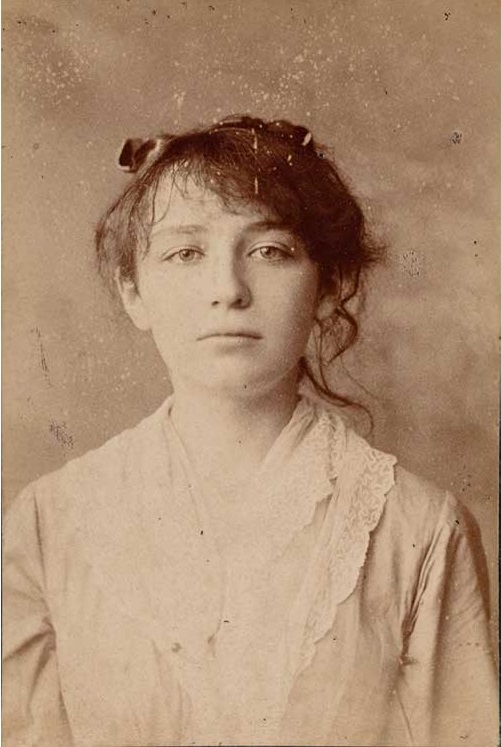
Portrait of Auguste Rodin

Auguste Rodin. George Charles Beresford. Public domain.

Historical person · 19th Century

Auguste Rodin

1840–1917

Sculptor whose expressive bodies, unfinished surfaces and unconventional public monuments changed the possibilities of modern sculpture.

Explore Social HistoryRead biography ↓

Your next chapter starts here

Take history with you.

Create a free account or log in to download this guide as a PDF. Reading on the website is always free.

Create free account
Quick answers

What to know about Auguste Rodin

Direct answers to common questions about Auguste Rodin, followed by the full sourced biography.

Who was Auguste Rodin?

Sculptor whose expressive bodies, unfinished surfaces and unconventional public monuments changed the possibilities of modern sculpture. Sculptor whose expressive bodies, unfinished surfaces and unconventional public monuments changed the possibilities of modern sculpture.

What is Auguste Rodin known for?

Auguste Rodin is particularly known for The Thinker, The Burghers of Calais, The Gates of Hell.

When did Auguste Rodin live?

Auguste Rodin lived 1840–1917. This profile places that life within 19th Century and Social History.

Why is Auguste Rodin historically significant?

Rodin relied on assistants, specialist carvers, founders and models. Camille Claudel was both an important collaborator and an independent sculptor, not simply a footnote to his private life. Multiple casts and changing combinations of fragments complicate the idea of a single finished original. Rodin also collected antiquities and admired incomplete ancient bodies, helping make the.

Biography

Auguste Rodin: life and legacy

Overview

Sculptor whose expressive bodies, unfinished surfaces and unconventional public monuments changed the possibilities of modern sculpture.

Training outside the academy

Auguste Rodin grew up in Paris and trained at the Petite École, where drawing and craft skills mattered more than the prestige of a fine-art career. Repeated rejection by the École des Beaux-Arts did not end his ambitions. He earned a living through decorative work and worked in Brussels before establishing his reputation as an independent sculptor. This practical background gave him experience of modelling, architectural ornament and collaboration. His eventual success therefore followed years of commercial employment rather than a straightforward rise through the official academy.

A body that seemed too real

The Age of Bronze, exhibited in 1877, made Rodin controversial because its naturalism prompted accusations that he had taken a cast directly from a living model. He defended the work as sculpture produced through observation and modelling. In 1880 the French government commissioned a monumental doorway for a proposed decorative-arts museum. The Gates of Hell became a continuing laboratory for figures and poses. The Thinker and other sculptures developed from this project, demonstrating how Rodin reused, enlarged and recontextualised forms rather than treating every work as entirely separate.

Reimagining public monuments

The Burghers of Calais commemorates six citizens associated with the surrender of their town in 1347. Instead of an elevated victorious hero, Rodin created a group of anxious, burdened individuals moving towards an uncertain fate. His monument to the novelist Balzac went further. The enveloping dressing gown and forceful head replaced the conventional descriptive portrait with a concentrated statement of personality. The commissioning society rejected it in 1898. Such disputes reveal the distance between public expectations of a readable commemorative likeness and Rodin’s interest in psychological and physical presence.

An extensive studio and a lasting collection

Rodin relied on assistants, specialist carvers, founders and models. Camille Claudel was both an important collaborator and an independent sculptor, not simply a footnote to his private life. Multiple casts and changing combinations of fragments complicate the idea of a single finished original. Rodin also collected antiquities and admired incomplete ancient bodies, helping make the fragment a deliberate artistic choice. His donation to France in 1916 secured the basis of the Musée Rodin. He died the following year, leaving a body of work whose visible surfaces preserve the sense of hands shaping resistant material.

Key moments

Timeline

  1. Born in Paris

    Born on 12 November.

  2. Entered the Petite École

    Began formal training in drawing and modelling.

  3. Worked in Brussels

    Continued decorative and sculptural employment.

  4. The Age of Bronze exhibited

    Its realism provoked accusations of life casting.

  5. Gates of Hell commissioned

    Received the major state commission.

  6. Burghers installed in Calais

    The public monument was inaugurated.

  7. Balzac rejected

    The commissioning society refused his unconventional monument.

  8. Donated his collection

    Gave his work and collection to the French state.

  9. Died

    Auguste Rodin died in 1917.

Connections

Related people

Keep reading

Related stories

Test your knowledge

Related quizzes

Evidence

Sources and further reading

  1. Auguste RodinNational Gallery of Art
  2. Auguste Rodin (1840–1917)Metropolitan Museum of Art
  3. Rodin biographyPhiladelphia Museum of Art
  4. Biographical records and portraitsNational Portrait Gallery
  5. Historical people and primary sourcesLibrary of Congress
  6. Historical figuresEncyclopaedia Britannica

Biographical claims are summarised from the sources above. Interpretation and disputed reputations are identified in the text rather than presented as settled fact.

Milestone unlocked!

Your completed quizzes are building a history of their own.