How extensive was the re-modelling of Worcester Cathedral in the nineteenth century, and what were the factors and ideas that influenced changes to the design of the building?
Introduction
This report examines nineteenth-century remodelling at Worcester Cathedral through site observation, documentary evidence, and scholarship. It argues that the Victorian campaign did not involve major structural rebuilding but, under the direction of Sir George Gilbert Scott, redefined the interior by altering spatial boundaries, sightlines, and liturgical hierarchy, that is, organising space, controlling visibility, and structuring worship. The extent of remodelling is assessed through spatial and liturgical reorganisation, material intervention, structural stabilisation, and patronal constraint. Influenced by Gothic Revival design, ecclesiological thinking, and donor patronage, the restoration preserved medieval fabric, yet in doing so, reinterpreted medieval sacred space through nineteenth-century Anglican priorities.1
The nave–choir threshold
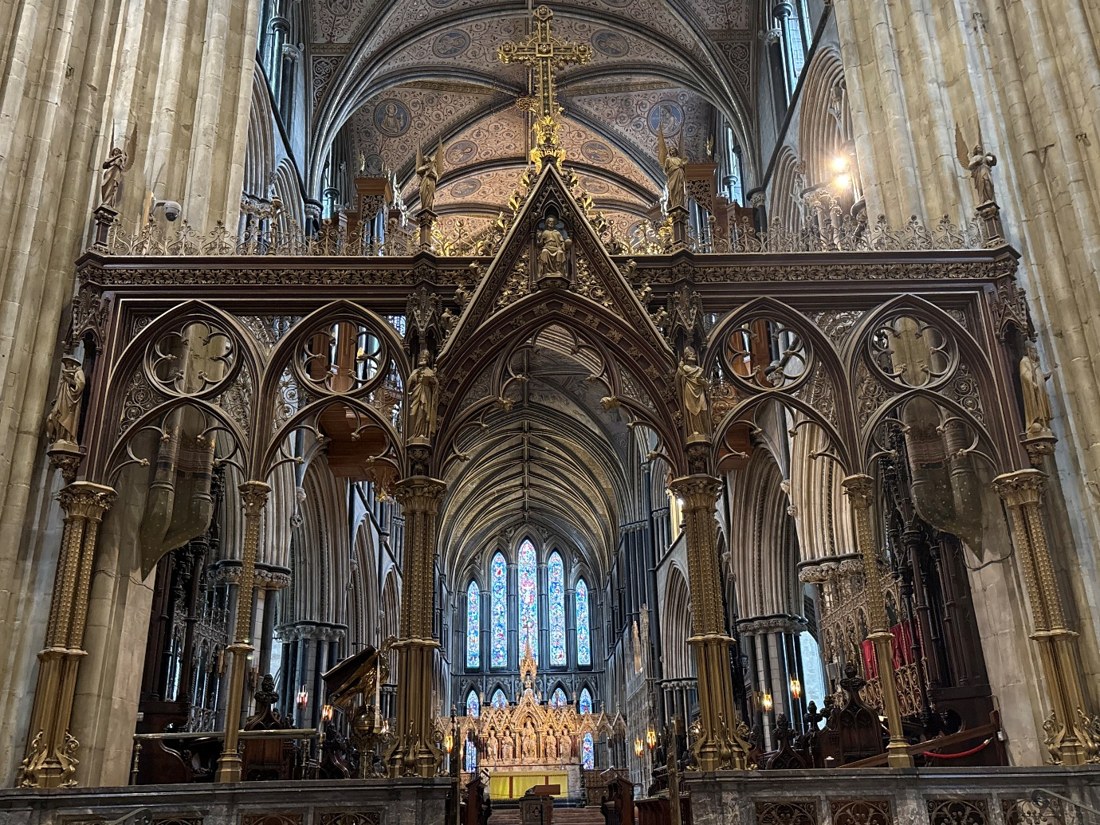
A measure of remodelling is the redefinition of the nave–choir threshold. Green’s Internal View of Worcester Cathedral (1794) shows the choir enclosed by a medieval masonry screen.2 This screen was replaced in 1818.3 Wild’s engraving of The Choir of Worcester Cathedral (1823), however, still shows a solid screen blocking views between the nave and choir into the early nineteenth century.4 As engravings, they reflect interpretation rather than an exact record. The replacement during the Victorian restoration was the Skidmore ironwork screen (Fig. 1), designed by the metalworker Francis Skidmore. Executed in 1872–3, the screen is non-load bearing, inserted for visual effect rather than necessity.5 Composed of pointed Gothic-arched ironwork, filled with tracery and capped with finials, it combines medieval form with industrial materials.6 The use of industrial iron marked a break from traditional masonry, a shift that Eastlake criticised as inconsistent with medieval architectural precedent.7 Ruskin similarly condemned restoration as ‘a Lie from beginning to end,’ arguing that modern intervention falsified medieval authenticity.8 From this perspective, the screen appears a compromise between medieval form and modern manufacture. Francis Skidmore, however, maintained that modern materials could serve Gothic purposes without compromising the design’s character. 9
While Ruskin emphasised historical authenticity and Eastlake criticised departures from medieval materials, these objections are less persuasive when considering the screen’s impact on the cathedral’s interior. Its proportions align with the arcade, while its vertical rhythm reinforces the Gothic interior. Its openwork design transformed the medieval barrier into a controlled visual threshold, allowing participation without dissolving hierarchy, a solution consistent with Ecclesiological concerns to balance congregational visibility with sacramental distinction.10 In contrast, Scott’s denser screen at Hereford Cathedral, later removed, did not survive in its original position; Worcester’s more open ironwork achieved a more lasting balance between preserving sacred separation and allowing the congregation to see into the choir.11 The Skidmore screen was a significant aspect of nineteenth-century remodelling, reconfiguring the relationship between the nave and the choir and reshaping liturgical emphasis, while also decisively introducing industrial materials into a medieval structure.
The Victorian pulpit
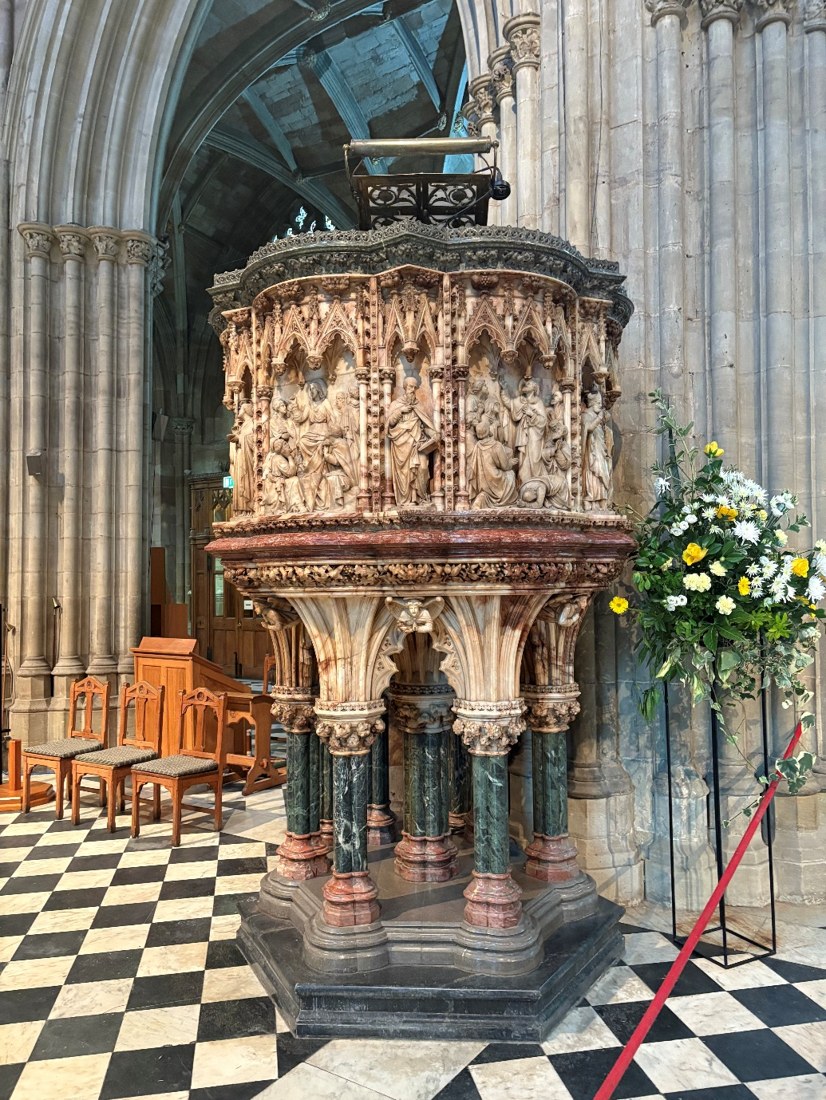
The nineteenth-century pulpit (Fig. 2) represents a permanent architectural intervention. Octagonal and monumental, it is enriched with Gothic canopies, carved foliage, and figural niches. It was funded by Lord Dudley in 1874, designed by Scott, and carved by James Forsyth.12 The pulpit’s scale and ornament emphasised the growing importance of preaching in mid-nineteenth-century Anglicanism, while the high altar retained sacramental primacy. This supports Nigel Yates’s argument that Victorian refurnishing reconfigured the liturgical hierarchy.13
Eamon Duffy’s analysis of medieval processional religion suggests the pulpit may disrupt a nave historically organised around movement to the high altar.14 Applied to Worcester, however, this model is less convincing, as the pulpit’s placement remains controlled: it follows the nave’s axial alignment, avoids blocking processional routes, and respects the rhythm of piers and arches while introducing a focal point within the nave. The pulpit, therefore, constituted a substantial element of nineteenth-century remodelling, recentring visual attention within the nave on the sermon while carefully preserving processional routes and maintaining the primacy of the high altar within the cathedral’s liturgical hierarchy.
The marble pavement
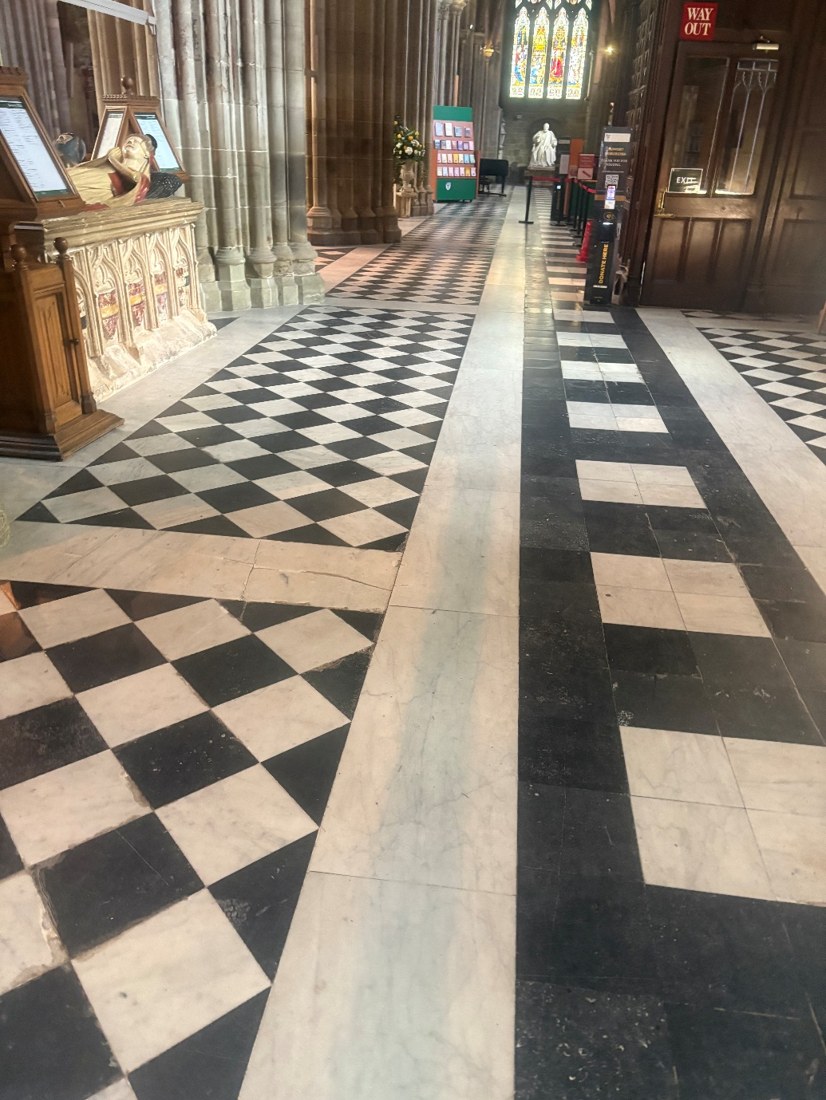
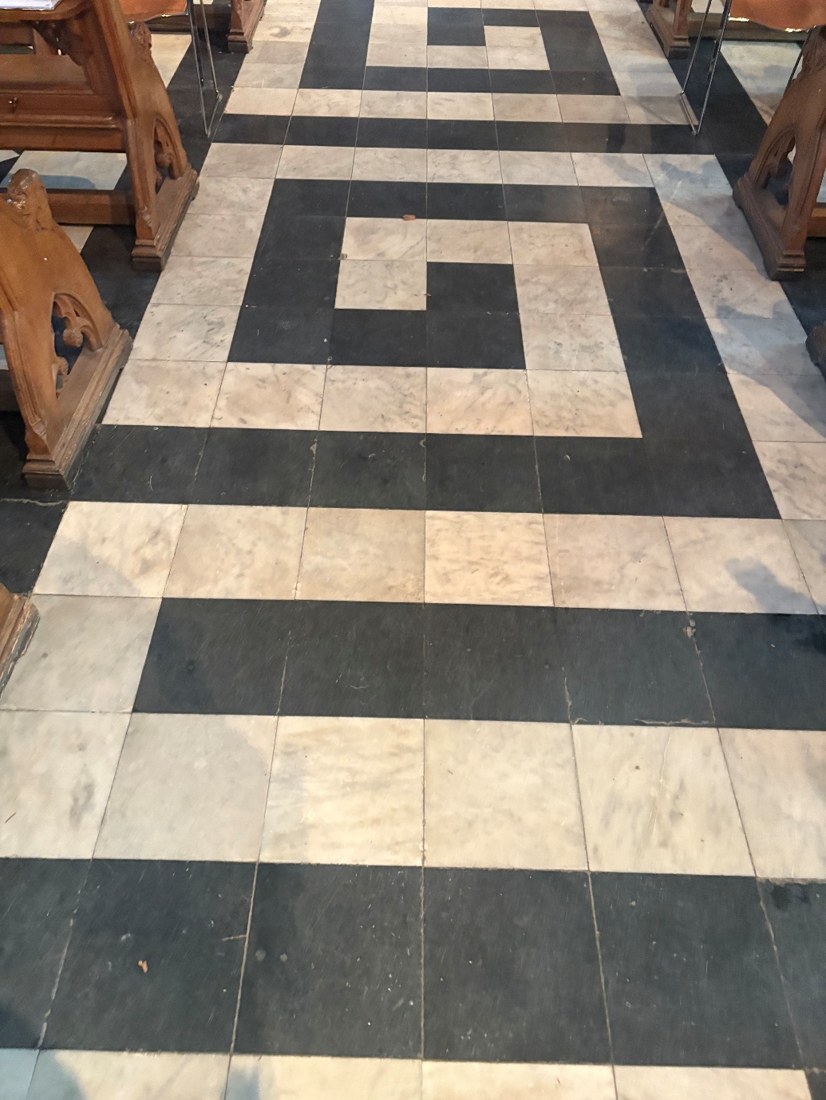
The nave pavement (Fig. 3) was laid in 1872–3; the patterned black-and-white marble floor of Sicilian white and Kilkenny black marbles introduces a geometric scheme that reinforces the nave’s central axis.15 R. Kitton’s (1832) engraving, View down the Nave of Worcester Cathedral, shows a plain Georgian stone floor, suggesting medieval paving had disappeared. The Victorian pavement, therefore, represents replacement rather than recovery.16 By reflooring the nave in marble with a unified geometric pattern, Scott significantly reshaped the interior’s spatial order, redirecting movement and visual attention along a central axis, making it a substantial component of nineteenth-century remodelling.
The reredos and the high altar
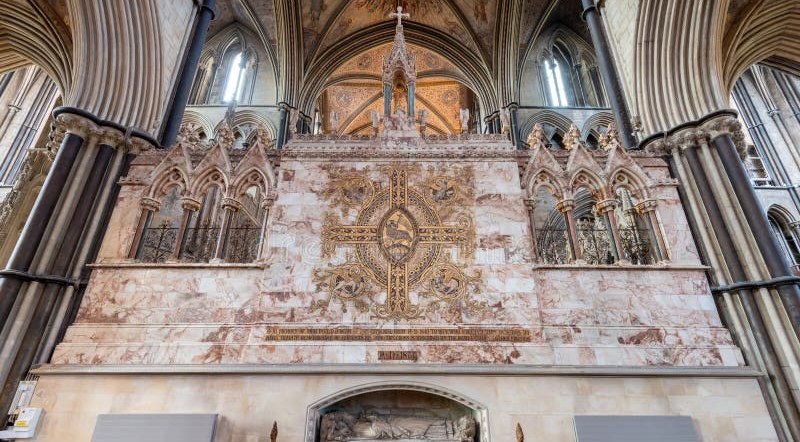
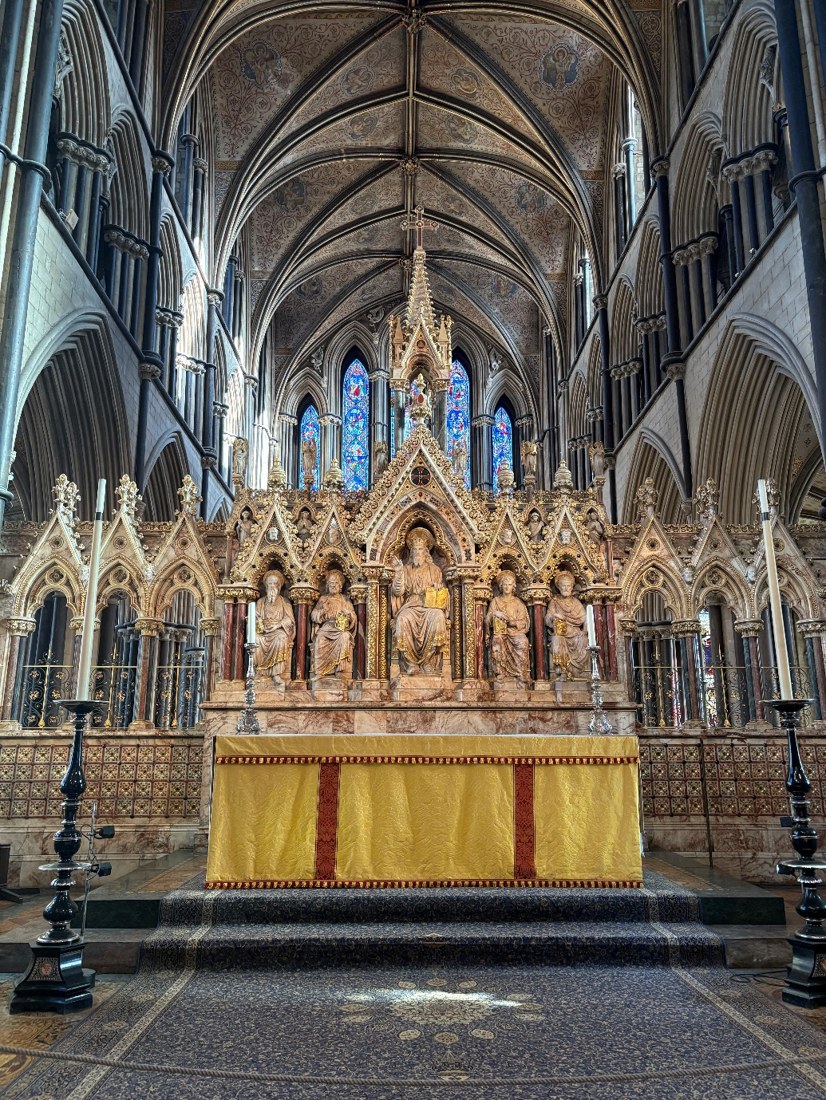
At the east end stands the marble reredos (Fig. 4). From the nave, it rises behind the altar, its gilded cross and pointed canopy drawing the eye upward and focusing attention on Holy Communion. The altar table conceals the lower carving, so the upper structure dominates. From the choir, the back is flatter, showing the design targeted the nave.
Commissioned by Dean John Peel as a memorial to his wife and executed from 1868 to 1874, the reredos reflects donor patronage and Gothic Revival design, as evidenced by its pointed arches, vertical emphasis, and carved, medieval-style detail.17 This eastward emphasis embodied the renewed importance of Eucharistic theology in nineteenth-century Anglican reform.18 The reredos, therefore, formed a major element of nineteenth-century remodelling, establishing a dominant sculptural focus that reorganised attention at the east end and elevated the altar within the cathedral’s hierarchy of space.
The organ and its patrons
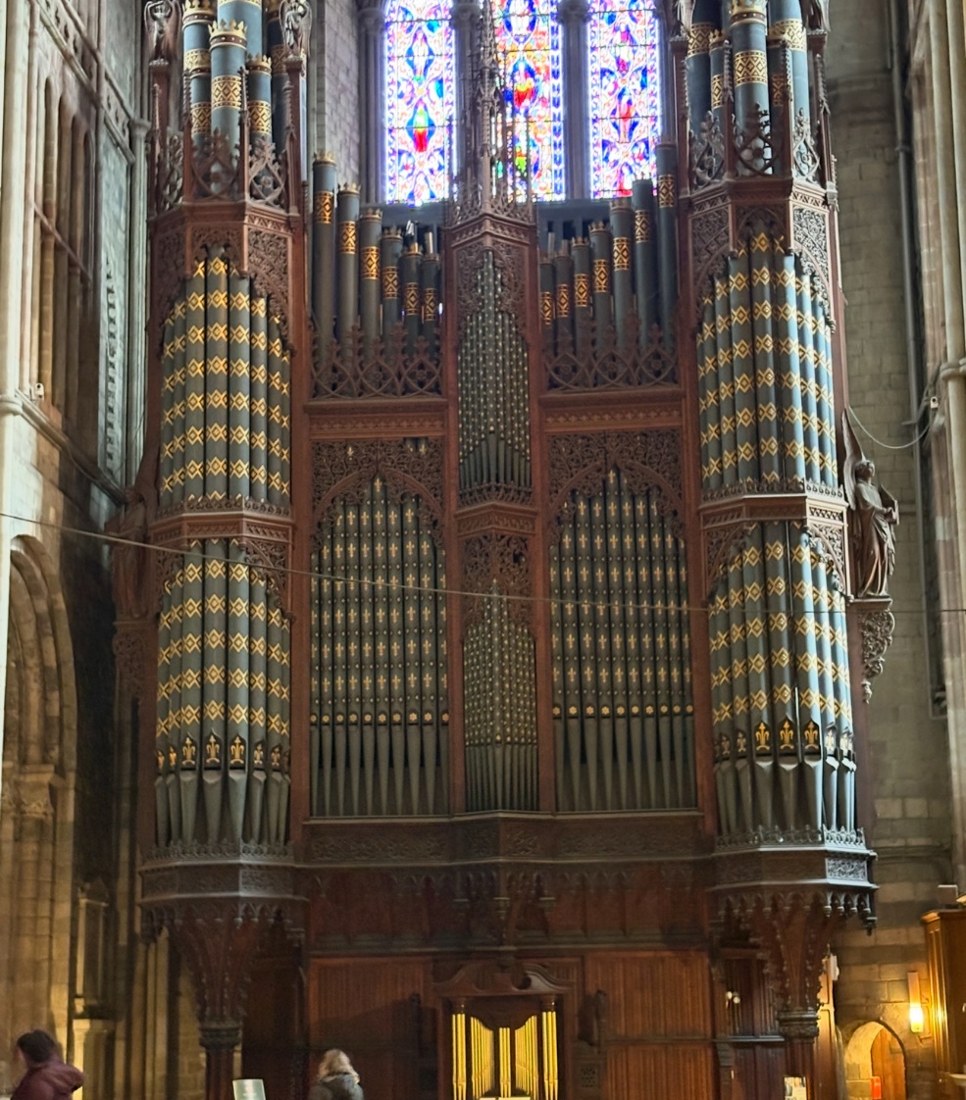
The organ and its case, positioned in the south transept and installed in 1874 (Fig. 5), expose the limits of Victorian remodelling. Imposing, the case intrudes into the transept, disrupting sightlines and partially obscuring the south transept window.19 Scott preferred an organ integrated with a screen but was compelled by Lord Dudley to accept transept placement, later describing it as ‘useless & obtrusive’.20 The organ reflects patronal compromise rather than a coherent restoration scheme. Its intrusive transept placement disrupted sightlines, revealing the limits of Victorian remodelling and the overriding influence of patronage.
Structural limits
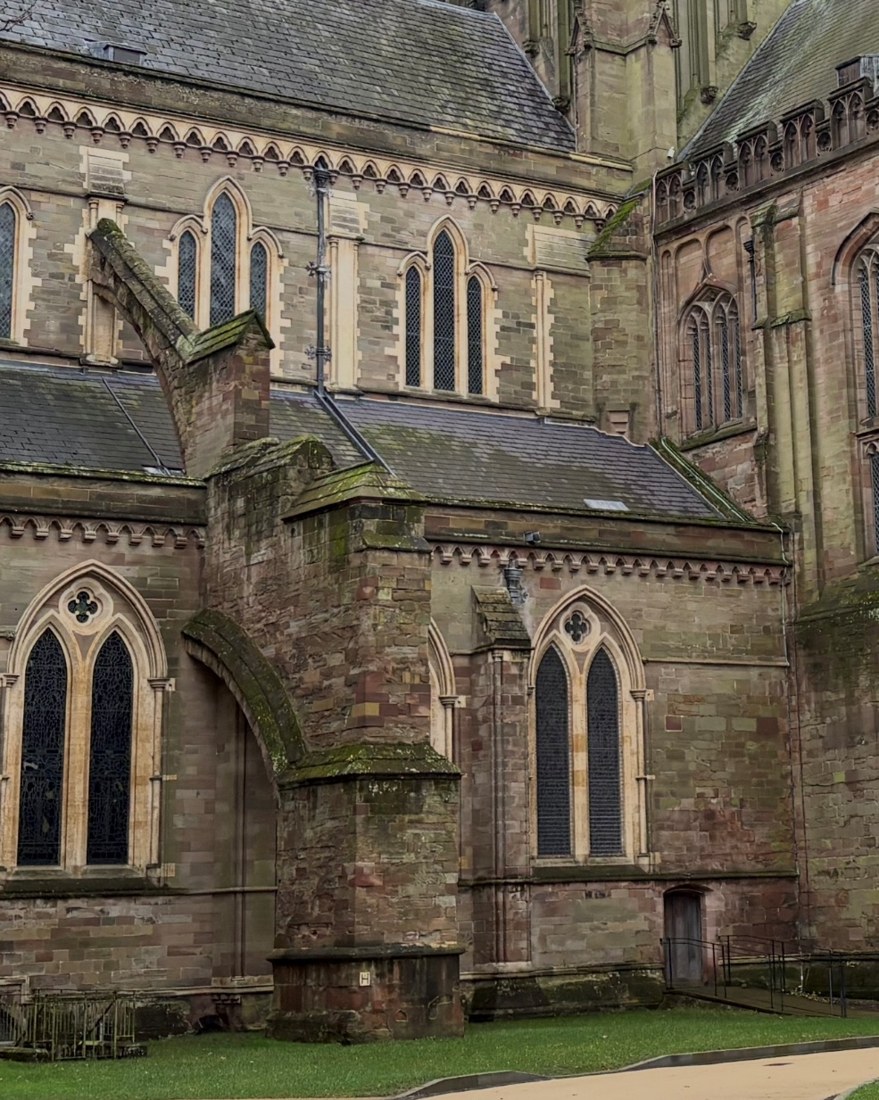
Although the Victorian restoration transformed the cathedral interior, it remained structurally restrained. The stabilised fabric resulting from eighteenth-century repairs influenced Scott’s approach, directing attention toward interior reordering rather than structural rebuilding.21 The 1750 Treasurer’s Accounts record substantial structural expenditure on roofing, glazing, stonework, and paving, indicating Georgian stabilisation of the fabric.22 The surviving Georgian buttresses on the north side (Fig. 6), undecorated, were added to reinforce the walls and strengthen the fabric, confirming earlier stabilisation.23 By contrast, the Skidmore screen, pulpit, reredos, pavement, and organ case were non-load-bearing additions that reshaped the cathedral’s appearance and function rather than its structure. Because the fabric was secure, nineteenth-century remodelling was extensive in interior redesign, though limited structurally.
Conclusion
In conclusion, nineteenth-century remodelling at Worcester Cathedral was extensive in reshaping spatial boundaries, sightlines, material character, and liturgical hierarchy, yet limited in structural intervention and constrained by patronage. The restoration preserved medieval fabric while reconstructing how sacred space was seen, experienced, and ordered within nineteenth-century Anglicanism.
Photographic evidence
Photographs by the author, 28 January 2026. Figure numbers correspond to the references in the article.
Bibliography
- Brooks, Alan, and Nikolaus Pevsner, Worcestershire, Buildings of England (Yale University Press, 2007)
- Duffy, Eamon, The Stripping of the Altars: Traditional Religion in England, c. 1400–c 1580 (Yale University Press, 1992)
- Eastlake, Charles L., A History of the Gothic Revival (American Life Foundation, 1975)
- Green, Valentine, Internal View of Worcester Cathedral (engraving, 1794), Worcester Cathedral Library
- Kitton, R., View down the Nave of Worcester Cathedral, looking West (engraving, 1832), Worcester Cathedral Library.
- Lockett, Richard, ‘Sir Gilbert Scott’s Vision for Worcester Cathedral’, in Archaeology at Worcester Cathedral: Report of the Seventeenth Annual Symposium, March 2007, ed. by Christopher Guy (Worcester Cathedral, 2007)
- Robinson, Alicia, ‘Collaborations Between Scott and Skidmore: One Object’, British Art Studies, 5 (April 2017), https://britishartstudies.ac.uk/issues/05/_assets/downloads/publication-scott-skidmore.pdf [accessed 18 February 2026]
- Scott, Sir George Gilbert, Personal and Professional Recollections, ed. by G. Gilbert Scott (Sampson Low, Marston, Searle, and Rivington, 1879)
- Stamp, Gavin, ‘Scott, Sir George Gilbert (1811–1878)’, Oxford Dictionary of National Biography (Oxford University Press, 2004; online edn)https://www.oxforddnb.com/display/10.1093/ref:odnb/9780198614128.001.0001/odnb-9780198614128-e-24869 [accessed 22 February 2026]
- Treasurer’s Accounts, 1750, WCM A56, Worcester Cathedral Library
- Whyte, William, ‘Skidmore, Francis Alfred (1817–1896)’, Oxford Dictionary of National Biography (Oxford University Press, 2004; online edn, 2013) https://www.oxforddnb.com/display/10.1093/ref:odnb/9780198614128.001.0001/odnb-9780198614128-e-69896?rskey=8aEjeC&result=1 [accessed 2 February 2026]
- Whyte, William, Unlocking the Church: The Lost Secrets of Victorian Sacred Space (Oxford: Oxford University Press, 2017)
- Wild, Charles, The Choir of Worcester Cathedral, Taken from the Altar (engraving, 1823), Worcester Cathedral Library.
- Worcester Cathedral Library, “The Restoration of Worcester Cathedral in the Eighteenth Century,” Worcester Cathedral Library Blog, 15 July 2021, https://worcestercathedrallibrary.wordpress.com/2021/07/15/the-restoration-of-worcester-cathedral-in-the-eighteenth-century/ [accessed 20 February 2026]
- Yarker, Elizabeth, ‘The Victorian Restoration of Worcester Cathedral and the Joint Restoration Committee’, in Archaeology at Worcester Cathedral: Report of the Twelfth Annual Symposium, March 2002, ed. by Christopher Guy (Worcester Cathedral, 2002)
- Yates, Nigel, Buildings, Faith and Worship: The Liturgical Arrangement of Anglican Churches 1600–1900 (Oxford University Press, 1991)
Footnotes
- William Whyte, Unlocking the Church: The Lost Secrets of Victorian Sacred Space (Oxford: Oxford University Press, 2017), p. 11.↩
- Valentine Green, Internal View of Worcester Cathedral (engraving, 1794), Worcester Cathedral Library.↩
- Alan Brooks and Nikolaus Pevsner, Worcestershire, Buildings of England (Yale University Press, 2007), p. 689.↩
- Charles Wild, The Choir of Worcester Cathedral, Taken from the Altar (engraving, 1823), Worcester Cathedral Library.↩
- Brooks and Pevsner, Worcestershire, p. 689.↩
- Robinson, Alicia, ‘Collaborations Between Scott and Skidmore: One Object’, British Art Studies, 5 (April 2017), https://britishartstudies.ac.uk/issues/05/scott-skidmore [accessed 18 February 2026]↩
- Charles L. Eastlake, A History of the Gothic Revival (American Life Foundation, 1975), pp. vii-ix.↩
- Gavin Stamp, ‘Scott, Sir George Gilbert (1811–1878)’, Oxford Dictionary of National Biography (Oxford University Press, 2004; online edn), https://doi.org/10.1093/ref:odnb/24869 [accessed 22 February 2026].↩
- William Whyte, ‘Skidmore, Francis Alfred (1817–1896)’, Oxford Dictionary of National Biography (Oxford University Press, 2004; online edn, 2013), https://doi.org/10.1093/ref:odnb/69896 [accessed 2 February 2026].↩
- Whyte, Unlocking the Church, p. 13.↩
- Robinson, ‘Collaborations Between Scott and Skidmore’.↩
- Richard Lockett, ‘Sir Gilbert Scott’s Vision for Worcester Cathedral’, in Archaeology at Worcester Cathedral: Report of the Seventeenth Annual Symposium, March 2007, ed. by Christopher Guy (Worcester Cathedral, 2007), pp. 10–11.↩
- Nigel Yates, Buildings, Faith and Worship: The Liturgical Arrangement of Anglican Churches 1600–1900 (Oxford: Oxford University Press, 1991), p. 128.↩
- Eamon Duffy, The Stripping of the Altars: Traditional Religion in England, c. 1400–c 1580 (Yale University Press, 1992), pp. 92–98.↩
- Brooks and Pevsner, Worcestershire, p. 693↩
- R. Kitton, View down the Nave of Worcester Cathedral, looking West (engraving, 1832), Worcester Cathedral Library.↩
- Lockett, ‘Sir Gilbert Scott’s Vision for Worcester Cathedral’, pp. 9–12.↩
- Yates, Buildings, Faith and Worship, pp. 166–170↩
- Elizabeth Yarker, ‘The Victorian Restoration of Worcester Cathedral and the Joint Restoration Committee’, in Archaeology at Worcester Cathedral: Report of the Twelfth Annual Symposium, March 2002, ed. by Christopher Guy (Worcester Cathedral, 2002), p 11.↩
- Sir George Gilbert Scott, Personal and Professional Recollections, ed. by G. Gilbert Scott (Sampson Low, Marston, Searle, and Rivington, 1879), pp 343-345.↩
- Stamp, ‘Scott, Sir George Gilbert’.↩
- Treasurer’s Accounts, 1750, WCM A56, Worcester Cathedral Library.↩
- Worcester Cathedral Library, “The Restoration of Worcester Cathedral in the Eighteenth Century,” Worcester Cathedral Library Blog, 15 July 2021, https://worcestercathedrallibrary.wordpress.com/2021/07/15/the-restoration-of-worcester-cathedral-in-the-eighteenth-century/ [accessed 20 February 2026]↩